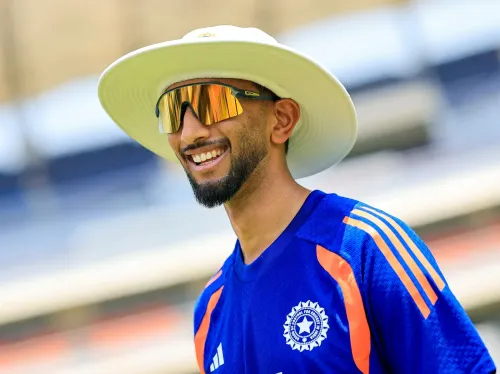
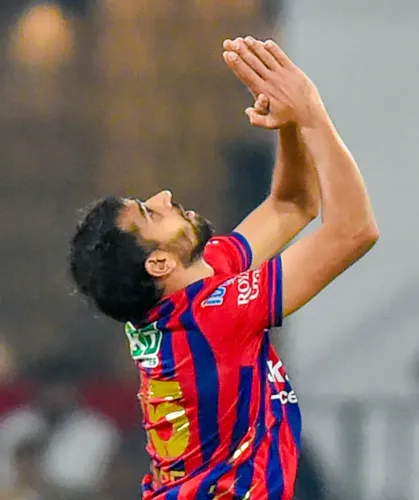
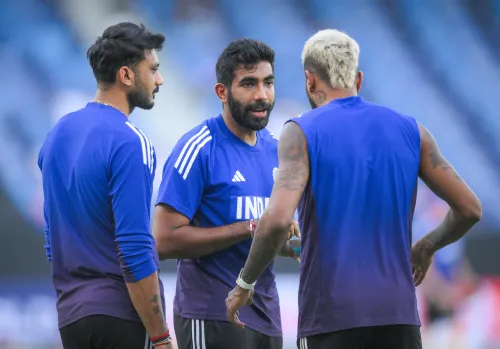
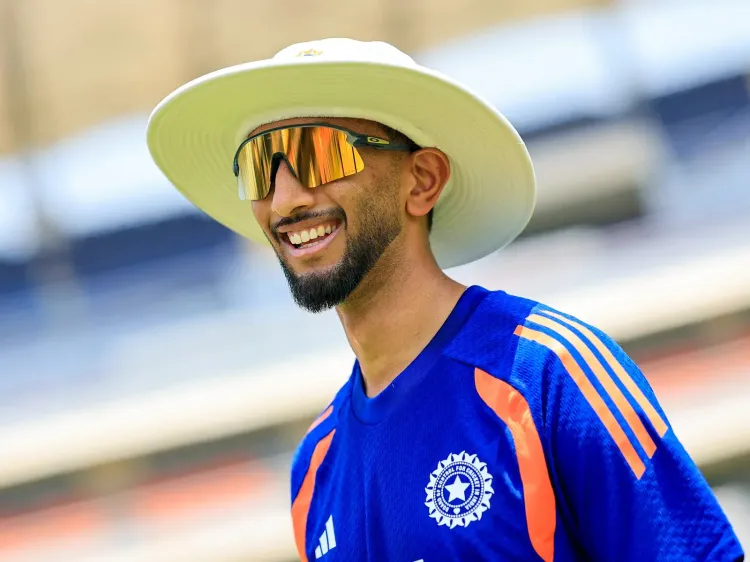
Prasidh Krishna: Afghanistan ODI series key to World Cup rhythm ahead of 2027
Synopsis
With Bumrah, Siraj and Pandya all rested, Prasidh Krishna is the senior voice in India's pace attack against Afghanistan — and he's framing this rain-hit series not as a routine bilateral but as the first real lap of India's 2027 World Cup preparation. His words on fuller lengths and format adaptability signal a squad that is already thinking two years ahead.
Key Takeaways
Prasidh Krishna described the India vs Afghanistan ODI series as vital preparation for the 2027 Men's ODI World Cup in South Africa, Zimbabwe and Namibia.
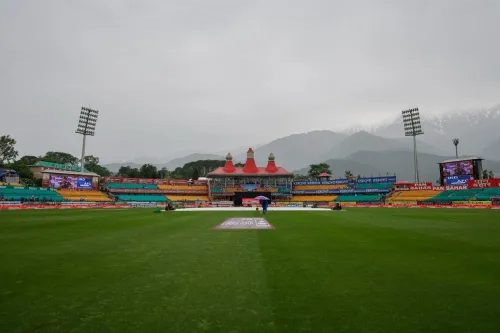
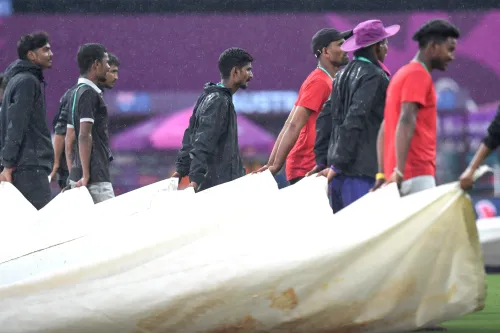
The toss for the first ODI at HPCA Stadium, Dharamshala was delayed on 13 June due to heavy rain.
Prasidh returned 3 for 37 in his recent Test outing at New Chandigarh , crediting work on bowling fuller lengths.
Jasprit Bumrah , Mohammed Siraj , and Hardik Pandya are all absent from the ODI squad, elevating Prasidh's role in the pace unit.
Prasidh rejected any strong sense of seniority, saying the group learns from and supports each other.
India pacer Prasidh Krishna said on 13 June that the three-match ODI series against Afghanistan is a critical building block for the team's preparations ahead of the 2027 Men's ODI World Cup, scheduled to be hosted across South Africa, Zimbabwe, and Namibia. He was speaking on the sidelines of a rain delay at the HPCA Stadium, Dharamshala, where the toss for the first ODI had been pushed back due to heavy rainfall.
World Cup Rhythm in Focus
'These matches help us find the right combinations and build the right rhythm going into the World Cup. We also get to learn what's working, what can improve, and what we can take forward into the tournament,' Prasidh said, speaking to host broadcasters during the delay.
The series represents one of India's early structured opportunities to road-test their ODI combinations with the 2027 World Cup still roughly two years away. With several senior players rested, the squad is being used as a broader selection and fitness trial.
Fuller Lengths and Test Learnings
Reflecting on his recent Test appearance in New Chandigarh — where he returned figures of 3 for 37 — Prasidh said the emphasis has been on bowling fuller and hitting more uncomfortable lengths. 'We've been working on that length for quite some time now, and it's really pleasing for me to see it come off in game time as well. The idea is to bowl a little fuller and hit that uncomfortable length where batsmen find it difficult to make decisions,' he explained.
Notably, the ability to replicate training-ground plans in match conditions has been a recurring challenge for Indian pace bowlers in multi-format windows, making Prasidh's consistency across formats a point of interest for the selection panel.
Adapting Across Formats
On transitioning back to white-ball cricket after a T20 run and a one-off Test, Prasidh stressed the importance of mental flexibility. 'The changes are mainly about the approach and mindset. We've played T20s, then a one-off Test, and now we go back to white-ball cricket. It's about adapting to the situation, the format, and the demands of the game,' he said.
He added that his personal ODI objective centres on containment: 'For me, it's about trying to keep things tight, block the runs, and make it harder for the batsmen. It's very important.' This is consistent with India's broader ODI bowling philosophy of building pressure through economy before seeking wickets.
Senior Role Without the Hierarchy Tag
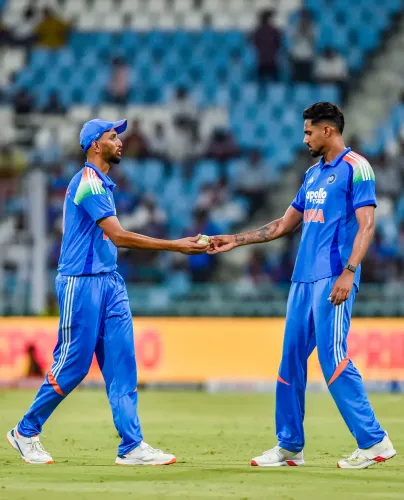
With Jasprit Bumrah, Mohammed Siraj, and Hardik Pandya all absent from the ODI squad, Prasidh has stepped into a de facto leadership role among the pace attack. However, he downplayed any notion of formal seniority. 'Honestly, nothing really changes. We've all been playing together for quite some time, so there isn't a strong sense of seniority. We all learn from each other and support each other — that's the best way to move forward as a team,' he said.
The first ODI, once weather permits, will give India's rejigged pace unit an early read on how well the combinations cohere ahead of a demanding World Cup cycle.
Point of View
But it also underlines a structural concern: India's ODI depth is being tested precisely because its first-choice pace trio is unavailable. The absence of Bumrah, Siraj and Pandya in the same window is not incidental — it reflects workload management choices that compress the time available to build genuine combination chemistry. The 2027 World Cup is two years away, which sounds comfortable, but the qualification and warm-up calendar will narrow that window quickly. If the selectors are serious about using this series as a laboratory, the metrics they track — economy rates, death-over control, powerplay swing — need to feed directly into selection logic, not just talking points at press conferences.
NationPress
24 Sept 2026
Frequently Asked Questions
Why is the India vs Afghanistan ODI series important for the 2027 World Cup?
Prasidh Krishna said the series helps India find the right combinations and build rhythm ahead of the 2027 Men's ODI World Cup, hosted by South Africa, Zimbabwe and Namibia. With senior players rested, it also serves as a broader selection and fitness trial.
Why was the toss delayed in the first ODI at Dharamshala?
The toss for the first ODI between India and Afghanistan at the HPCA Stadium in Dharamshala was delayed on 13 June due to heavy rain. Play had not commenced at the time of Prasidh Krishna's pre-match interaction with broadcasters.
What were Prasidh Krishna's figures in the recent Test match?
Prasidh Krishna took 3 wickets for 37 runs in his recent Test outing in New Chandigarh. He credited the performance to sustained work on bowling fuller lengths to create difficult decisions for batsmen.
Who are the senior pacers absent from India's ODI squad against Afghanistan?
Jasprit Bumrah, Mohammed Siraj, and Hardik Pandya are all absent from India's ODI squad for the Afghanistan series, making Prasidh Krishna one of the more experienced pace options in the group.
How is Prasidh Krishna approaching the transition between formats?
Prasidh said the key to switching between T20s, Tests and ODIs lies in adapting mindset and approach to each format's demands. In ODIs specifically, he focuses on keeping runs tight and making it difficult for batsmen to score freely.