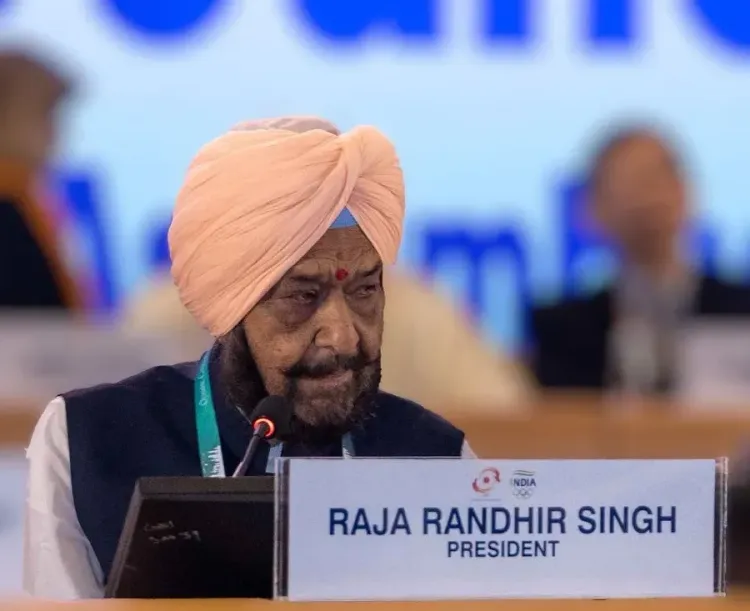
Randhir Singh, five-time Olympian and OCA president, dies at 79
Synopsis
Randhir Singh was not merely a five-time Olympian — he was the architect of India's presence in global sports governance, rising from a 1978 Asian Games gold to become the first Indian president of the Olympic Council of Asia. His death at 79 closes a chapter that will be difficult to replicate: no other Indian has held simultaneous influence at the IOA, OCA, IOC, and WADA.
Key Takeaways
Randhir Singh passed away on 27 May 2025 at the age of 79 in New Delhi.
He represented India at five Olympic Games (1968–1984) and was a reserve shooter at the 1964 Tokyo Olympics .
He became the first Indian shooter to win an Asian Games gold medal , at the 1978 Asian Games in trap shooting.
He served as IOA Secretary General from 1987 to 2012 and OCA Secretary General from 1991 to 2015 .
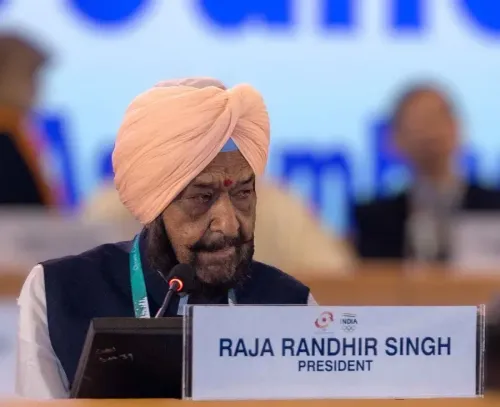
He was the first Indian elected OCA President , stepping aside in January 2025 due to health concerns.
Honours include the Arjuna Award (1979) , Olympic Order Silver (2014) , and the OCA Award of Merit (2005) .
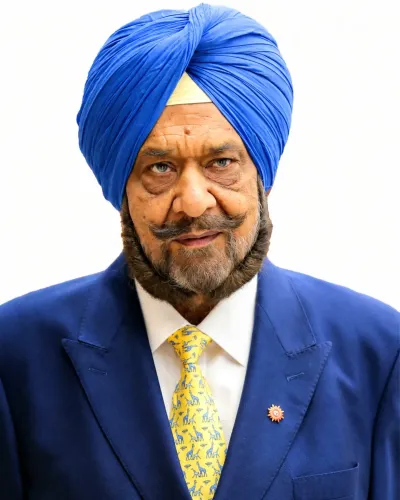
Veteran Indian shooter, five-time Olympian, and sports administrator Randhir Singh passed away on Wednesday, 27 May 2025, at the age of 79. One of the most consequential figures in Indian and Asian sports governance, Singh leaves behind a legacy spanning competitive shooting, Olympic administration, and continental sports diplomacy that few Indians have matched.
A Sporting Career Built Across Five Olympics
Born on 18 October 1946 in Patiala, Randhir Singh came from a distinguished sporting lineage — his uncle, Yadavindra Singh, represented India in Test cricket, while his father, Raja Bhalindra Singh, served as an International Olympic Committee (IOC) member from 1947 to 1992. After completing his education at Yadavindra Public School, Patiala and graduating in history from St. Stephen's College, Singh pursued golf, swimming, squash, and cricket before finding his calling in trap and skeet shooting.
He represented India at five consecutive Olympic Games — 1968 Mexico City, 1972 Munich, 1976 Montreal, 1980 Moscow, and 1984 Los Angeles — having also served as a reserve shooter at the 1964 Tokyo Olympics. At the 1978 Asian Games, he became the first Indian shooter to win a continental gold medal, claiming the individual trap shooting title. He followed that with an individual bronze and a team silver at the 1982 Asian Games.
Honours and Awards
In 1979, Singh was conferred the Arjuna Award — India's second-highest sporting honour — alongside the Maharaja Ranjit Singh Award for his athletic contributions. Later in his career, he received the OCA Award of Merit in 2005, the ANOC Merit Award in 2006, the Olympic Order (Silver) in 2014, and an Honorary Doctorate in Literature in Sports Science from the Lakshmibai National Institute of Physical Education, Government of India.
Decades at the Helm of Indian and Asian Sports Governance
Singh's administrative career was as decorated as his time on the range. He was appointed Honorary Secretary General of the Indian Olympic Association (IOA) in 1987, a role he held until 2012. Simultaneously, he served on the governing board of the Sports Authority of India (SAI) from 1987 to 2010, and as Vice-Chairman of the Organising Committee of the 2010 Delhi Commonwealth Games.
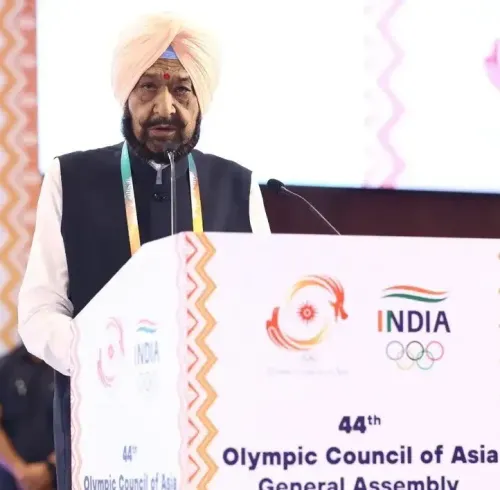
At the continental level, he served as Secretary-General of the Olympic Council of Asia (OCA) from 1991 to 2015, then as Life Vice-President until 2021, before being elevated to Acting President. He was also the Founder Secretary General of the Afro-Asian Games Council from 1998 to 2007.
Global Reach: IOC, WADA, and ANOC
Singh was a full IOC member from 2001 to 2014, subsequently continuing as an honorary member. During his IOC tenure he served on multiple commissions, including Olympic Games Study (2002–2003), Sport for All (2004–2013), Women and Sport (2006–2013), and the Coordination Committee for the 1st Summer Youth Olympic Games, Singapore (2010). He joined the ANOC Executive Council in 2002, was elected as the IOC representative on the WADA Board between 2003 and 2005, and subsequently joined WADA's Finance and Administration Committee in 2005. He also chaired the 2019 Asian Games Coordination Committee.
Final Chapter: OCA Presidency and Health Decline
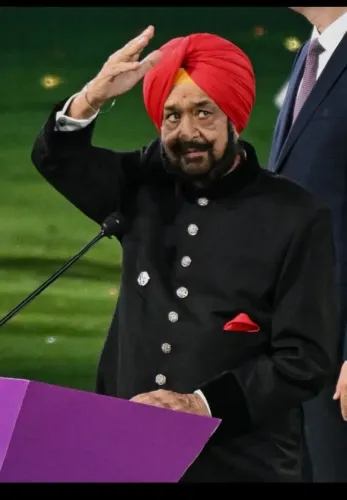
Singh made history as the first Indian elected OCA President, securing a four-year term through 2028. However, in January 2025, he stepped aside from the role due to health concerns; Sheikh Joaan bin Hamad Al Thani was subsequently elected as the new president. His passing marks the end of an era for Indian sports administration — one that stretched from an individual gold at the 1978 Asian Games to the presidency of Asia's foremost Olympic body.
Point of View
OCA, IOC, and WADA simultaneously — a combination no successor currently replicates. His stepping down from the OCA presidency in January 2025 due to health issues had already signalled the end of an era, but his passing makes the institutional vacuum concrete. India's sports governance has leaned heavily on individual relationships built over decades; the challenge now is whether the next generation can build institutional capacity rather than relying on singular careers of this scale.
NationPress
23 Oct 2026
Frequently Asked Questions
Who was Randhir Singh?
Randhir Singh was a former Indian trap and skeet shooter, five-time Olympian, Arjuna Awardee, and one of India's most influential sports administrators. He served as IOA Secretary General, OCA Secretary General, IOC member, and became the first Indian elected president of the Olympic Council of Asia.
When and where did Randhir Singh pass away?
Randhir Singh passed away on Wednesday, 27 May 2025, at the age of 79. He had stepped down from the OCA presidency in January 2025 citing health concerns.
What were Randhir Singh's biggest achievements as an athlete?
He represented India at five consecutive Olympic Games from 1968 to 1984. His standout athletic achievement was winning the individual trap shooting gold at the 1978 Asian Games — the first Indian shooter to claim a continental gold — followed by a bronze and team silver at the 1982 Asian Games.
What role did Randhir Singh play in sports administration?
Singh served as IOA Honorary Secretary General from 1987 to 2012, OCA Secretary General from 1991 to 2015, and IOC member from 2001 to 2014. He was also the first Indian elected OCA President, a role he held until stepping aside in January 2025 due to health reasons.
What awards did Randhir Singh receive?
He received the Arjuna Award and Maharaja Ranjit Singh Award in 1979, the OCA Award of Merit in 2005, the ANOC Merit Award in 2006, the Olympic Order (Silver) in 2014, and an Honorary Doctorate in Literature in Sports Science from the Lakshmibai National Institute of Physical Education.