Aakash Chopra on India Women's T20 WC exit: fitness, retiring out batters key
Synopsis
Aakash Chopra's post-mortem of India's Women's T20 World Cup 2026 exit cuts deeper than a single defeat — he's questioning whether India's cricket culture is ready to discard sentiment for strategy. The reluctance to retire out a struggling batter, a delayed finisher, and a fitness gap against Australia, South Africa, and New Zealand point to systemic issues that one tournament cycle alone may not fix.
Key Takeaways
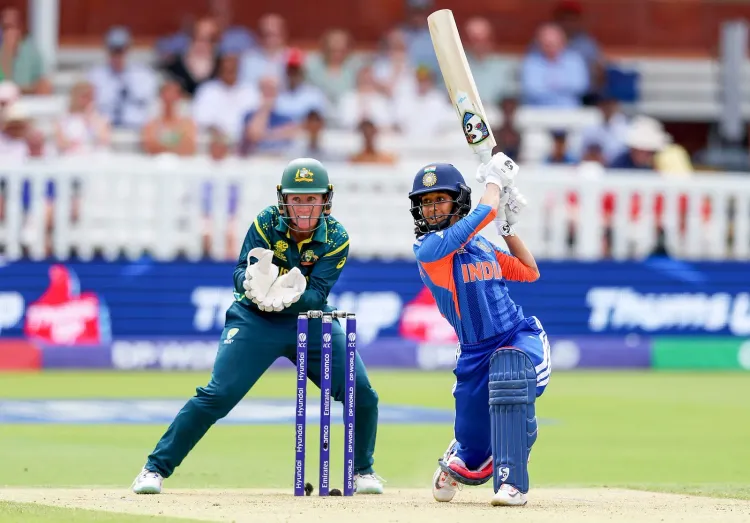
Aakash Chopra criticised India's tactics after their Women's T20 World Cup 2026 elimination against Australia .
Chopra argued that retiring out a batter mid-innings is unfairly treated as taboo, calling it a legitimate strategic tool in a 120-ball format.
He flagged the delayed use of finisher Richa Ghosh as a missed opportunity, with Shafali Verma and Smriti Mandhana playing near run-a-ball innings at the top.
Fitness was identified as the most critical improvement area for India to compete against Australia , South Africa , and New Zealand in T20s.
Chopra also questioned the timing of Jemimah Rodrigues' retirement from the format.
Despite the exit, Chopra said the squad has 'a lot of upside and the potential to create history' ahead of the next World Cup cycle.
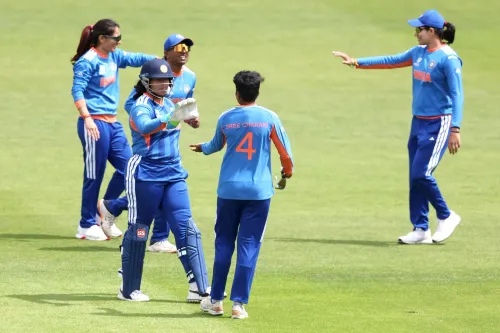
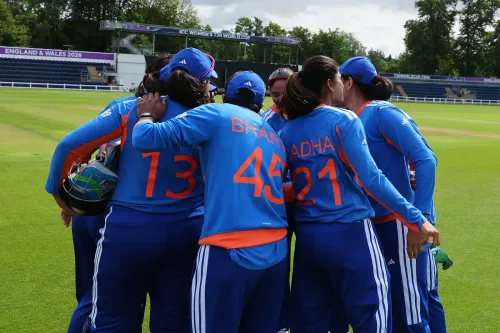
Former India opener Aakash Chopra has called out the tactical shortcomings and fitness gaps that he believes cost India at the Women's T20 World Cup 2026, following their elimination at the hands of Australia. Speaking to JioStar after India's exit, Chopra offered a candid post-mortem — questioning a missed batting reshuffle and flagging physical conditioning as the single biggest barrier between this squad and global glory.
The Case for Retiring Out Batters
Chopra's sharpest critique centred on India's reluctance to retire out a struggling batter mid-innings — a tactic that remains largely unused in women's cricket despite its legality.
'My issue is that retiring out a batter is still seen as taboo, as if retiring a batter out means you've insulted them. But that's not the case. I'll draw a simple parallel. If a bowler isn't having a great day, we don't forcefully make them bowl their full quota. So, if a batter is trying their level best and just isn't able to time the ball well, why should they bat out their entire innings? Ultimately, it's a game of 120 balls, and you have to maximise every one of them,' Chopra said.
The argument reflects a broader evolution in T20 thinking — one where resource optimisation matters as much as individual performance, and where sentiment cannot override strategy.
Richa Ghosh and the Missed Acceleration Window
Chopra also pointed to the delayed deployment of finisher Richa Ghosh as a costly tactical error, tracing the problem back to an underwhelming powerplay by openers Shafali Verma and Smriti Mandhana.
'You were already behind the eight ball when Shafali and Smriti Mandhana played almost run-a-ball innings, then Harmanpreet had to single-handedly finish the game. It's not like Richa would have started hitting sixes from the outset, but if you have resources and still don't use them well, you're just left regretting the decision of not bringing Richa in earlier,' he said.
The innings structure, Chopra implied, lacked the flexibility to course-correct once the top order failed to build momentum — a recurring vulnerability in India's T20 batting blueprint.
Fitness: The Non-Negotiable for the Next Cycle
Looking beyond the 2026 campaign, Chopra identified athletic conditioning as the area demanding the most urgent attention — particularly given the physical demands that sides like Australia, South Africa, and New Zealand bring to the shortest format.
'One area where Indian women's cricket will have to improve is fitness, and this format, especially, highlights that aspect. If you want to compete against Australia, South Africa and New Zealand in the shortest format, you'll have to be a lot fitter,' he said.
Chopra drew a clear distinction between formats: 'In the longer formats, you can still stay relevant because of your skill and craft, but when it comes to T20s, which is a dynamic format, your fielding, how well you cover the ground, and how far you can hit the ball matter a lot more.'
Jemimah Rodrigues Retirement Timing Questioned
Chopra also flagged the timing of Jemimah Rodrigues' retirement as a question worth examining, though he stopped short of elaborating on the specific impact it had on squad balance during the tournament.
Potential Intact, But Improvements Are Non-Negotiable
Despite the early exit, Chopra was measured in his overall assessment, stopping well short of writing off the squad's long-term prospects.
'This team has a lot of upside and the potential to create history, so if they have to conquer the world, by the time the next World Cup arrives, everyone should look absolutely fit and hungry,' he concluded.
The next ICC Women's T20 World Cup cycle will test whether India's cricket administration translates these observations into structured fitness mandates and more aggressive in-game tactical thinking.
Point of View
But it surfaces a deeper structural tension in Indian women's cricket: a culture that still prioritises individual sentiment over collective optimisation. The reluctance to retire out a batter is symptomatic of a broader hesitancy to make uncomfortable in-game calls — the same hesitancy that likely delayed Richa Ghosh's entry. On fitness, the gap between India and the southern-hemisphere sides is not new, yet it keeps reappearing as a post-tournament talking point rather than a pre-tournament deliverable. If the Board of Control for Cricket in India does not institutionalise fitness benchmarks with real selection consequences before the next cycle, Chopra's observations will simply be repeated after the next exit.
NationPress
29 Jun 2026
Frequently Asked Questions
Why did India exit the Women's T20 World Cup 2026?
India were eliminated from the Women's T20 World Cup 2026 after a defeat to Australia. Former India opener Aakash Chopra attributed the exit to tactical errors — including not retiring out a struggling batter and delayed use of finisher Richa Ghosh — alongside a fitness gap compared to top sides.
What did Aakash Chopra say about retiring out a batter?
Chopra argued that retiring out a batter in T20 cricket should not be treated as taboo or an insult to the player. He compared it to not forcing a bowler to complete their full quota on a bad day, saying every one of the 120 balls must be maximised.
What was Chopra's criticism of India's batting order against Australia?
Chopra said India fell behind early when Shafali Verma and Smriti Mandhana played near run-a-ball innings, leaving Harmanpreet to finish alone. He argued that deploying Richa Ghosh earlier could have changed the innings trajectory.
Why did Chopra flag fitness as a concern for India Women?
Chopra said T20 cricket rewards physical sharpness — fielding range, ground coverage, and hitting power — more than longer formats where skill and craft can compensate. He said India must be significantly fitter to match Australia, South Africa, and New Zealand in the shortest format.
What did Chopra say about India's long-term potential?
Despite the early exit, Chopra said the squad has 'a lot of upside and the potential to create history,' provided every player arrives at the next World Cup looking 'absolutely fit and hungry.'