Sachin Tendulkar unveils 'Batography' at Wankhede, 25 bats trace iconic career
Synopsis
Thirteen years to the day after Sachin Tendulkar's farewell Test at the Wankhede, the same stadium now houses 'Batography' — a museum section built around 25 bats that span his entire career, from a Kashmir willow gifted by his sister in 1978 to the bat he used in his final innings. It is the most intimate retelling yet of a career the nation lived through.
Key Takeaways
Sachin Tendulkar unveiled 'Batography' at the MCA Sharad Pawar Cricket Museum , Wankhede, on 16 November 2026 — exactly 13 years after his final Test.
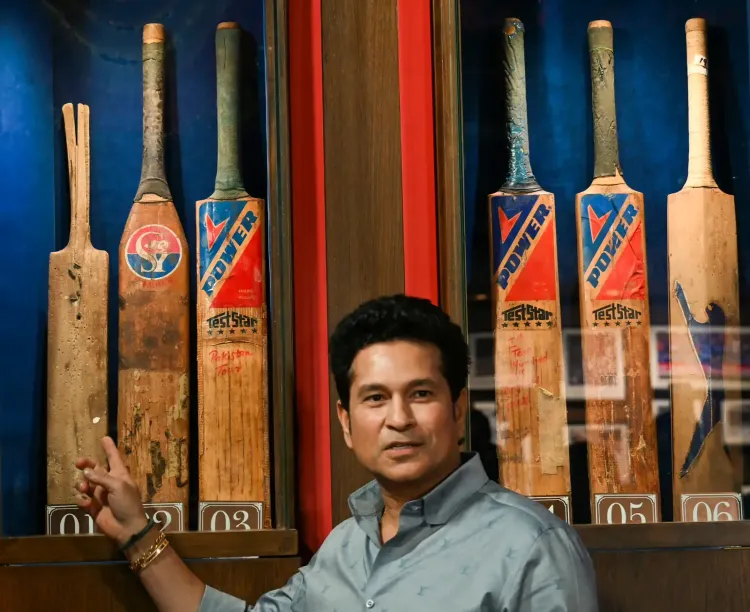
The exhibit features 25 bats tracing his career from 1978 to 2013 , along with select headgear, apparel, and personal memorabilia.
Key pieces include the bat from his maiden Test century at Manchester (1990) , a bat gifted by Sir Donald Bradman (1998) , and the bat used for his 100th international century in Mirpur (2012) .
Since India's first museum-and-stadium tour launched in October 2025 , more than 23,000 visitors have toured the MCA Museum and Wankhede.
Tickets for the Batography zone are available on District from 17 to 22 November 2026 .
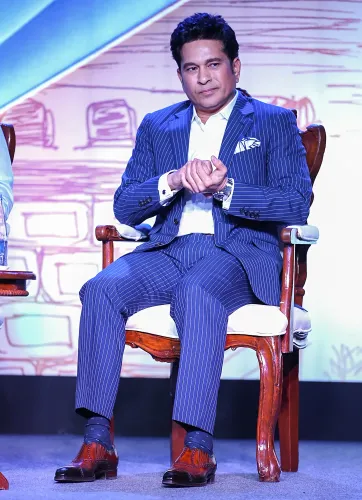
Sachin Tendulkar on 16 November 2026 unveiled 'Batography', a dedicated section at the MCA Sharad Pawar Cricket Museum in Mumbai, marking exactly 13 years since the cricket legend played his 200th and final Test match at the same venue — the Wankhede Stadium. The exhibit, featuring 25 bats that chronicle his career from 1978 to 2013, along with select headgear and apparel, was unveiled alongside Ajinkya Naik, President of the Mumbai Cricket Association (MCA).
A Career Told Through Willow
Conceptualised around the idea of narrating a cricketer's story through his primary instrument, 'Batography' presents each bat as a distinct chapter in Tendulkar's life. The collection opens with a Kashmir willow bat gifted to a five-year-old Tendulkar by his elder sister, Savita, in 1978, and closes with the bat he wielded in his final Test innings at the Wankhede.
Among the most historically significant pieces on display is the bat with which he struck his maiden Test century at Manchester in 1990, aged just 17. Also featured is the bat personally gifted to him by Sir Donald Bradman in 1998, the bat he used during the ICC Cricket World Cup 2003 — a tournament in which he was named Player of the Tournament — and the bat with which he completed his record-breaking 100th international century against Bangladesh in Mirpur on 16 March 2012.
Memorabilia Beyond the Bats
Complementing the bat collection is a curated set of memorabilia capturing defining career moments. Highlights include Tendulkar's first helmet, his Mumbai Ranji Trophy jersey, the India jersey and helmet from his 200th Test, and the handwritten sheet of paper he consulted during his farewell speech at the Wankhede. His family joined him at the unveiling, lending a deeply personal dimension to the occasion.
The significance of the venue is layered: it was at the Wankhede Stadium on 27 November 1983 that a ten-year-old Tendulkar first attended a Test match and watched his hero, Vivian Richards, score a century. That same ground later hosted the final act of one of sport's greatest careers.
What Tendulkar Said
Speaking at the event, Tendulkar reflected on the emotional weight of the collection. 'For 24 years, my life revolved around 22 yards, and through that journey, my bats were the one constant. They always felt like an extension of my arms, each bringing back memories of a particular phase, a dressing room, a pitch or the roar of a crowd,' he said.
He added: 'From picking up my first bat in 1978, the one my sister brought back from Kashmir, to the one I picked for my last international innings here at Wankhede, the journey holds memories that I share with all the people who lived those with me.'
MCA's Vision for the Museum
Ajinkya Naik, President of the MCA, described the unveiling as 'a tribute to a phenomenon', noting that since the launch of India's first museum-and-stadium tour in October 2025, more than 23,000 visitors have walked through the MCA Sharad Pawar Cricket Museum and the Wankhede. The MCA Sharad Pawar Cricket Museum houses over 20 sections spanning different eras and personalities in Mumbai and Indian cricket, with interactive spaces including a quiz room and an audio-visual room.
Tickets for the museum and the museum-and-stadium tour — both of which will now include the Batography zone — are available on District for the period from 17 to 22 November 2026. The unveiling was followed by a felicitation ceremony and a fireside conversation with Tendulkar, attended by MCA Apex Council members, family, museum staff, and media.
With the Batography zone now live, the Wankhede ceases to be merely a cricket ground — it becomes an archive of the game's most storied individual journey, open for every generation to walk through.
Point of View
And Tendulkar's name is the most powerful draw Indian cricket has. With 23,000 visitors already through the door in its first year, the museum-and-stadium tour model has legs — and Batography is designed to deepen that pull. The more interesting question is whether this signals a broader cultural shift: Indian cricket's relationship with its past has long been celebratory rather than curatorial, and a thoughtfully assembled permanent exhibit is a relatively new instinct.
NationPress
16 Nov 2026
Frequently Asked Questions
What is 'Batography' at the Wankhede Museum?
'Batography' is a dedicated section at the MCA Sharad Pawar Cricket Museum in Mumbai, featuring 25 bats that trace Sachin Tendulkar's career from 1978 to 2013. It also includes select headgear, apparel, and personal memorabilia from his collection, with each bat presented as a chapter in his life and career.
Why was 16 November chosen for the unveiling?
16 November 2026 marks exactly 13 years since Sachin Tendulkar played his 200th and final Test match against the West Indies at the Wankhede Stadium on 16 November 2013. The date was chosen to honour the anniversary of that landmark occasion at the same venue.
What are the most significant bats in the Batography collection?
Key bats include the Kashmir willow gifted by his sister Savita in 1978, the bat from his maiden Test century at Manchester in 1990, a bat gifted by Sir Donald Bradman in 1998, the bat used in the ICC World Cup 2003, and the bat with which he scored his 100th international century in Mirpur on 16 March 2012.
How can visitors see the Batography exhibit?
Tickets for the MCA Sharad Pawar Cricket Museum and the museum-and-stadium tour — both of which include the Batography zone — are available on District for the period from 17 to 22 November 2026.
How popular has the MCA Museum and Wankhede tour been?
Since India's first museum-and-stadium tour was introduced at the Wankhede in October 2025, more than 23,000 people have taken the tour, according to MCA President Ajinkya Naik. The addition of the Batography zone is intended to attract a wider audience.