Santner lauds New Zealand bowlers after near-miss vs India in Wellington ODI

Synopsis
New Zealand set just 135 yet nearly beat India — that's the story of a disciplined bowling performance that exposed the top order at Wellington. With Duffy removing Gill and Kohli cheaply and Jamieson taking three, the Black Caps showed that in seam-friendly Wellington conditions, no target is truly safe.
Key Takeaways
India won the second ODI at Hnry Stadium, Wellington by just four runs under the DLS method on 7 November .
India were struggling at 113 for 7 chasing 135 when rain ended play.
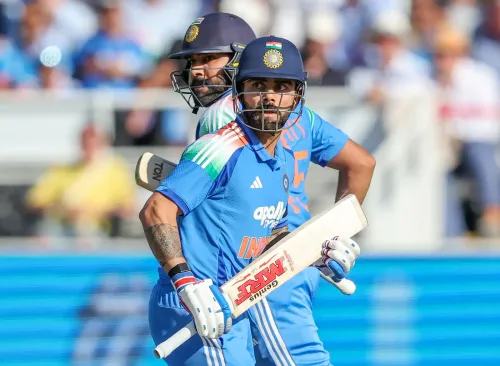
Jacob Duffy removed both Shubman Gill and Virat Kohli cheaply, then also dismissed Naman Dhir .
Kyle Jamieson finished with 3 for 35 , while stand-in Matthew Fisher replaced the concussed Blair Tickner and took a wicket.
Captain Mitchell Santner did not bowl, citing seam-friendly conditions that suited his pace attack.
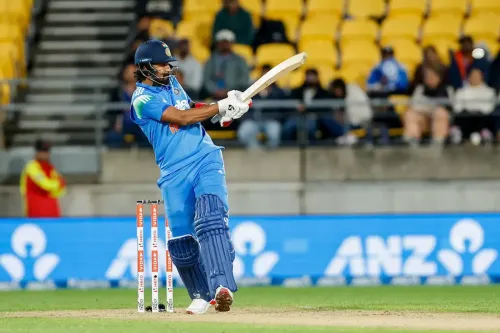
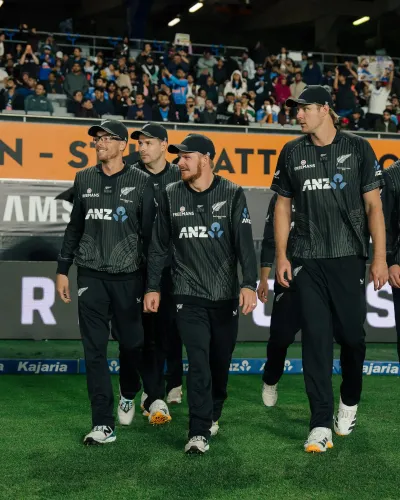
New Zealand captain Mitchell Santner heaped praise on his bowling unit after they pushed India to the brink in the second ODI at Hnry Stadium, Wellington, on Saturday, 7 November. Despite setting what appeared to be a modest target of 135, the Black Caps made the chase a genuine contest, reducing India to 113 for 7 before rain intervened — with the visitors ultimately winning by just four runs under the DLS method.
Key Bowling Performances
Jacob Duffy was the standout at the top of the order, removing in-form opener Shubman Gill and Virat Kohli for cheap scores early in the chase. Kyle Jamieson was equally threatening, finishing with figures of 3 for 35, while Duffy returned later to dismiss Naman Dhir. Matthew Fisher, who stepped in as a replacement for the concussed Blair Tickner, also chipped in with a wicket to maintain relentless pressure on the Indian batting line-up.
Santner on the Pitch and His Bowlers
'It was a tricky wicket. There's no hiding it. I think they bowled really well, especially at the top, challenged us, and obviously, wickets at the start are never ideal. But I think we were still probably a little bit under at the halfway stage, knowing that there was still a little bit in it, which was nice. And the boys bowled really well,' said Santner after the match.
He emphasised that his team's approach was disciplined rather than reactive. 'Like we said at Eden Park, it would have been easy for us to just go out there and expect things to happen. But we bowled really well. We started well, and I guess the only way to get into that target was to take wickets at the top. We managed to do that, and then I think the guys coming back in, spell after spell, managed to get the breakthroughs throughout, which is key in ODI cricket,' he added.
Why Santner Did Not Bowl
Santner also addressed why he himself did not turn out to bowl during the chase — an eyebrow-raising decision given his credentials as a frontline spinner. 'I warmed up for a little bit, but I think we got up. I think I got pulled, so I just said, "Yeah, you guys look like you're doing all right." It was one of those wickets where the seamers looked pretty challenging on. I know Axar bowled quite nicely, but the Indian quicks were in and around it as well, and they all bowled pretty well,' he explained.
Context and What It Means for the Series
The result at Wellington followed an earlier contest at Eden Park, and the two matches together have underscored New Zealand's ability to stay competitive at home even when their batting falls short. The seamers, in particular, exploited the seam-friendly conditions at Hnry Stadium to full effect. This narrow DLS defeat will serve as a reminder to India that low targets on New Zealand pitches carry genuine threat. The series now continues with both sides having taken stock of conditions that heavily favour pace bowling.
Point of View
Bouncy conditions. New Zealand, for their part, have now shown across back-to-back matches that disciplined bowling can compensate for a below-par batting effort. If India's middle order had not steadied the ship modestly, the result could have been different. The series still matters: the margins are tight enough to keep both sides honest going forward.
NationPress
7 Nov 2026
Frequently Asked Questions
What was the result of the India vs New Zealand second ODI in Wellington?
India won the second ODI at Hnry Stadium, Wellington on 7 November by four runs under the DLS method. India were 113 for 7 chasing 135 when rain halted play, making it an extremely close finish.
Who took wickets for New Zealand in the Wellington ODI?
Jacob Duffy dismissed Shubman Gill, Virat Kohli, and Naman Dhir, while Kyle Jamieson claimed 3 for 35. Matthew Fisher, replacing the concussed Blair Tickner, also took a wicket.
Why did Mitchell Santner not bowl in the second ODI?
Santner said he warmed up but held back because his pace bowlers were performing well on a seam-friendly surface. He acknowledged the conditions suited seamers more than spinners on the day.
How did New Zealand make a low target of 135 so competitive?
New Zealand's seamers exploited seam-friendly conditions at Hnry Stadium to take regular wickets throughout India's chase. Early breakthroughs against Gill and Kohli put India under sustained pressure from which they never fully recovered.
What does this result mean for the India-New Zealand ODI series?
The two-match gap in performance between the sides has been narrow, with both games tightly contested. The series continues with India holding a win, but the Wellington match exposed their top-order fragility against quality pace bowling in helpful conditions.