PV Sindhu defends athlete funding: 'Supporting players isn't bleeding the system'
Synopsis
PV Sindhu won at the Hylo Open — then returned home to a funding fight. Her social media response to criticism of state support for athletes cuts to the heart of a deeper inequity: while stars like Sindhu can attract sponsors, the 18-year-old with no name and no backing can't. The SAI-BAI deadline dispute may have a procedural answer, but Sindhu is asking a much larger question.
Key Takeaways
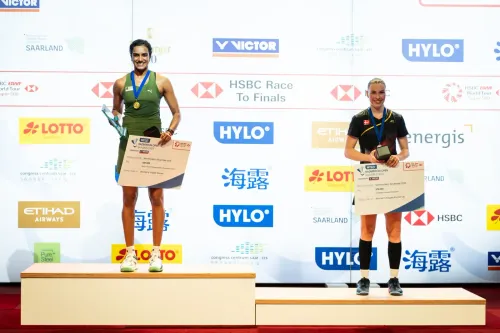
PV Sindhu and Lakshya Sen won their respective singles titles at the Hylo Open in Saarbrucken, Germany , despite the funding controversy.
SAI reportedly declined to fund the Indian contingent's four-tournament European tour after BAI missed a 30-day pre-tournament proposal deadline.
Sindhu argued on social media platform X that funding athletes is 'investing in India's sporting future' — not bleeding the system.
Several younger players competed without coaches; Tanvi Sharma reached the Denmark Open quarterfinals without any coaching support.
Ashmita Chaliha received courtside help from fellow shuttler Isharani Baruah during her French Open win over Akane Yamaguchi .
SAI maintained the revised deadline — down from 90 days to 30 days — already accommodated federation requests, and the proposal still was not submitted.
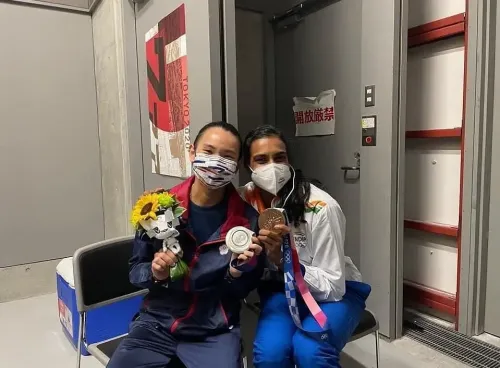
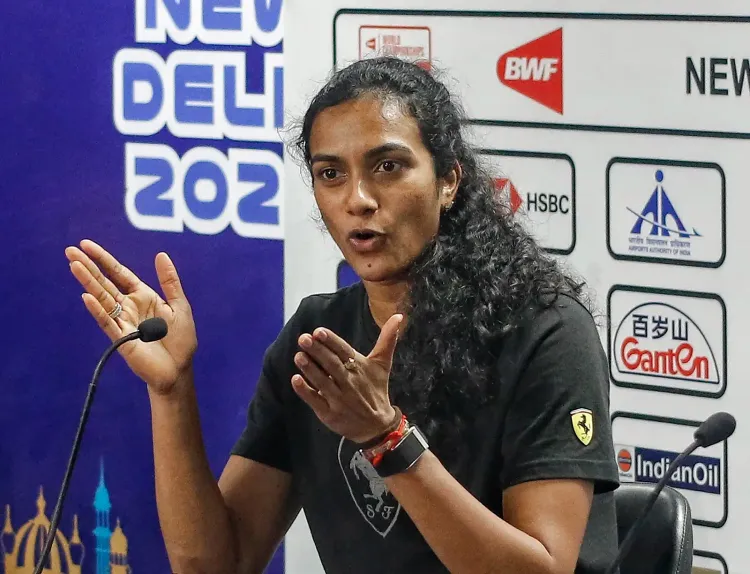
Double Olympic medallist PV Sindhu has pushed back sharply against criticism over the funding row that forced Indian badminton players to personally bear the costs of a four-tournament European tour, arguing that government support for athletes should be seen as a long-term investment in India's sporting future — not a drain on public resources.
The Funding Row Explained
The controversy centres on the Sports Authority of India (SAI)'s alleged decision not to finance the Indian contingent's campaign spanning tournaments in Finland, Denmark, France, and Germany. The issue came to national attention after Sindhu and Lakshya Sen won the women's and men's singles titles, respectively, at the Hylo Open in Saarbrucken, Germany on Sunday — a podium finish that underscored just how much had been achieved despite the absence of institutional support.
What Sindhu Said
Responding to a post on social media platform X, Sindhu drew a stark contrast between earnings in professional badminton and the costs athletes routinely incur. 'I don't think your tweet fully captures the reality of professional badminton. A first-round exit at Wimbledon earns 80,000 pounds. Winning the China Open, one of badminton's richest tournaments, earns USD 140,000. Lose in the first round? Just USD 2,000. Yet our expenses are largely similar. Travel, coaches, physios, trainers and support teams. I've had long conversations with Rohan Bopanna about this very disparity,' she wrote.
Sindhu acknowledged that established athletes should work towards financial independence — noting her own good fortune in securing sponsors — but stressed that such opportunities are not available to everyone. 'That's also why organisations like @OGQ_India are so important,' she added. She also underscored the situation faced by younger, lesser-known players who competed without coaches or pulled out of tournaments altogether due to financial constraints.
'More importantly, younger players had to compete without coaches, while several withdrew from tournaments. I can find ways to fund my tour. But what about the 18-year-old chasing her dreams, hoping to become the next Sindhu or Lakshya?' she questioned.
At the same time, Sindhu was careful to acknowledge the state's broader contribution to Indian sport. 'I must acknowledge the tremendous support the Government of India and Sports Authority of India (SAI) have extended to athletes like us over the years. Their contribution to Indian sport cannot be understated. Accountability is absolutely necessary. But supporting athletes isn't bleeding the system. It's investing in India's sporting future. And we shouldn't lose sight of that,' she wrote.
SAI's Position: Deadline Was Missed
According to sources within SAI, the funding lapse was not a policy decision but a procedural failure by the Badminton Association of India (BAI). The authority's revised guidelines require national federations to submit funding proposals — complete with player names — at least 30 days before a tournament. 'BAI did not submit their proposal within the pre-set time. Federations will also have to start acting responsibly,' an SAI official said.
The official added that earlier rules had required proposals 90 days in advance without names and 60 days in advance with names. After federations complained those timelines were too tight, SAI shortened the deadline to 30 days — yet, according to the official, the proposal was still not received. 'These new guidelines apply to everybody. If we don't have the proposal with the names 30 days before a tournament, we will not process it,' the official stated.
Impact on Players at the Tournament
The consequences of the funding gap were visible on the court. Ashmita Chaliha received informal assistance from fellow Indian shuttler Isharani Baruah during her French Open victory over Japan's Akane Yamaguchi. Young shuttler Tanvi Sharma competed entirely without a coach despite advancing to the quarterfinals of the Denmark Open — a result that both highlighted her resolve and raised questions about the support structures available to emerging talent.
Broader Implications
This episode surfaces a recurring tension in Indian sport between institutional accountability and athlete welfare. Notably, the debate has arrived at a moment when Indian badminton is at a competitive high — making the administrative lapse all the more jarring. Whether SAI and BAI resolve the procedural deadlock before the next major international cycle will determine whether the row becomes a structural reform or a one-off controversy.
Point of View
Which softens a message that deserved sharper edges. The real story here is structural: BAI's failure to meet a 30-day administrative deadline is indefensible at this level of competition, yet the solution cannot be to make funding conditional on paperwork while junior athletes pay the price. India has repeatedly produced world-class badminton talent with relatively modest infrastructure; the risk is that bureaucratic friction begins to erode the pipeline before the next generation of champions can emerge.
NationPress
3 Nov 2026
Frequently Asked Questions
Why did Indian badminton players have to fund their own European tour?
The Sports Authority of India (SAI) did not process the funding request because the Badminton Association of India (BAI) failed to submit its proposal with player names at least 30 days before the tournaments, as required under revised SAI guidelines. SAI said the deadline, already relaxed from 60-90 days to 30 days at BAI's request, was still not met.
What did PV Sindhu say about the funding controversy?
Sindhu responded on social media platform X, arguing that supporting athletes is an investment in India's sporting future rather than a burden on the system. She also highlighted the financial vulnerability of younger players who, unlike established stars, lack sponsors and cannot self-finance international campaigns.
How did the funding gap affect players at the European tournaments?
Several younger players competed without coaching support, and some reportedly withdrew from tournaments. Ashmita Chaliha was assisted by fellow shuttler Isharani Baruah during her French Open win, while Tanvi Sharma reached the Denmark Open quarterfinals without a coach.
What results did India achieve despite the funding row?
PV Sindhu won the women's singles title and Lakshya Sen won the men's singles title at the Hylo Open in Saarbrucken, Germany — notable performances that coincidentally brought the funding issue into the spotlight.
What is OGQ India and why did Sindhu mention it?
OGQ India (Olympic Gold Quest) is a non-profit organisation that provides financial and support services to elite Indian athletes. Sindhu referenced it to illustrate that private support structures exist precisely because not every athlete can rely on state funding or personal sponsorship.