Robin Singh: T10 demands 'very high skill levels', unlike any T20 game
Synopsis
Robin Singh, Team Director of Royal Desert Champions, has laid out exactly why T10 is not simply a shorter T20 — it is a format where self-doubt is fatal, every delivery is a power play, and only cricketers with fully internalised skills survive. His squad, built around Pooran, Salt, Rutherford, Naseem Shah, and Theekshana, is a direct expression of that philosophy.
Key Takeaways
Robin Singh , Team Director of Royal Desert Champions , described T10 as akin to playing the last 10 overs of a T20 game from ball one.
Singh stressed that 'skill levels have to be very high' and that self-doubt is a recipe for failure in the 60-ball format .
Royal Desert Champions pre-signed Nicholas Pooran , Phil Salt , and Sherfane Rutherford before the draft.
The franchise added Muhammad Waseem , Naseem Shah , and Maheesh Theekshana during the player draft.
Singh said the team secured roughly 80% of its draft targets, relying on a contingency strategy for the rest.
He emphasised picking seasoned cricketers capable of executing skills instantly, with no time for batters to settle.
Former India cricketer and Royal Desert Champions Team Director Robin Singh says that succeeding in T10 cricket demands skill levels far beyond what even T20 requires — because players get no time to settle, no sighters, and no room for self-doubt. Singh made the remarks in New Delhi on 10 October, offering a rare insider view of what separates the 60-ball format from its longer counterpart.
T10 vs T20: A Different Beast Altogether
'T10 is almost like playing the last 10 overs of a T20 game to some extent, or in the power plays, for that matter,' Singh said. The analogy captures the relentless pressure baked into every delivery of the format — there is simply no phase of the innings where a batter can ease in.
'You have to take a lot more risks in T10. So your skill levels have to be very high. People who are confident in their skills are the ones who succeed. If you second-guess yourself, you'll be in trouble in T10,' he added. The observation is significant: while T20 cricket has already challenged classical technique, T10 effectively eliminates the middle overs that give T20 batters even a brief window to recalibrate.
Royal Desert Champions' Draft Strategy
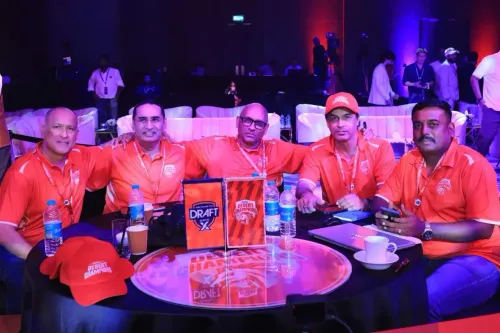
Royal Desert Champions entered the player draft with pre-signings that included Nicholas Pooran, Phil Salt, and Sherfane Rutherford. During the draft itself, the franchise added Muhammad Waseem, Naseem Shah, and Maheesh Theekshana, among others — a mix of explosive batting and match-winning bowling that reflects the format's demands.
Singh assessed the outcome pragmatically. 'We got about 80% of what we wanted from the draft. Drafts are always a bit tricky — you don't really know who you'll get because it depends on the pick before you and how people build their squad,' he said. He noted that a contingency approach is essential: 'If you don't get X, you can try and get Y to compensate. So you build a team around those things.'
What It Takes to Win in T10
Singh was emphatic that squad balance and experience are non-negotiable in a format this compressed. 'You have to try and pick a well-balanced team. Most importantly, seasoned cricketers — people who can execute skills. It's a very fast format. It's very quick. You don't have any respite. There is no time to relax. There are no sighters when you go to play. There are no free deliveries when you go to play. So you need to be on the button,' he said.
The emphasis on seasoned players over raw talent is a telling detail. In a format where a single over can swing the match, the premium is on those who have already internalised their skills under pressure — not those still refining them.
The Broader Picture for Short-Format Cricket
T10 leagues have proliferated globally over the past several years, with tournaments in the UAE and the Caribbean drawing franchise investors and international stars alike. Yet the format remains a specialist's domain — not every T20 power-hitter translates seamlessly into a T10 finisher. Singh's remarks underline why: the cognitive and technical demands of going all-out from ball one are qualitatively different from peaking in the back-end of a T20 chase. As the format matures, the gap between squads built on strategy and those assembled on star power alone is likely to widen.
Point of View
Heavy on proven match-winners like Pooran and Naseem Shah, suggests a more disciplined approach than the star-hunting that defined early T10 drafts. The deeper question is whether the format can sustain a genuine skills ecosystem, or whether it remains a novelty circuit that cannibalises T20 rosters without developing its own talent pipeline. Singh's 80% draft satisfaction rate is a modest but honest benchmark — and honesty about what you didn't get is itself a sign of strategic maturity.
NationPress
10 Oct 2026
Frequently Asked Questions
What did Robin Singh say about T10 cricket?
Robin Singh said T10 cricket demands 'very high levels of skills' because players must go all-out from the very first ball, with no time to settle or recover from mistakes. He compared the format to playing the power plays or the final 10 overs of a T20 match for the entire innings.
How is T10 cricket different from T20 cricket?
T10 cricket is a 60-ball format that eliminates the middle-overs phase where T20 batters can consolidate. According to Robin Singh, every delivery in T10 carries the intensity of a T20 power play, meaning batters must commit to high-risk, high-skill execution from ball one with no sighters or free deliveries.
Who did Royal Desert Champions sign for the T10 tournament?
Royal Desert Champions pre-signed Nicholas Pooran, Phil Salt, and Sherfane Rutherford before the draft. They subsequently added Muhammad Waseem, Naseem Shah, and Maheesh Theekshana, among others, during the player draft.
How did Robin Singh rate the Royal Desert Champions' player draft?
Singh said the franchise secured roughly 80% of what it targeted in the draft. He acknowledged that drafts carry an element of unpredictability, noting the team relied on a contingency strategy — targeting alternative players when first-choice picks were unavailable.
What qualities does Robin Singh look for in T10 players?
Singh prioritises seasoned cricketers who can execute their skills instantly under pressure. He specifically highlighted the need for a well-balanced squad, warning that players who second-guess themselves will struggle in a format that offers no respite at any point in the game.