Sonic edge-detection technology debuts in DRS for IND-NZ series 2026
Synopsis
For the first time in international cricket, 'Sonic' — a New Zealand-designed audio analysis tool for bat-ball contact detection — will be live inside DRS during India's tour of New Zealand. With BCCI and ICC sign-off secured after extensive validation, this series doubles as the global debut of a technology that could reshape how the third umpire calls edges.
Key Takeaways
Sonic edge-detection technology will be used in DRS for the first time during the India tour of New Zealand , starting 22 October 2026 .
Virtual Eye , ICC-accredited for ball-tracking since 2008 , will now supply the full DRS technology suite for the series.
The rollout has been approved by both the ICC and the BCCI following extensive testing and independent validation.
Future use of Sonic remains subject to the ICC's ongoing accreditation and approval processes.
India's tour comprises a 5-match T20I series , 5 ODIs , and 2 Tests , with the tour concluding on 1 December 2026 .
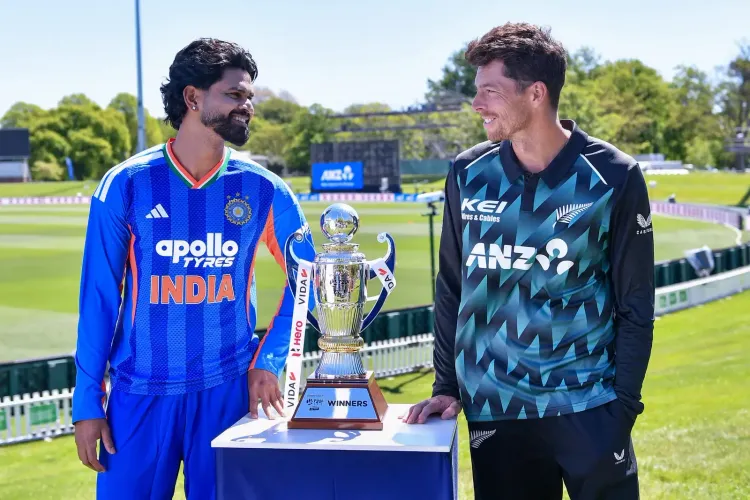
New Zealand Cricket (NZC) has confirmed that 'Sonic' — a New Zealand-designed edge-detection technology — will be used as part of the Decision Review System (DRS) for the first time during the multi-format India tour of New Zealand, beginning Thursday, 22 October 2026. The integration marks a significant step in cricket officiating technology, bringing audio-based bat-ball contact analysis to international cricket's highest stage.
What Sonic Technology Does
Sonic uses advanced audio analysis to assist third umpires when reviewing potential bat-ball contact — an area that has long been among the most contested in DRS reviews. The technology is designed to complement existing ball-tracking and edge-detection tools, giving officials a more comprehensive set of signals before delivering a verdict.
The approval means Virtual Eye — which has held ICC accreditation for ball-tracking since 2008 — will now supply the full suite of DRS technology for the series. Notably, Virtual Eye's expanded role consolidates multiple officiating tools under a single, accredited provider for the first time.
Testing, Validation and Approvals
According to NZC, the rollout follows an extensive programme of testing, validation, and independent assessment conducted in consultation with the International Cricket Council (ICC). Crucially, it has also received the backing of the Board of Control for Cricket in India (BCCI) — a prerequisite given India's stature and influence in global cricket governance.
NZC Chief Marketing and Commercial Officer Glenn Critchley said: 'The integrity of decision-making is fundamental to the game, which is why such a comprehensive testing and assessment process has been undertaken. The technology has been subject to extensive validation and independent review, and we're pleased with the outcome of that process. We'd like to thank the ICC, BCCI, Sky and Virtual Eye for their collaboration and commitment throughout.'
Ben Taylor, Chief Executive Officer of Virtual Eye, added: 'Our team has worked tirelessly developing and refining this technology, with a strong focus on accuracy, consistency and meeting the standards expected at the highest level of international sport.'
NZC also clarified that any future use of Sonic beyond this series remains subject to the ICC's ongoing accreditation and approval processes — meaning this series functions, in part, as a high-profile live test at the international level.
Series Format and Schedule
India's all-format tour of New Zealand opens with a five-match T20I series, followed by five ODIs. The tour concludes with two Tests, with the second red-ball game scheduled to end on 1 December 2026. The Sonic technology will be operative across all formats throughout the three-series tour.
Why This Matters for Cricket
DRS has been a flashpoint since its introduction, with edge-detection in particular drawing scrutiny over perceived inconsistencies. The addition of Sonic addresses a known gap — audio analysis of potential contact — that existing visual and snickometer-based tools do not always resolve cleanly. This comes amid broader ICC efforts to standardise officiating technology across member boards. If Sonic performs to expectations across this high-profile series, it could accelerate its adoption globally.
Point of View
Namely edge detection on faint bat-ball contact, where snickometer and Hot Spot have historically produced conflicting readings. The BCCI's backing is the real story: India's approval has historically been the bottleneck for new officiating technology in cricket, and its sign-off here signals a rare alignment between NZC, ICC, and India's board. If Sonic performs cleanly across 12 matches spanning three formats, the pressure on the ICC to fast-track global accreditation will be significant — and the days of edge-detection disputes as cricket's defining controversy could be genuinely numbered.
NationPress
22 Oct 2026
Frequently Asked Questions
What is Sonic technology in cricket DRS?
Sonic is a New Zealand-designed audio analysis technology that assists third umpires in determining potential bat-ball contact during DRS reviews. It analyses sound data to detect edges, complementing existing visual tools like Hot Spot and ball-tracking.
When is Sonic being used in DRS for the first time?
Sonic is being deployed in international cricket for the first time during the India tour of New Zealand, beginning 22 October 2026. The approval covers all formats of the three-series tour.
Has the BCCI approved Sonic technology for DRS?
Yes. The Board of Control for Cricket in India (BCCI) has supported the use of Sonic technology for this series, alongside ICC approval. The rollout followed extensive testing, validation, and independent assessment conducted in consultation with the ICC.
What role does Virtual Eye play in DRS for this series?
Virtual Eye, which has been ICC-accredited for ball-tracking since 2008, will now provide the complete suite of DRS technology for the India-New Zealand series, including the newly integrated Sonic edge-detection system.
Will Sonic be used in future international series beyond India-New Zealand?
That remains subject to the ICC's ongoing accreditation and approval processes, according to NZC. The India-New Zealand series effectively serves as the technology's first live international test, and any broader rollout will depend on its performance and subsequent ICC review.