Is Snicko Technology the Worst? Starc Calls for Its Removal After Adelaide Test Controversy
Synopsis
Australian cricketer Mitchell Starc has called for the removal of Snicko technology following dubious umpiring decisions in the ongoing Ashes Test at Adelaide Oval. The controversial calls have raised questions about the reliability of Snicko, with players and fans alike expressing frustration. What does this mean for cricket technology moving forward?
Key Takeaways
Controversial umpiring decisions raise questions about technology reliability.
Mitchell Starc's strong views on Snicko highlight player frustrations.
Calls for reassessment of umpiring technology in cricket.
Impact of technology on game integrity is under scrutiny.
Players and fans demand improvements in officiating standards.
Adelaide, Dec 18 (NationPress) The contentious umpiring at the Ashes continued into Day 2 of the ongoing third Test at the Adelaide Oval, with Australian fast bowler Mitchell Starc voicing his discontent, declaring that the Snicko technology should be 'dismissed.'
Pat Cummins delivered a sharply aimed short ball that unexpectedly rose on Smith, forcing him to leap defensively. The ball deflected towards first slip, where Usman Khawaja lunged forward, leading to an emphatic Australian appeal for a catch.
The on-field umpire opted to send the decision for review amid uncertainty regarding contact with bat or glove and whether the catch was legitimate. Replays revealed that the ball had hit Smith's helmet, not his gloves, despite a spike on the Snicko. It also bounced before reaching Khawaja, resulting in a not-out decision.
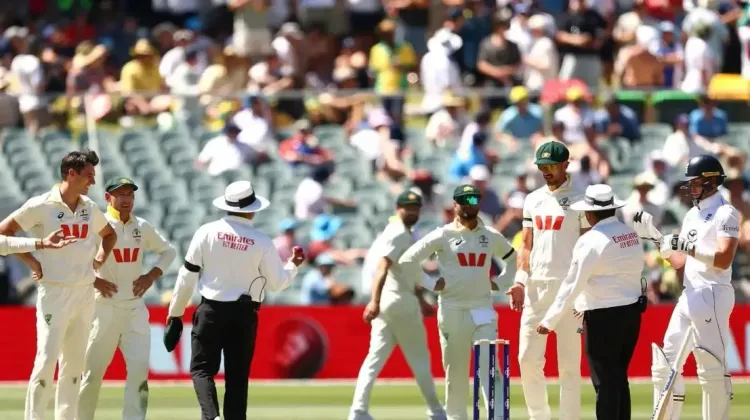
In the midst of the Snicko debate, Starc was caught on the stump mic expressing his opinion to the umpire and teammates, remarking, "Snicko needs to be sacked. That’s the worst technology there is… They made a mistake the other day and another one today."
Shortly after, England faced another controversy, with the Snicko meter again under scrutiny after Jamie Smith was controversially given out. Captain Ben Stokes was visibly upset with the third umpire’s ruling, despite replays indicating a clear gap between bat and ball, raising doubts about the Snicko technology's reliability.
Cummins bowled a short delivery to the England wicketkeeper, who attempted a pull shot but failed to connect cleanly. The ball went through to the wicketkeeper, prompting on-field umpire Nitin Menon to refer the decision to the third umpire to verify if the catch was valid.
Menon did not make an initial call and neither team opted to use a DRS challenge. After a thorough review, third umpire Chris Gaffaney determined that the ball had been caught cleanly by wicketkeeper Alex Carey and declared Smith out.
Even though video replays showcased a clear gap between bat and ball, Snicko indicated a spike right after the ball passed the bat, which ultimately swayed the third umpire's decision.
Point of View
I recognize the valid concerns raised by players regarding umpiring technologies like Snicko. While technology aims to enhance the game, it must be reliable and trustworthy. The ongoing debates during the Ashes highlight the need for continuous evaluation and improvement of these systems to maintain the integrity of cricket.
NationPress
5 Oct 2026
Frequently Asked Questions
What is Snicko technology?
Snicko technology is a form of ball-tracking technology used in cricket to detect whether the ball has made contact with the bat or glove, indicated by a spike on the screen.
Why did Mitchell Starc criticize Snicko?
Mitchell Starc criticized Snicko after controversial umpiring decisions during the ongoing Ashes Test, suggesting that the technology is unreliable and should be removed.
How did the umpiring decisions affect the game?
The umpiring decisions, influenced by Snicko readings, led to protests from players and fans, raising concerns about the credibility of technology in officiating cricket matches.