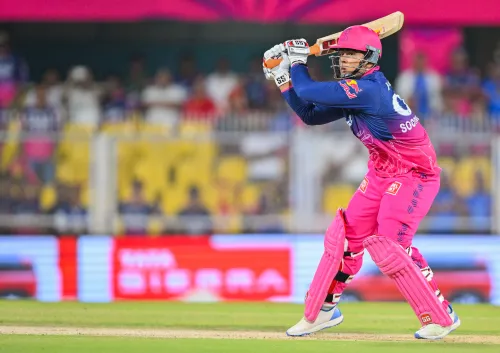
Dale Steyn: Sooryavanshi's fearless hitting reflects cricket's cultural shift
Synopsis
Dale Steyn's take cuts deeper than a typical player tribute — he argues the real revolution in cricket isn't physical, it's cultural. Coaches who accept failure, commentators who no longer punish risk, and a media ecosystem that celebrates aggression have collectively unlocked a generation of fearless match-winners. Sooryavanshi hitting ball one for six isn't an outlier; it's the new normal.
Key Takeaways
Dale Steyn says modern cricket's fearless batting culture is driven by coaches and commentators who accept failure rather than punish risk.
He cited Vaibhav Sooryavanshi , Dewald Brevis , and Tristan Stubbs as examples of the new generation empowered by this environment.
Steyn compared today's attackers to rare predecessors like Sanath Jayasuriya and Virender Sehwag , who were considered novelties 10–15 years ago .
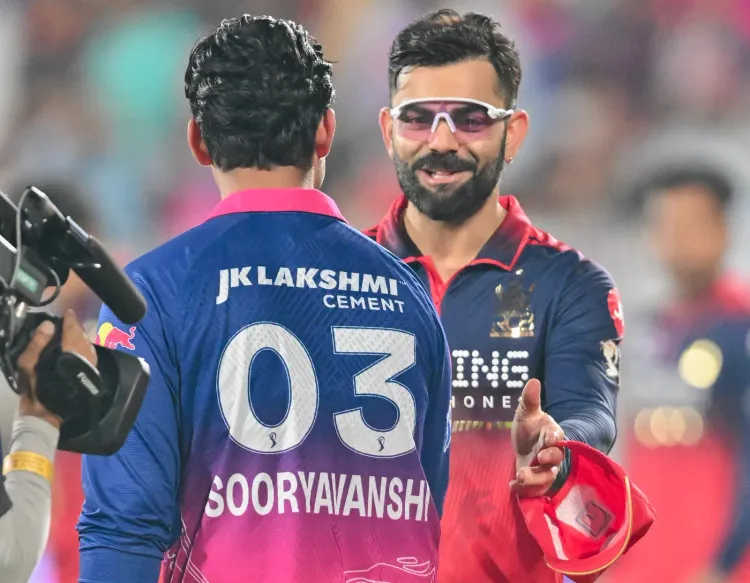
He praised Virat Kohli's longevity as a product of exceptional self-drive — a different but equally valid form of greatness.
Steyn made his remarks in an interaction facilitated by SA20 ahead of Season 5 .
South African pace legend Dale Steyn has argued that the audacious batting style of today's young cricketers — typified by Vaibhav Sooryavanshi hitting the first ball of his innings for six — is not simply a matter of raw talent, but the product of a fundamental cultural transformation in how the game is coached, analysed, and communicated. Steyn shared his views in an interaction facilitated by SA20 ahead of Season 5.
A New Culture of Accepting Failure
Steyn pointed to a generational shift in coaching philosophy as the primary driver of modern cricket's attacking ethos. 'We're seeing a good combination of current coaches who are ex-players of the current game, are more understanding of failure. And in 2020, there's a lot of failure. You know, you fail way more than you succeed. And every now and then you have one or two seasons where you blow the lights out and you do extremely well,' he said.
According to Steyn, coaches and commentators of an earlier era would have publicly criticised players for taking risks — a practice that has all but disappeared. 'That has allowed a fearless brand of cricket. Because a player is now not scared that if he plays a bad shot, he's going to be abused on TV. Or he's going to have a coach say to him, that was a bad shot. Whereas maybe, call it 10 years ago, that may have been the case,' he observed.
Sooryavanshi, Brevis, Stubbs — The New Breed
Steyn cited Vaibhav Sooryavanshi, Dewald Brevis, and Tristan Stubbs as emblematic of the new generation empowered by this environment. He drew a direct comparison with the rare few who played similarly aggressive cricket a decade or more ago.
'That's why we see guys like Sooryavanshi walking out there and first ball hitting it for six. If you cast your mind back 10 or 15 years ago, there weren't many players that would do that. There was a handful of players that would do that. Sanath Jayasuriya may have been somebody that would do that as an opening batter? Maybe Virender Sehwag. But, you know, they were a novelty,' Steyn noted.
He stressed that what was once considered a novelty — or even recklessness — is now an accepted and celebrated mode of play. 'It wasn't something that happened on a day-to-day basis. And if they did fail, they would say, oh, that's the way that they play. But if a new player tried that, they would be abused. We don't do that anymore,' he added.
Bowlers Too Are Playing Without Fear
Steyn extended his analysis beyond batting, arguing that the same freedom now defines modern bowling. Rather than obsessing over economy rates, bowlers are encouraged to prioritise wicket-taking, even at the cost of runs.
'Bowlers are not scared of going for 20 runs an over or 15 runs an over. They are trying to take wickets. They are trying to break the game open. That is their main goal,' he explained. 'If you bowl four overs for 40, you've done incredibly well. Maybe try and pick up a couple wickets to really break the game open,' he said, reflecting a philosophy that would have been considered heresy in an earlier era.
Kohli's Longevity: A Different Kind of Greatness
While celebrating the new wave of fearless talent, Steyn also reserved considerable admiration for Virat Kohli, framing the Indian batting star's career as a testament to mental fortitude and relentless self-improvement.
'His ability to sustain, his mental approach to the game, stay fresh, and stay wanting to continue to perform says a lot about him. He's got a lot of self-drive, which is something that I think all of us cricketers had in my era. That's the only thing that we had. We just wanted to get better every single year,' Steyn said.
The contrast Steyn draws is instructive: where today's youngsters thrive on a culture of external acceptance, Kohli's longevity has been powered by internal drive — a quality Steyn considers timeless.
The Game's Language Has Changed
Steyn concluded with a broader reflection on how the entire ecosystem around cricket — from spectator understanding to media commentary — has evolved in tandem with the players. 'The thinking in terms of the game is gone. The language in terms of the game is gone. And the communication in terms of what we are telling the viewers, the spectators — their understanding of the game has advanced,' he said.
He expressed optimism that this collective progress is pushing the sport toward new heights. 'Everyone's working together to see this game go and elevate to another level. I think we're all on the right path right now,' Steyn concluded. As SA20 Season 5 approaches, his words offer a timely lens through which to view the next generation of match-winners taking centre stage.
Point of View
And that's what makes it worth examining. He is essentially arguing that cricket's run-scoring explosion is not purely a skills story — it is a permission story. When the ecosystem stops punishing failure, players stop fearing it, and the game's ceiling rises. The uncomfortable implication is that previous generations may have been held back less by ability than by culture. Kohli's longevity, which Steyn contrasts with the new wave, also raises a quieter question: as external validation becomes the norm, will the next generation develop the internal drive that sustained careers across formats and decades? That tension — between fearlessness and fortitude — may define cricket's next chapter.
NationPress
26 Oct 2026
Frequently Asked Questions
What did Dale Steyn say about Vaibhav Sooryavanshi?
Steyn used Sooryavanshi as a prime example of the fearless modern batter, noting that 'guys like Sooryavanshi walking out there and first ball hitting it for six' reflects a broader cultural shift in cricket. He said such aggression from ball one was a rarity 10–15 years ago, limited to players like Sanath Jayasuriya and Virender Sehwag.
Why does Dale Steyn think young cricketers are more fearless today?
Steyn attributes it to a cultural change in coaching and commentary — coaches who are former players now accept failure as part of the game, and commentators no longer publicly criticise players for taking risks. This has given young players the freedom to express themselves without fear of backlash.
What did Steyn say about Virat Kohli?
Steyn praised Kohli's longevity, calling his ability to 'stay fresh and stay wanting to continue to perform' a sign of exceptional self-drive. He contrasted Kohli's internal motivation with the external-acceptance environment that empowers today's younger players.
What was the context of Dale Steyn's interview?
Steyn gave the interview in an interaction facilitated by SA20 ahead of Season 5 of the league. He spoke broadly about the evolution of cricket culture, covering batting, bowling, coaching, and commentary.
How has the culture around bowlers changed, according to Steyn?
Steyn said bowlers are no longer judged primarily on economy rates. The modern expectation is wicket-taking, even if it costs runs — a shift from the older view that going for 10 runs an over was a failure. He argued this freedom has made bowlers more aggressive and effective match-breakers.