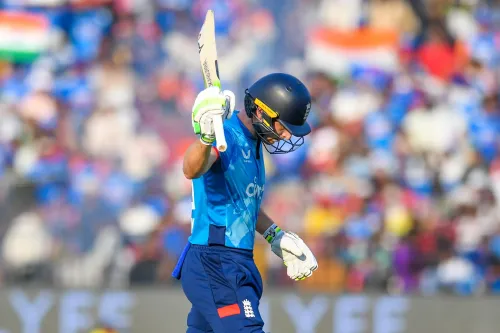
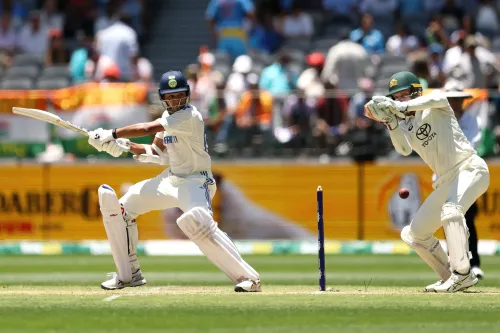
Daryll Cullinan: All-format batters a myth, cricket needs specialist squads

Synopsis
Daryll Cullinan’s Cricinfo column lands as a direct challenge to cricket’s governing bodies: the all-format superstar is no longer a realistic standard, and chasing one is actively damaging Test cricket. Using India’s IPL-to-UK transition as his sharpest example, the former Proteas batter argues the only credible fix is format-specific squads — and that boards protecting commercial star power are the ones standing in the way.
Key Takeaways
Daryll Cullinan argued in a Cricinfo column on Monday that the era of the true multi-format batter is over.
He cited India’s UK tour — where players moved directly from the IPL into international cricket — as a stark example of inadequate format preparation.
Cullinan blamed T20 -centric coaching for producing ‘hybrid techniques’ that break down under Test conditions.
He criticised ‘Bazball’ for giving players ‘permission to ignore’ the toughest demands of Test batting.
His solution: specialist squads , dedicated coaching, and separate player development pathways for each format.
He warned that boards prioritising commercial star power over format integrity risk a decade of underperformance.
Former South Africa batter Daryll Cullinan has argued that modern cricket is deceiving itself by demanding players perform at the highest level across all three formats, asserting in a column for Cricinfo on Monday that the era of the genuine multi-format batter is over and that dedicated specialist squads are now an urgent necessity.
The Core Argument
Cullinan contended that contemporary scheduling pressures, commercial imperatives, and T20-centric coaching philosophies have produced a generation of batters with what he described as a ‘hybrid technique’ — one that fractures under the rigours of Test cricket.
“Producing a batter equally accomplished across all three formats of the game is no longer achievable in cricket. Such a player represents a batting pinnacle that asks too much, and performances have suggested this for long now, yet coaches continue to believe otherwise,” Cullinan wrote.
He argued that the modern batter is shuttled from franchise cricket to international T20s, then to 50-over cricket, before being expected almost overnight to produce a Test-match game in entirely different conditions. “One week he is encouraged to attack from ball one and the next he must leave patiently outside off stump, play with limitations against movement, or survive pace and bounce abroad. Cricket has gone there. Player development has not,” he stated.
India’s UK Tour as a Case Study
Cullinan pointed to India’s recent tour of the United Kingdom as a vivid illustration of the problem, noting that players arrived directly from the Indian Premier League (IPL) without adequate preparation for the conditions ahead.
“After two defeats to Ireland on dibbly-dobbly wickets, England exposed India’s difficulties against pace and bounce in an embarrassing manner at Trent Bridge. So much so, the T20 world champions were reduced to merely gifted players being asked to produce a game for which they had not prepared. More concerningly, all appeared uncertain about what that game actually looks like,” he added.
On Coaching Methods and Muscle Memory
Cullinan was sharply critical of modern coaching philosophies, arguing that current preparation methods prioritise power-hitting over foundational technical discipline. He invoked a widely cited principle: “Under pressure, the body does not reproduce the meeting. It reproduces the training.”
He also took aim at the ‘Bazball’ approach, arguing it did not liberate batting but instead “gave a generation of players permission to ignore its toughest demands and call it freedom.” He stressed that adaptation — not aggression alone — has always been the defining skill in run-scoring: “No amount of positive thinking can help a batter play a seaming ball late if the technique to do so has never been built.”
The Case for Specialist Squads
Addressing administrators and boards reluctant to break up multi-format stars for commercial reasons, Cullinan called for a structural overhaul. He advocated for specialist coaching, dedicated player development pathways, and exclusive squads built around the technical, mental, and environmental demands of each format.
“The exceptional multi-format batter will still occasionally emerge and their rarity will make them even more valuable. But exceptions cannot be the basis of a national strategy,” he wrote. He concluded with a direct challenge to cricket’s decision-makers: “Protect the integrity of each format, select players who are fully committed and properly prepared for its unique demands, and cricket will create a stronger commercial product, not a weaker one. The teams with the courage to act first will move decisively ahead of those still hedging.”
What This Means for the Game
Cullinan’s column arrives as several major cricket boards grapple with fixture congestion and the growing influence of franchise leagues on player availability and technique. His argument reflects a broader debate within the sport about whether the pursuit of universal cricketers is undermining standards in the longest format. How boards respond — particularly those with the most to lose commercially — will shape the next phase of international cricket’s evolution.
Point of View
ECB, and Cricket Australia. His India-UK example is well-chosen but incomplete; England’s own Bazball era produced Test wins while simultaneously accelerating the technique erosion he describes. The deeper contradiction is that the same broadcasters funding Test cricket are the ones driving T20 expansion. Specialist squads are the logical answer to a scheduling crisis that the sport’s power brokers created and continue to profit from.
NationPress
17 Sept 2026
Frequently Asked Questions
What is Daryll Cullinan’s argument about multi-format batters?
Cullinan argues that producing a batter equally accomplished across all three formats — T20, ODI, and Test — is no longer achievable given modern scheduling and T20-centric coaching. He wrote in a Cricinfo column that the era of the true multi-format batter is effectively over and that dedicated specialist squads are urgently needed.
Why did Cullinan cite India’s UK tour as an example?
Cullinan used India’s tour of the United Kingdom as a case study because the team arrived directly from the IPL without meaningful preparation for English conditions. He noted that after two defeats to Ireland, England exposed India’s weaknesses against pace and bounce at Trent Bridge, which he described as an ‘embarrassing’ illustration of the format-transition problem.
What did Cullinan say about Bazball?
Cullinan argued that Bazball ‘did not liberate batting’ but instead gave a generation of players permission to ignore the toughest demands of Test cricket and call it freedom. He said it arrived in a game whose technique and mentality were already shifting toward power-hitting, accelerating the erosion of foundational skills.
What solution does Cullinan propose for cricket boards?
He calls for a clean break: specialist coaching tailored to each format, dedicated player development pathways, and exclusive squads built around the technical, mental, and environmental demands of T20, ODI, and Test cricket separately. He argues this would strengthen cricket’s commercial product rather than weaken it.
Who is Daryll Cullinan?
Daryll Cullinan is a former South Africa batter who played Test, ODI, and domestic cricket for the Proteas. He is now a cricket columnist and commentator, and wrote this analysis for Cricinfo.