Tilak Varma credits Rohit Sharma's off-field lessons for leadership growth
Synopsis
Tilak Varma's rise to India's T20I vice-captaincy isn't accidental — it was built in the dugout, watching Rohit Sharma manage bowlers from the outside. Now partnering Shreyas Iyer at the helm, Varma reveals how sideline observation, a tough positional shift down the order, and nightly visualisation routines are quietly shaping one of India's next leadership fixtures.
Key Takeaways
Tilak Varma credits off-field observation of Rohit Sharma's captaincy — at MI and with India — for shaping his leadership instincts.
Varma now serves as T20I vice-captain alongside captain Shreyas Iyer , with responsibilities spanning off-field team bonding and player management.
He described the shift from No.
6/7 as 'really tough', requiring separate mental and technical preparation for older-ball conditions.
India lead the T20I series against the West Indies 1-0 after an eight-wicket win in Lucknow ; the second game is in Ranchi on Friday .
Varma uses pre-match visualisation — mentally rehearsing scenarios against the opposition's best bowlers — as a key preparation tool.
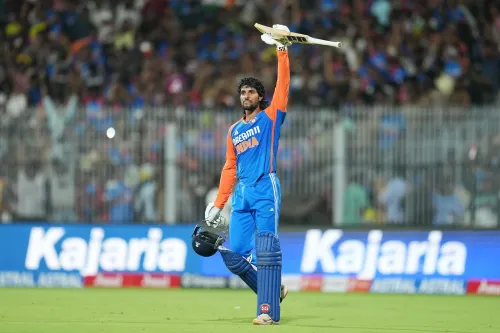
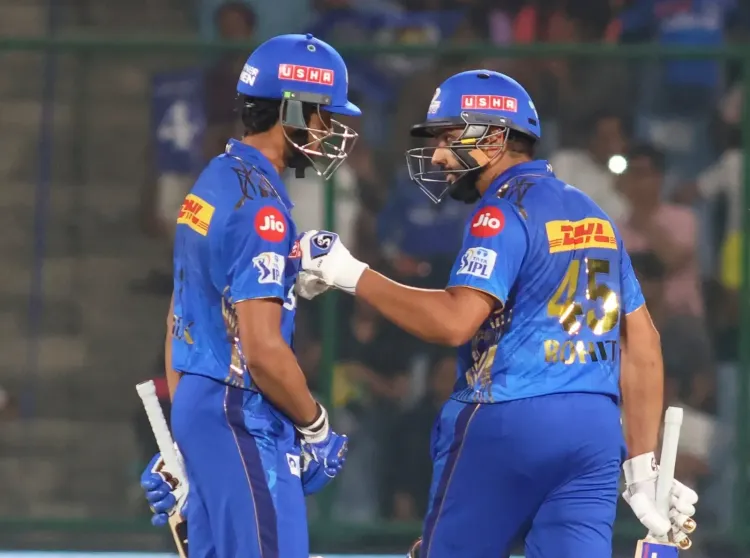
Tilak Varma, India's T20I vice-captain and left-handed batter, has credited his off-field observations of Rohit Sharma as the foundation of his evolving understanding of leadership and match awareness. Speaking in an interview with JioStar, Varma opened up on his journey from emerging middle-order prospect to key finisher and now deputy skipper in India's T20I setup.
Learning from Rohit Sharma
'I haven't played under Virat bhai's captaincy but have played under Rohit bhai's captaincy, both in MI and also in the Indian team. So, I have learned a lot of things from him,' Varma said. He explained that the intensity of live match situations makes real-time absorption of tactical lessons difficult, which is why off-field discussions proved more valuable.
'When Rohit bhai and Virat bhai were playing, I didn't use to be in the playing eleven. So, sitting outside, I used to observe which bowler Rohit bhai brings on and when, how he uses the bowlers. I used to observe all those things from him, and I've incorporated that into my own approach now while being on the field,' he added.
What the Vice-Captaincy Means to Him
Now serving as deputy to T20I captain Shreyas Iyer, Varma acknowledged that the vice-captaincy carries responsibilities that extend well beyond the boundary rope. 'First of all, it's a responsibility. So, people start looking at you differently than before, like slightly more senior,' he said.
He noted that team atmosphere, off-field player interactions, and managing individual mindsets form a significant part of the role. 'In a team sport, players have their ups and downs, so I observe how you interact with the youngsters and where everyone stands. I look at all of that, and when I get an opportunity on the field, I will use my brain as well,' Varma said.
Adapting from Top Order to Finisher
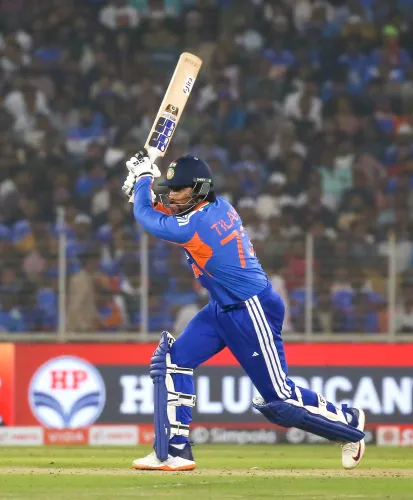
Varma was candid about the difficulty of shifting down the batting order. 'I always love batting at number three,' he said, adding that from his Under-19 World Cup days as an opener to his IPL stints at No. 4, 5, and 6, every positional shift demanded fresh mental recalibration.
'When you are a number three or four player and then you bat at six or seven, that transition has been really tough,' he acknowledged. The mechanical adjustments were equally demanding — older balls, slower deliveries, and yorkers replace the seaming conditions top-order batters routinely face. 'I prepared myself mentally accordingly and accepted that I have to perform here. Once I did that, I worked on it in practice,' he said.
Visualisation as a Match-Day Tool
With India having taken a 1-0 lead over the West Indies following an eight-wicket win in Lucknow, and the second T20I scheduled for Friday in Ranchi, Varma also detailed the visualisation routine that keeps him composed at the crease.
'When a game is approaching, like if there's a game tomorrow, I visualise; I think about which bowlers the opposition has... Before going to sleep, I just visualise that I'm walking in at this position,' he said. By mentally rehearsing scenarios involving the opposition's best bowlers, Varma ensures that nothing surprises him when he steps out to bat. 'Then, when I go onto the field, I'm not surprised... I always prepare for the best. Then, if some other bowler comes on, it becomes easier,' he added.
As India's T20I cycle under Iyer takes shape, Varma's blend of technical adaptability and quiet leadership instinct signals a long-term role both with the bat and in the dressing room hierarchy.
Point of View
Not just batting. What is notable is the institutional knowledge transfer — Rohit Sharma's tactical instincts being absorbed and passed down through observation rather than formal mentoring. If Varma's on-field execution eventually matches his off-field awareness, India may have found both a finisher and a future captain in the same package.
NationPress
7 Oct 2026
Frequently Asked Questions
What has Tilak Varma said about Rohit Sharma's influence on his leadership?
Tilak Varma said he closely observed Rohit Sharma's captaincy decisions — particularly bowler rotations and usage — while sitting out of the playing eleven, and has since incorporated those observations into his own on-field approach. He credited these off-field discussions and observations at both Mumbai Indians and with the Indian team as central to his understanding of leadership nuances.
What is Tilak Varma's role in the current India T20I setup?
Tilak Varma is currently India's T20I vice-captain, serving as deputy to captain Shreyas Iyer. He described the role as carrying additional off-field responsibilities including team bonding, managing player mindsets, and interacting with younger squad members.
How has Tilak Varma adapted to batting in the lower order?
Varma acknowledged that transitioning from his preferred top-order positions to batting at No. 6 or 7 was 'really tough', requiring separate preparation for older-ball conditions such as slower deliveries and yorkers. He said he worked extensively in practice and mentally accepted the role before executing it successfully in matches.
What is the current India vs West Indies T20I series score?
India lead the T20I series 1-0 after an eight-wicket win in Lucknow. The second match of the series is scheduled for Friday in Ranchi.
How does Tilak Varma prepare mentally before a match?
Varma uses structured visualisation before matches, mentally rehearsing scenarios against the opposition's best bowlers the night before a game. He said this ensures he is not caught off guard by any situation when he walks out to bat, and attributes improved match results to this routine.