FIFA World Cup: UEFA blasts FIFA over Balogun ban reversal after Trump push
Synopsis
FIFA suspended Folarin Balogun's one-match World Cup ban after U.S. President Trump personally lobbied FIFA chief Gianni Infantino — and the football world has erupted. UEFA called it a 'red line' violation; Jürgen Klopp said it 'puts everything into question'; even former FIFA president Sepp Blatter warned football must not become 'a playground for political power.' The episode, echoing a similar Ronaldo ban reprieve, raises a question FIFA cannot easily dodge: who actually runs the game?
Key Takeaways
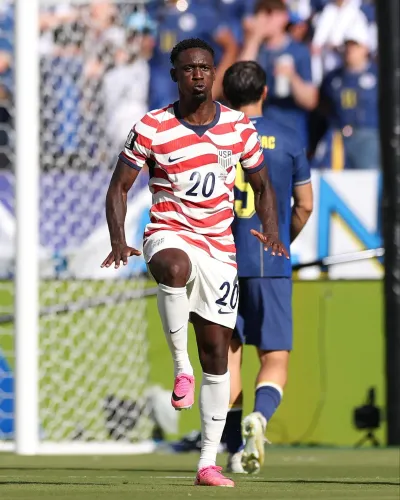
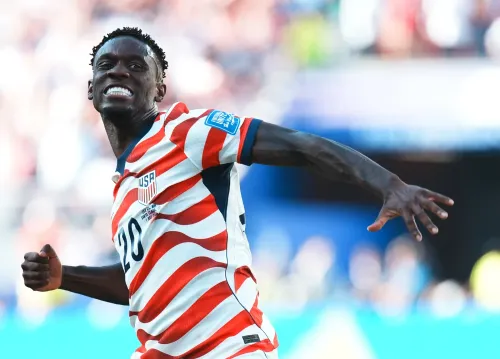
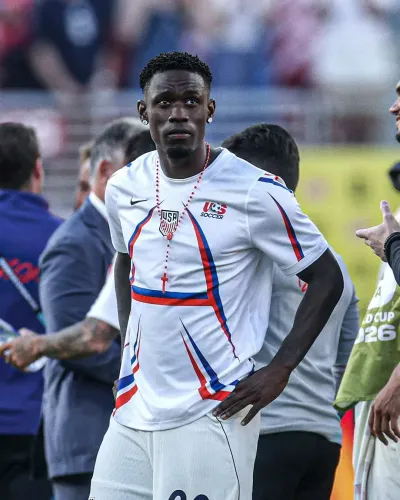
FIFA suspended Folarin Balogun's one-match World Cup ban, converting it to a one-year probation , allowing him to play in the USA vs Belgium Round of 16 .
The decision followed reported lobbying by U.S.
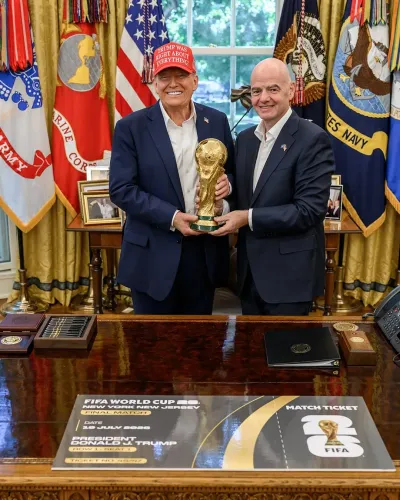
President Donald Trump , who asked FIFA president Gianni Infantino to review the case.
UEFA formally condemned the move, saying FIFA had 'crossed a red line' and put the competition's credibility at risk.
Former Liverpool manager Jürgen Klopp and former FIFA president Sepp Blatter both publicly criticised the political interference.
The Royal Belgian Football Association said it was 'astonished' and was exploring all available options.
The controversy follows a separate FIFA decision that cleared Cristiano Ronaldo to play at the World Cup after suspending part of a qualifying ban.
UEFA launched a withering attack on FIFA on Monday, 7 July 2025, after world football's governing body suspended the one-match World Cup ban imposed on United States striker Folarin Balogun — a move that followed direct intervention by U.S. President Donald Trump. The European governing body called the decision a direct threat to the integrity of the sport, saying FIFA had 'crossed a red line.'
The reversal allowed Balogun to feature in the United States' Round of 16 clash against Belgium, igniting a firestorm of criticism from coaches, officials, national associations, and even a former FIFA president.
How the Controversy Unfolded
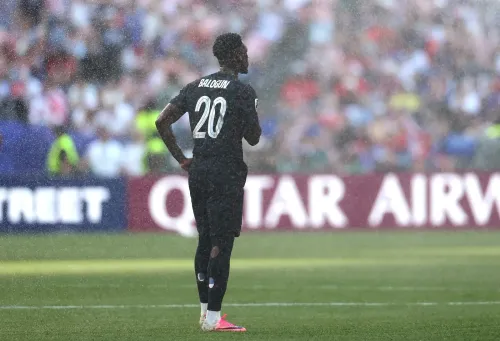
Balogun had received a red card — confirmed via a VAR review — for dragging his studs down the leg of Bosnia and Herzegovina defender Tarik Muharemovic during the Americans' Round of 32 victory. Under standard FIFA rules, the red card triggered an automatic one-match ban.
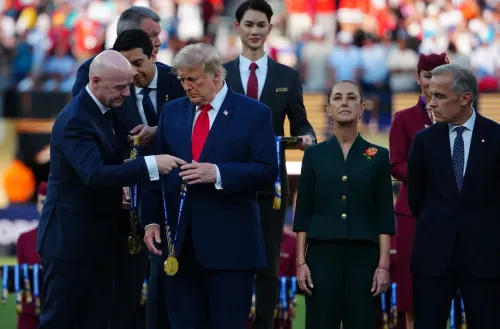
FIFA, however, chose not to overturn the red card itself but instead converted the suspension into a one-year probation period — effectively clearing Balogun to play immediately. The decision came after President Trump reportedly asked FIFA president Gianni Infantino to personally review the case.
UEFA's Formal Condemnation
UEFA's response was unambiguous. 'We express our disbelief at such an unusual, confusing, and unjustifiable decision,' the body stated, accusing FIFA of crossing a fundamental line. 'When the certainty of rules is no longer guaranteed by its guardians, the integrity of the game is at risk, and the credibility of a competition is weakened,' UEFA added.
This is not a routine administrative dispute — it strikes at the foundational principle that football's disciplinary process must be insulated from political pressure.
Coaches and Officials Pile On
Former Liverpool manager Jürgen Klopp was among the most vocal critics. 'This is our sport, not theirs,' he said. 'If Donald Trump and Gianni Infantino really settled this between them, it is crazy; it puts everything into question. These two individuals, who know little about football, should have no role in this.'
The head of the German Football Association warned that 'the integrity of the competition and the credibility of FIFA are at risk,' while the European Commissioner for Sport cautioned against 'weaponizing sport for political goals.'
England manager Thomas Tuchel, while suggesting Balogun's challenge may not have merited a red card, questioned the process itself — particularly given that his own defender Jarell Quansah had been sent off in England's win over Mexico without any such review. 'Who reverses this decision and when? And on what basis? How far does this go now? This is strange for me,' Tuchel said. 'Where does this start and where does this stop?'
Belgium's Reaction and Trump's Praise
The Royal Belgian Football Association, facing the United States in the knockout round, said it was 'astonished' by FIFA's ruling and confirmed it was exploring all available options.
President Trump, meanwhile, praised the outcome on his Truth Social platform, writing: 'Thank you to FIFA for doing what was right and correcting a great injustice.' The White House also celebrated Balogun's reinstatement with a social media post reading: 'USA-USA-USA.'
Sepp Blatter Weighs In — and a Pattern Emerges
Former FIFA president Sepp Blatter joined the chorus of condemnation. 'Red cards are not overturned by political calls. They are overturned by rules, evidence, and independent organisations,' he said. 'If a U.S. President intervenes with the FIFA President — and a player is suddenly cleared before a World Cup knockout match — the question is unavoidable: Where is FIFA going? Football must never become a playground for political power.'
Notably, this controversy follows a separate disputed FIFA disciplinary decision that cleared Portugal captain Cristiano Ronaldo to participate in the World Cup after FIFA suspended the final two matches of a three-game ban he had received during qualifying. Critics argue the two cases together suggest a troubling pattern of selective enforcement at the highest level of the game.
With the World Cup deep into its knockout stages, pressure is now mounting on FIFA to clarify the legal basis for its decision — and to explain why standard disciplinary procedures appear to have been bypassed for a host nation's player.
Point of View
While maintaining plausible deniability on the card itself. The Ronaldo precedent makes this harder to dismiss as a one-off: two high-profile bans softened in the same tournament, both benefiting nations with significant commercial or political leverage over FIFA, is not coincidence — it is a pattern. UEFA's fury is justified, but its leverage is limited so long as FIFA controls the tournament. The deeper damage is institutional: every future red card at a major FIFA event will now carry an asterisk.
NationPress
5 Oct 2026
Frequently Asked Questions
Why was Folarin Balogun's World Cup ban reversed?
FIFA converted Balogun's automatic one-match suspension into a one-year probation period, allowing him to play immediately, after U.S. President Donald Trump reportedly asked FIFA president Gianni Infantino to personally review the case. FIFA did not overturn the red card itself, only the suspension attached to it.
What did UEFA say about FIFA's decision?
UEFA formally condemned the ruling, calling it 'unusual, confusing, and unjustifiable' and stating that FIFA had 'crossed a red line.' The body warned that when rules are not consistently enforced, the integrity of the game and the credibility of the competition are both undermined.
Who else criticised FIFA over the Balogun decision?
Former Liverpool manager Jürgen Klopp, England manager Thomas Tuchel, the head of the German Football Association, the European Commissioner for Sport, the Royal Belgian Football Association, and former FIFA president Sepp Blatter all publicly criticised the decision, citing concerns over political interference in football's disciplinary process.
What was Balogun's original offence?
Balogun received a red card — confirmed by a VAR review — for dragging his studs down the leg of Bosnia and Herzegovina defender Tarik Muharemovic during the United States' Round of 32 win. Under FIFA rules, this triggered an automatic one-match ban.
Is this the only controversial FIFA disciplinary decision at this World Cup?
No. A similar controversy arose when FIFA cleared Portugal captain Cristiano Ronaldo to play at the World Cup after suspending the final two matches of a three-game ban he had received during qualifying. Critics argue the two cases together point to a pattern of selective enforcement.