IRIS National Fair: 120 projects showcased in Ahmedabad
Synopsis
Students from 22 states presented 120 projects at the IRIS National Fair in Ahmedabad, selected from around 1,200 applications. Gujarat Deputy Chief Minister Harsh Sanghavi urged participants to keep researching, whether or not they won awards.
Key Takeaways
The IRIS National Fair 2026-27 concluded in Ahmedabad on 24 November .
The fair featured 120 projects by 144 students from 22 states .
Around 1,200 projects applied across 22 STEM categories before a multi-level evaluation.
Harsh Sanghavi urged students to continue researching beyond the pursuit of awards.
Arjun Modhwadia highlighted a Class V student's project on productive screen time.
The fair introduced the Technology Enhances the Arts category.
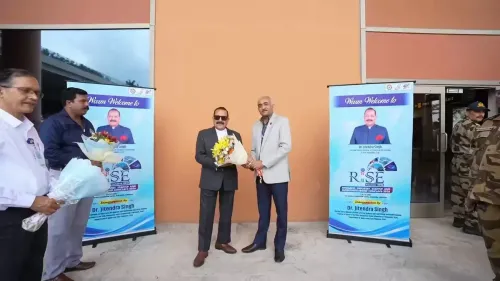
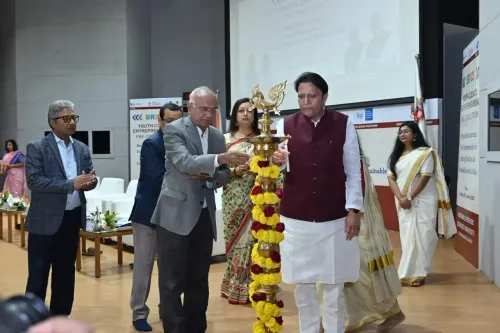
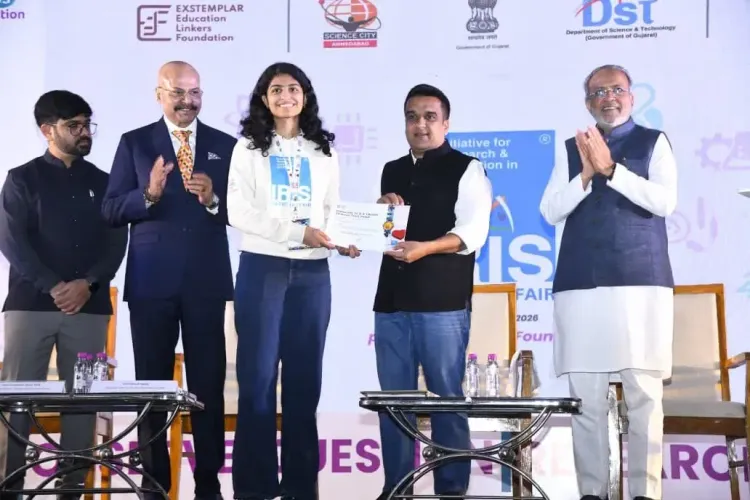
The IRIS National Fair 2026-27 concluded in Ahmedabad on Tuesday, 24 November, after young researchers from 22 states presented 120 projects addressing scientific and real-world challenges. At the closing ceremony, Gujarat Deputy Chief Minister Harsh Sanghavi urged students to keep developing their ideas rather than treat awards as the final measure of success.
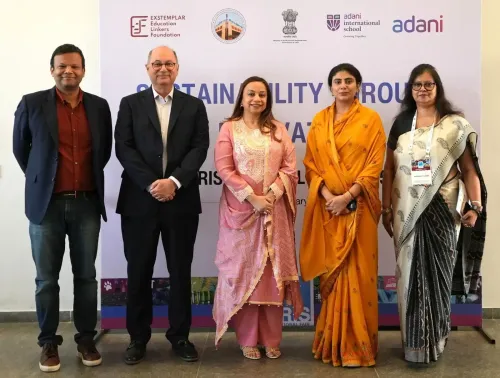
The three-day fair ran from 22 to 24 November at Vigyan Bhavan in Gujarat Science City. It was organised by the Exemplar Education Linkers Foundation, with Zydus Lifesciences Limited as the supporting partner.
Students present research from 22 states
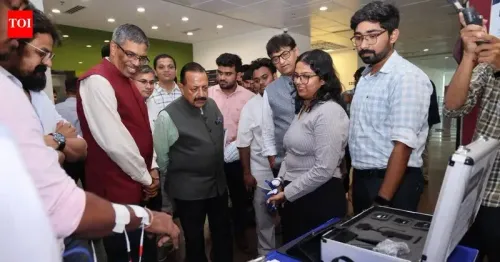
Organisers received applications for around 1,200 research projects across 22 STEM categories. After a multi-level evaluation, 120 projects by 144 students from 22 states were selected for the national-level event.
The work spanned life sciences, engineering, artificial intelligence, environmental science, mathematics and robotics, among other disciplines. The fair also introduced a category called Technology Enhances the Arts.
The event gives school students an opportunity to present original research and proposed solutions to real-world problems before scientists, academicians, researchers and industry experts. Its stated aim is to identify and nurture young scientific talent.
Sanghavi calls for sustained research
Sanghavi said the confidence and depth of research displayed by participants reflected the potential of young scientific talent. He also pointed to students from small villages who had pursued research despite limited facilities, alongside participants from major cities and international schools.
Opportunities, he said, should not be restricted by geographical or economic differences. He thanked Zydus, the state Department of Science and Technology and the organisers for giving students a platform to progress from local to national and international stages.
Addressing those who had and had not been selected at the global level, Sanghavi said students still had opportunities to pursue further research. “Merely dreaming will not be enough; one must work consistently to turn those dreams into reality,” he said.
Screen time and practical problem-solving
Sanghavi also discussed the influence of digital devices on children and the challenge of directing screen time towards creative and productive activities. He said the projects showed how students could use their time and resources for meaningful research.
Gujarat Science and Technology Minister Arjun Modhwadia highlighted a project by a Class V student that explored ways to turn children's screen time into productive learning. He said students who identify problems around them and develop solutions represent a shift from passive learning towards active problem-solving.
Modhwadia also acknowledged the role of parents and mentors in encouraging children to pursue research and spend less time on mobile phones.
Minister cites research and technology opportunities
Recalling what he described as the limited career-oriented approach to education during his student days, Modhwadia said opportunities had emerged in India's research, innovation and start-up ecosystem under Prime Minister Narendra Modi.
He referred to the development of indigenous vaccines during the COVID-19 pandemic and progress in semiconductors. He said six of the country's 12 semiconductor plants were being established in Gujarat, and pointed to fields including space technology, biotechnology, electronics and artificial intelligence as areas where young Indians could play a leading global role.
For the students who presented their work, the message from the closing ceremony was to continue experimenting and developing their ideas beyond the fair.
Point of View
But the harder question is whether students with limited facilities can continue developing their work after the event. Sustained mentoring and access to resources matter more than treating a single award as the endpoint.
NationPress
24 Nov 2026
Frequently Asked Questions
What happened at the IRIS National Fair in Ahmedabad?
The fair showcased 120 research projects by 144 students from 22 states. It concluded on 24 November after three days at Gujarat Science City.
What did Harsh Sanghavi tell students at the fair?
Gujarat Deputy Chief Minister Harsh Sanghavi urged students to pursue their ideas consistently rather than treat awards as the ultimate measure of success. He also called for opportunities that are not restricted by geography or economic circumstances.
How were projects selected for the IRIS National Fair?
The 120 national-level projects were selected through a multi-level evaluation. Around 1,200 research projects had applied across 22 STEM categories.
Which subjects did the student projects cover?
The projects covered fields including life sciences, engineering, artificial intelligence, environmental science, mathematics and robotics. The fair also introduced a Technology Enhances the Arts category.
What opportunities does the IRIS National Fair offer students?
The fair allows school students to present original research and proposed solutions before scientists, academicians, researchers and industry experts. It aims to identify and nurture young scientific talent.