16 Delhi Metro stations shut after Jantar Mantar protest violence
Synopsis
Central Delhi ground to a halt on 23 July as 16 Metro stations were shut following clashes tied to the Jantar Mantar protest over the NEET-UG paper leak — and a late-night stone-pelting attack that injured a senior police officer near Connaught Place. The scale of the shutdown signals how sharply the examination integrity crisis has spilled into law and order.
Key Takeaways
16 Delhi Metro stations were closed for entry and exit on 23 July amid heightened security following Jantar Mantar protest violence.
Interchange facilities at Rajiv Chowk , Mandi House , and Central Secretariat remained operational for train transfers.
Protests erupted on 20 July , led by CJP supporters and students demanding the resignation of Union Education Minister Dharmendra Pradhan over the NEET-UG paper leak .
ACP Vivek Bhagat of Connaught Place was injured in a stone-pelting attack near Tolstoy Marg at around 8:30 pm on Wednesday .
Delhi Police have confirmed an investigation is underway and security has been reinforced across affected areas.
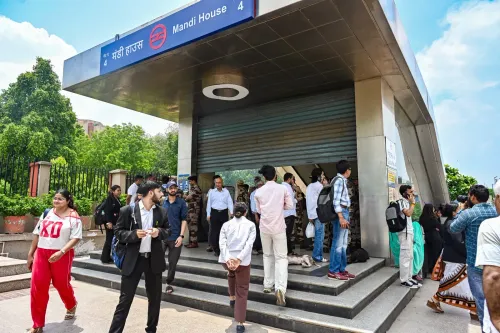
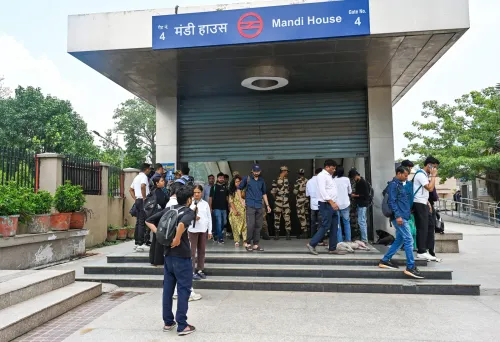
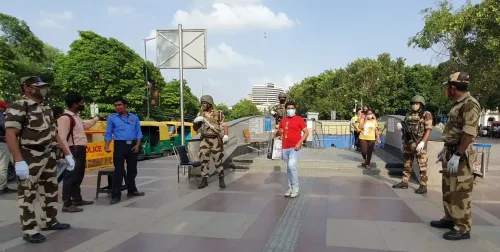
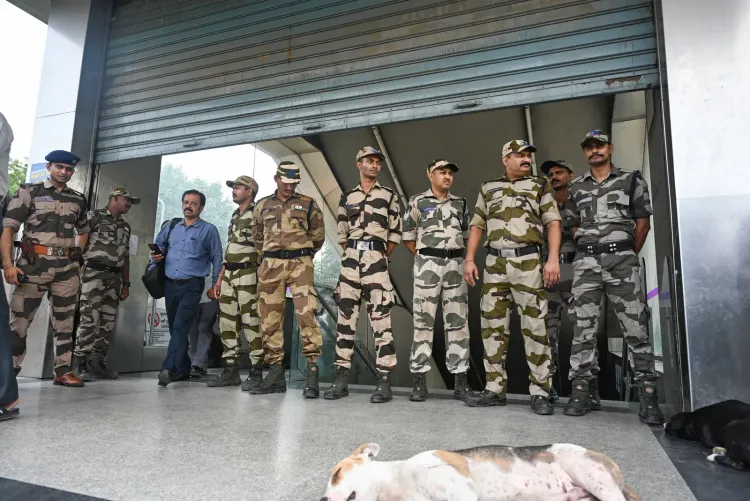
Sixteen Delhi Metro stations were shut for entry and exit on Thursday, 23 July, as security forces intensified their presence across New Delhi following violent clashes linked to the Jantar Mantar protest demanding accountability over recurring examination irregularities, including the NEET-UG paper leak. The closures, spanning key hubs from Rajiv Chowk to Central Secretariat, mark one of the most sweeping Metro shutdowns the capital has seen in recent months.
Stations Affected
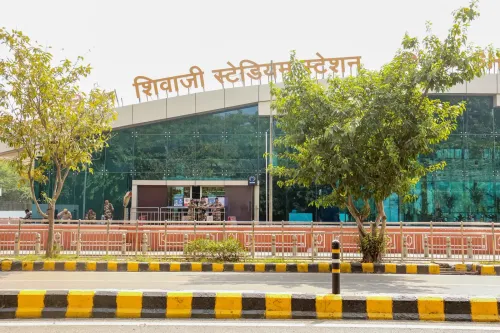
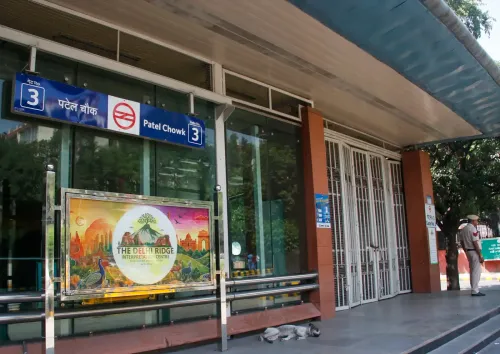
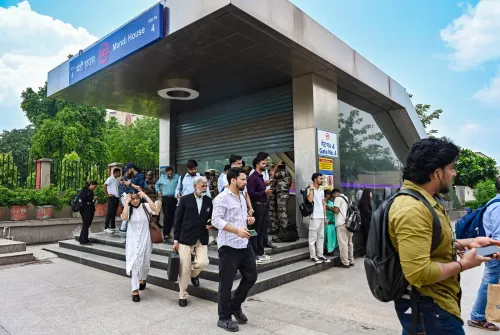
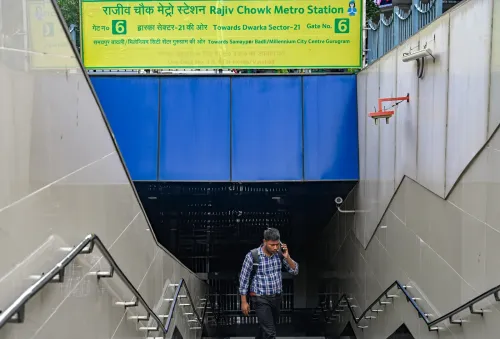
The Delhi Metro Rail Corporation (DMRC) confirmed that the following stations were closed for passenger entry and exit: Lok Kalyan Marg, Rajiv Chowk, Patel Chowk, Ramakrishna Ashram Marg, Barakhambha Road, Supreme Court, Seva Teerth, Janpath, Mandi House, Central Secretariat, ITO, Delhi Gate, Indraprastha, Khan Market, Jor Bagh, and Shivaji Stadium.
However, the DMRC clarified, in a post on X, that interchange facilities at Rajiv Chowk, Mandi House, and Central Secretariat would remain operational, allowing commuters to transfer between lines even as entry and exit were suspended.
What Triggered the Protests
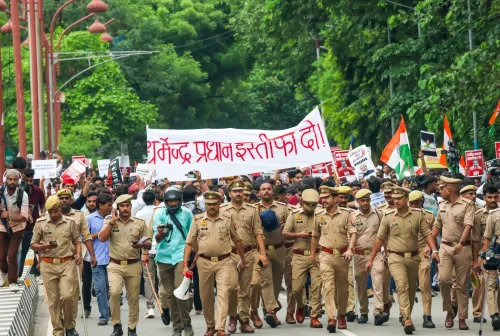
The unrest traces back to 20 July, when thousands of supporters of the Cockroach Janata Party (CJP), alongside students, marched from Jantar Mantar towards Parliament. Their central demand: the resignation of Union Education Minister Dharmendra Pradhan over a pattern of examination irregularities, with the NEET-UG paper leak serving as the immediate flashpoint.
The demonstrations drew students, opposition leaders, and civil society activists calling for systemic accountability in India's public examination framework. This comes amid a broader national debate over the integrity of competitive entrance tests, which millions of students appear each year.
Late-Night Clashes and Police Injuries
Fresh violence was reported on Wednesday night, when a group of individuals allegedly attacked police personnel with stones and bottles near Tolstoy Marg in the Connaught Place area at around 8:30 pm. Assistant Commissioner of Police (ACP), Connaught Place, Vivek Bhagat, sustained injuries in the attack, according to officials.
Delhi Police have attributed the incident to miscreants and stated that a thorough investigation is underway. Security has since been significantly reinforced across the affected zones to prevent further escalation.
Impact on Commuters and the City
The Metro closures have disrupted daily movement for lakhs of commuters who depend on the network to navigate central Delhi. The affected corridor covers some of the most densely used stations on the Yellow Line and Blue Line, connecting government offices, courts, commercial hubs, and residential neighbourhoods.
Notably, this is not the first time Metro stations in central Delhi have been shuttered during large-scale protests — similar closures were enforced during demonstrations in earlier years. The pattern underscores the recurring tension between public order management and urban mobility in the capital.
With investigations ongoing and security deployments in place, authorities are expected to reassess station operations in the coming days depending on ground conditions.
Point of View
But it penalises millions of ordinary commuters for a political crisis the government has yet to resolve. The NEET-UG controversy has now moved from examination halls to the streets, and the injury of a senior police officer signals that the situation is more volatile than official statements suggest. What is missing from the response so far is any credible accountability measure on the examination irregularities themselves — the root cause that brought protesters to Jantar Mantar in the first place. Until that is addressed, security deployments will manage symptoms, not the underlying grievance.
NationPress
21 Oct 2026
Frequently Asked Questions
Which Delhi Metro stations were closed on 23 July 2025?
Sixteen stations were shut for entry and exit: Lok Kalyan Marg, Rajiv Chowk, Patel Chowk, Ramakrishna Ashram Marg, Barakhambha Road, Supreme Court, Seva Teerth, Janpath, Mandi House, Central Secretariat, ITO, Delhi Gate, Indraprastha, Khan Market, Jor Bagh, and Shivaji Stadium. Interchange facilities at Rajiv Chowk, Mandi House, and Central Secretariat remained available for passengers changing trains.
Why were Delhi Metro stations shut on 23 July?
The closures were ordered as a security measure following violence linked to the Jantar Mantar protest, where thousands marched on 20 July demanding the resignation of Union Education Minister Dharmendra Pradhan over the NEET-UG paper leak and broader examination irregularities. Fresh clashes on Wednesday night further prompted authorities to tighten restrictions.
Who was injured in the Connaught Place clashes?
Assistant Commissioner of Police (ACP), Connaught Place, Vivek Bhagat, was injured after a group of individuals allegedly pelted stones and hurled bottles at police personnel near Tolstoy Marg at around 8:30 pm on Wednesday. Delhi Police have confirmed an investigation is underway.
What were the Jantar Mantar protesters demanding?
Protesters — including students, CJP supporters, opposition leaders, and activists — were demanding the resignation of Union Education Minister Dharmendra Pradhan over recurring examination irregularities, with the NEET-UG paper leak as the primary grievance. They marched from Jantar Mantar towards Parliament on 20 July.
Can commuters still change trains at closed Metro stations?
Yes, the DMRC confirmed that interchange facilities at Rajiv Chowk, Mandi House, and Central Secretariat remain operational, allowing passengers to switch between Metro lines even though entry and exit at those stations are suspended.