Deen Mohammad Baloch: Rights groups demand release on 17th disappearance anniversary
Synopsis
Seventeen years after Deen Mohammad Baloch was taken from a hospital in Khuzdar, his whereabouts remain unknown — and global rights groups say that silence is itself the story. With protests outside 10 Downing Street and condemnations from Amnesty International and Front Line Defenders, the case has become a focal point for the broader crisis of enforced disappearances in Balochistan.
Key Takeaways
Deen Mohammad Baloch , central leader of the Baloch National Movement (BNM) , has been missing since 28 June 2009 — now 17 years .
He was reportedly taken from Khuzdar Civil Hospital in Balochistan's Khuzdar district by Pakistani forces.
Front Line Defenders and Amnesty International have demanded Pakistan immediately disclose his fate and release him.
His daughter, Sammi Deen Baloch , has reportedly faced home raids, surveillance, online defamation, and repeated arbitrary arrests for her advocacy work.
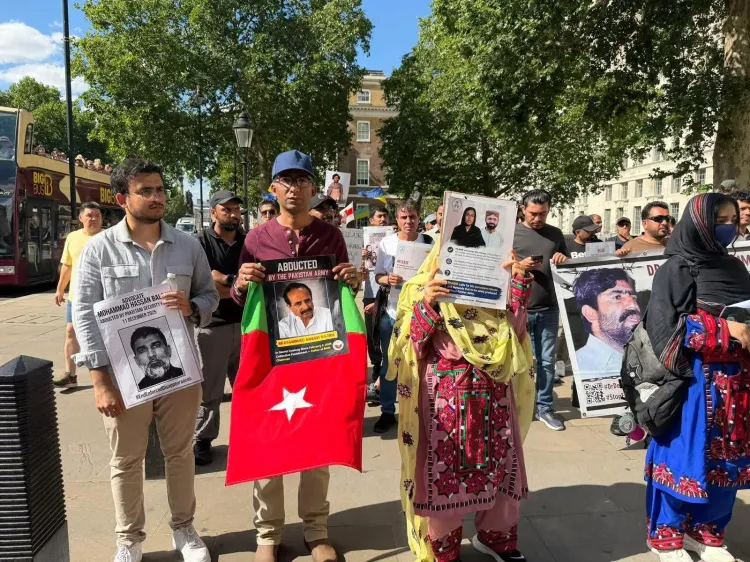
BNM held protests outside 10 Downing Street in London and in South Korea on the anniversary.
Speakers also condemned life sentences reportedly handed to Mahrang Baloch , Sibghatullah Baloch , and Balach Qadir through alleged 'faceless trials.'
Global human rights organisations on 29 June 2025 marked the 17th anniversary of the enforced disappearance of Deen Mohammad Baloch, a central leader of the Baloch National Movement (BNM), demanding that Pakistani authorities immediately disclose his whereabouts and ensure his safe release. Deen Mohammad was taken from his workplace at Khuzdar Civil Hospital in Balochistan's Khuzdar district on 28 June 2009, according to rights groups, and his fate remains unknown to this day.
Key Developments on the 17th Anniversary
Ireland-based rights organisation Front Line Defenders issued a statement noting that what began as one family's search for a missing father has since grown into one of Pakistan's most prominent campaigns against enforced disappearances. The group called on Pakistani authorities to immediately reveal Deen Mohammad's fate and to halt all forms of harassment, surveillance, and reprisal against his daughter, human rights defender Sammi Deen Baloch.
Amnesty International also expressed grave concern, stating: 'Today marks 17 years since the enforced disappearance of Deen Mohammad Baloch, who was taken from his place of work, Khuzdar Civil Hospital, on 28 June 2009. Despite repeated petitions to the courts, appeals to authorities, and tireless advocacy by his family, his whereabouts remain unknown.'
Protests in London and Seoul
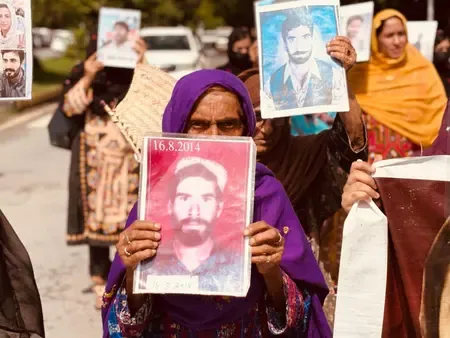
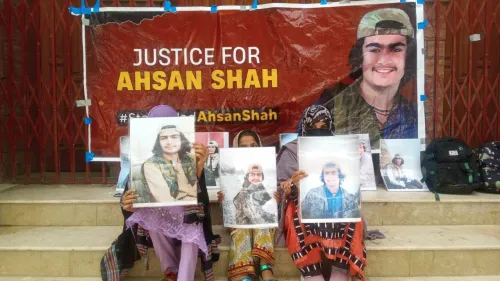
The BNM staged demonstrations in both the United Kingdom and South Korea to mark the occasion. Outside 10 Downing Street in London, protesters sought to draw the attention of the UK government, the United Nations, and international human rights bodies to what they described as the deteriorating socio-political situation in 'occupied' Balochistan.
Speakers at the London gathering condemned the 17-year enforced disappearance and alleged 'unlawful imprisonment and continuous torture' of Deen Mohammad, characterising it as a 'gross human rights violation.' BNM activists in South Korea similarly demanded accountability from Pakistani authorities and appealed to the international community for support.
Pattern of Reprisals Against Families
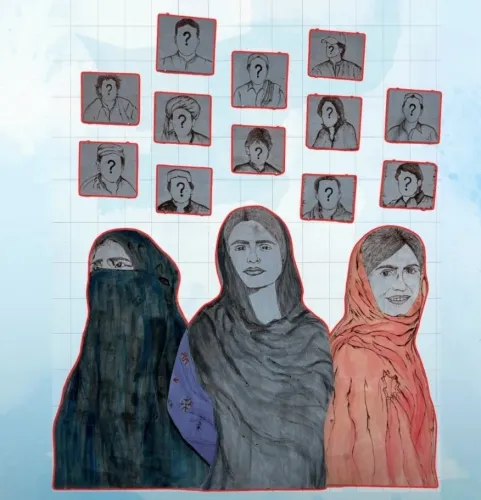
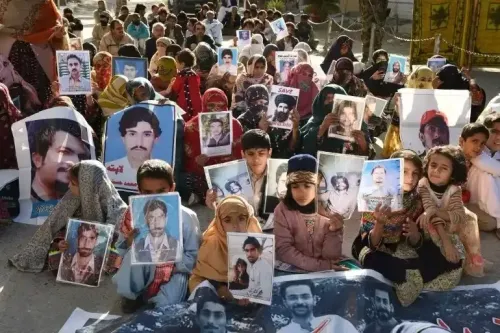
Front Line Defenders highlighted a broader pattern of reprisals against the families of the disappeared in Balochistan, noting that women — mothers, wives, sisters, and daughters — are frequently targeted. Sammi Deen Baloch herself has reportedly faced multiple raids on her home, surveillance, online defamation, and repeated arbitrary arrests in connection with her peaceful human rights work.
The BNM alleged that enforced disappearances have become 'a formalised state policy in occupied Balochistan, operating in blatant defiance of international law,' with thousands of Baloch families affected. The group also condemned life sentences reportedly handed down to BYC leader Mahrang Baloch, Sibghatullah Baloch, and BSO Chairman Balach Qadir through what it described as 'faceless trials.'
What Rights Groups Are Demanding
Front Line Defenders and Amnesty International have both called on Pakistan to comply with its obligations under international law, including disclosing the fate of Deen Mohammad and releasing him if he is being held without legal basis. Rights groups argue that Pakistan's failure to account for the disappeared after 17 years constitutes an ongoing violation of international human rights norms.
With international scrutiny intensifying and diaspora protests spreading across multiple continents, the case of Deen Mohammad Baloch is unlikely to recede from global human rights discourse in the near term.
Point of View
According to rights groups, a deliberate policy. What makes this case significant beyond its longevity is the secondary persecution: his daughter Sammi Deen Baloch has been repeatedly arrested and surveilled for peaceful advocacy, a pattern that Front Line Defenders says is systemic across Balochistan. The international community has issued statements for years; what remains absent is any mechanism of consequence. Without binding accountability — through UN treaty bodies, bilateral pressure, or targeted sanctions — anniversary protests risk becoming rituals rather than leverage.
NationPress
27 Sept 2026
Frequently Asked Questions
Who is Deen Mohammad Baloch and why was he disappeared?
Deen Mohammad Baloch is a central leader of the Baloch National Movement (BNM) who was reportedly taken by Pakistani forces from Khuzdar Civil Hospital in Balochistan's Khuzdar district on 28 June 2009. His exact whereabouts remain unknown after 17 years, and no official explanation has been provided by Pakistani authorities, according to rights groups.
Who is Sammi Deen Baloch?
Sammi Deen Baloch is the daughter of Deen Mohammad Baloch and a prominent human rights defender who has campaigned for her father's release for 17 years. According to Front Line Defenders, she has faced multiple home raids, surveillance, online defamation, and repeated arbitrary arrests in reprisal for her peaceful advocacy work.
What are international rights groups demanding from Pakistan?
Front Line Defenders and Amnesty International have both called on Pakistani authorities to immediately disclose the fate and whereabouts of Deen Mohammad Baloch and ensure his safe release. They have also urged Pakistan to cease all harassment, surveillance, and reprisals against Sammi Deen Baloch and other families of the disappeared.
Where did protests take place on the 17th anniversary?
The Baloch National Movement staged demonstrations outside 10 Downing Street in London, United Kingdom, and in South Korea. Protesters sought to draw the attention of the UK government, the United Nations, and international human rights organisations to the situation in Balochistan.
What is the broader context of enforced disappearances in Balochistan?
Rights groups allege that enforced disappearances have become a widespread and systematic practice in Balochistan, with thousands of families affected. The BNM claims it has become 'a formalised state policy,' while Front Line Defenders notes that families who campaign for the disappeared — particularly women — are themselves frequently targeted in reprisals.