Was the Violence in the 2020 Delhi Riots Intended to Force Government Change?
Synopsis
The Supreme Court is set to hear bail petitions from student activists linked to the 2020 Delhi riots, with police claims indicating the violence aimed for a regime change. The implications are significant as the accused face over five years in jail, raising questions about justice and accountability.
Key Takeaways
The violence during the 2020 Delhi riots was allegedly aimed at regime change.
Over five years of incarceration without trial raises serious legal concerns.
The Supreme Court's review is crucial for justice and accountability.
Delhi Police claims highlight the potential severity of the allegations.
The petitioners are challenging a Delhi High Court decision denying bail.
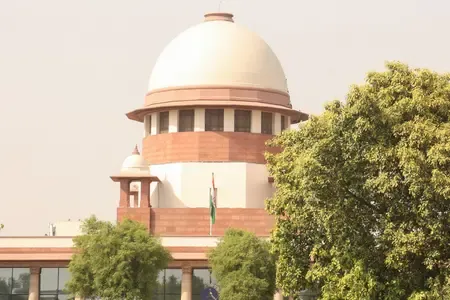
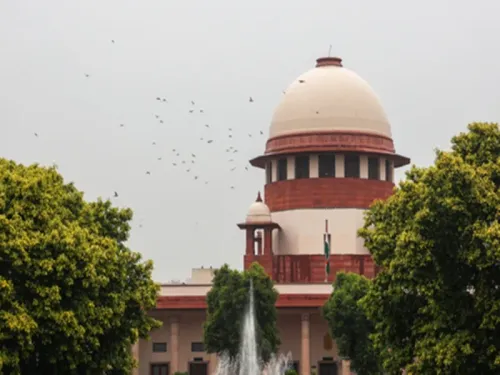
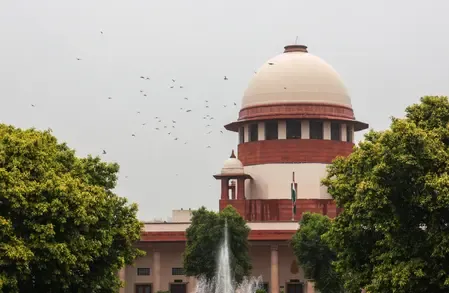
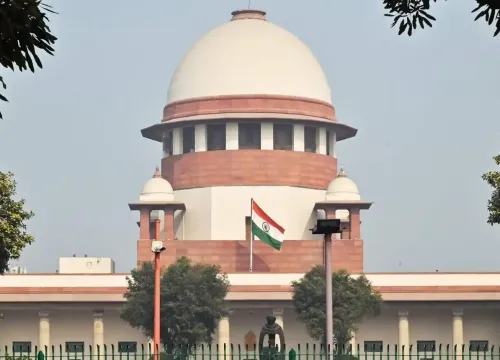
New Delhi, Oct 30 (NationPress) As the Supreme Court gears up to address the bail applications submitted by student activists Umar Khalid and others in relation to the 2020 Delhi riots 'larger conspiracy' case, an affidavit from the Delhi Police has asserted that the violence was intended to enforce a regime change.
In a detailed 389-page affidavit filed on Thursday, the Delhi Police stated, "In offences that undermine the very foundation of India's integrity [UAPA offences], jail is the norm and not bail."
They further claimed, "The allegations against the petitioner are prima facie valid. The burden of disproving this presumption lies with the petitioners, which they have failed to do."
The police opposed the bail request solely based on the delays in the trial, asserting that the petitioners themselves caused the hold-ups.
This past Monday, the Supreme Court granted the Delhi Police additional time to submit their counter-affidavit regarding bail petitions from Khalid, Sharjeel Imam, Meeran Haider, Gulfisha Fatima, and Shifa-ur-Rehman, all implicated in the 2020 Delhi riots 'larger conspiracy' case under the Unlawful Activities (Prevention) Act (UAPA).
A Bench of Justices Aravind Kumar and N.V. Anjaria emphasized that there should be no further delays and scheduled the hearing for Friday, instructing the Delhi Police to file their counter-affidavits promptly.
Initially, Additional Solicitor General (ASG) S.V. Raju, representing the Delhi Police, requested two weeks to respond. However, the Justice Kumar-led Bench denied the request, noting that ample time had already been provided.
“We have given you enough time. This is your first appearance. We previously mentioned issuing notice and indicated in open court that we would hear this matter on October 27 and resolve it,” the apex court remarked.
When ASG Raju sought at least one week, the Justice Kumar-led Bench remained firm. “What is the need for a counter-affidavit in a bail matter?” they questioned.
Senior advocates Kapil Sibal and Abhishek Manu Singhvi, representing the petitioners, opposed the adjournment request, underscoring that the accused had already spent over five years incarcerated without trial.
“In matters concerning delay, there cannot be further delays,” Singhvi contended.
“The petitioners have been imprisoned for over five years,” Sibal added, urging the apex court to advance the hearing.
In response, the Justice Kumar-led Bench commented, “Mr. Raju, consider if you can provide any resolution… after all, this pertains to bail… five years have passed.”
“Let me review it, but remember that appearances can sometimes be misleading,” ASG Raju countered.
The petitioners are contesting the Delhi High Court’s ruling, which denied them bail, stating there was prima facie evidence indicating a conspiracy linked to the 2020 riots.
The Supreme Court had notified the Delhi Police on September 22 regarding this issue. The February 2020 Delhi riots, which erupted amidst protests against the Citizenship Amendment Act (CAA) and the National Register of Citizens (NRC), resulted in 53 fatalities and over 700 injuries.
Point of View
My perspective is clear: justice must be served. The prolonged incarceration of individuals without trial raises serious concerns about the fairness of our legal system. The claims put forth by the Delhi Police must be thoroughly examined, ensuring that the rights of all parties are upheld while maintaining public order and integrity.
NationPress
19 Sept 2026
Frequently Asked Questions
What are the main allegations in the 2020 Delhi riots case?
The primary allegations involve claims of a larger conspiracy aimed at instigating violence during the protests against the Citizenship Amendment Act (CAA) and National Register of Citizens (NRC).
How long have the accused been in jail?
The accused have been imprisoned for over five years without trial, raising concerns about the legal process and rights of the individuals involved.
What is the significance of the Supreme Court's involvement?
The Supreme Court's involvement is crucial as it ensures judicial oversight and addresses potential violations of rights, especially concerning the prolonged detention of the accused.
What does the Delhi Police's affidavit claim?
The affidavit claims that the violence during the riots was intended to enforce a regime change, impacting the integrity of the nation.
What is the next step in the legal process?
The Supreme Court is set to hear the bail petitions and will review the Delhi Police's counter-affidavit, which is expected to provide further insights into the case.