538 Gujarat jail sepoys pass out after 9-month training, 60 women among graduates

Synopsis
Gujarat's prison department graduated its 20th batch of recruits — 538 jail sepoys including 60 women — after nine months of training that notably included India's three new criminal laws: BNS, BNSS and BSA. The batch also trained on body-worn cameras and body scanners, signalling a deliberate shift toward a modern, rehabilitation-focused correctional workforce.
Key Takeaways
538 jail sepoys , including 60 women , graduated from the GIPCA training institute in Ahmedabad on 4 November 2026 .
This was the 20th batch of jail sepoys trained by the Gujarat Prisons and Correctional Administration Department .
Recruits were trained in India's three new criminal laws: Bharatiya Nyaya Sanhita (BNS) , Bharatiya Nagarik Suraksha Sanhita (BNSS) and Bharatiya Sakshya Adhiniyam (BSA) .
Modern security training covered body-worn cameras , body scanners , baggage scanners and breathalysers .
Rao addressed the ceremony, stressing rehabilitation, discipline and awareness of emerging crimes including white-collar offences .
A total of 538 newly recruited jail sepoys — including 60 women — have successfully completed a nine-month training programme at the Gujarat Prisons and Correctional Administration Department's (GIPCA) training institute in Ahmedabad, officials announced on 4 November 2026. The 20th batch passed out in a graduation parade that underscored the state's push to modernise prison management and align correctional services with India's new criminal laws.
Graduation Ceremony and Key Remarks
The pass-out parade was attended by Jail and Correctional Administration Director General of Police (DGP) Dr K.L.N. Rao, who administered the oath and addressed the 478 male and 60 female trainees alongside their families. Rao described the graduation as 'one of the most important occasions in the training of uniformed personnel' and acknowledged the contributions of families, instructors and the institute's principal.
Rao situated the prison department within India's broader criminal justice architecture, noting it stands alongside the police — responsible for law enforcement — and the judiciary, which conducts proceedings. 'The jail staff have the sacred responsibility of reforming prisoners through repentance and helping them return to society as good citizens,' he said, stressing that the role demands courage, sacrifice and dedication.
What the Nine-Month Curriculum Covered
The training was notably comprehensive, blending legal foundations with modern technology and behavioural sciences. Recruits studied the Jail Manual, the Prisons Act, the Prisoners Act, and rules governing parole and furlough. The Indian Constitution, human rights frameworks, the Right to Information Act, the Indian Penal Code and the Code of Criminal Procedure were also part of the syllabus.
Critically, the batch was trained in India's three newly enacted criminal statutes: the Bharatiya Nyaya Sanhita (BNS), the Bharatiya Nagarik Suraksha Sanhita (BNSS) and the Bharatiya Sakshya Adhiniyam (BSA) — laws that replaced century-old colonial codes and have redefined procedural requirements across the justice system.
Modern Security Equipment and Soft Skills
Beyond legal theory, trainees were given hands-on instruction in operating modern security apparatus including NUD devices, body-worn cameras, hand-held and door-frame metal detectors, baggage scanners, body scanners and breathalysers. Subjects such as psychology, sociology and criminology were included to sharpen understanding of inmate behaviour.
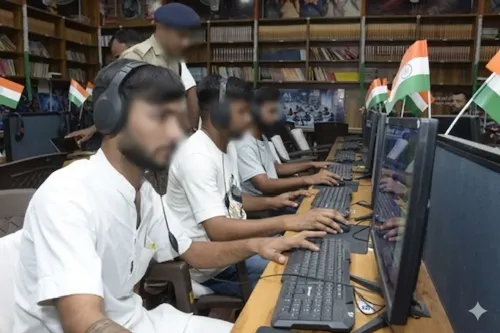
The curriculum further encompassed computer skills, the e-Prisons application, first aid, yoga, karate and outdoor activities — a holistic approach aimed at producing well-rounded correctional officers rather than purely custodial staff.
Evolving Nature of Crime and Prison Challenges
DGP Rao noted that economic globalisation and rapid technological change had transformed the profile of offenders entering India's prisons, with correctional facilities now housing individuals convicted of white-collar crimes and other emerging categories of offences. 'Dealing with such offences required updated working methods and a deeper understanding of emerging criminal trends,' he said.
He urged the new personnel to remain alert to internal security challenges while upholding discipline, peace and the rule of law within prison walls. This batch joins an institution that is increasingly positioned not just as a custodial agency but as an active participant in inmate rehabilitation and social reintegration.
Point of View
BNSS and BSA in the training curriculum is more than a syllabus update — it reflects how deeply the 2023 criminal law overhaul is now percolating into frontline justice institutions. Gujarat's prison department is ahead of several states in codifying these statutes into recruits' foundational training. The more telling signal, however, is the emphasis on criminology, psychology and rehabilitation alongside physical drills: India's prisons have long been critiqued for prioritising custody over correction. Whether this curricular ambition translates to on-the-ground reform depends on staffing ratios, infrastructure and leadership continuity — none of which a graduation parade can guarantee.
NationPress
4 Nov 2026
Frequently Asked Questions
How many jail sepoys graduated from GIPCA in the latest batch?
A total of 538 jail sepoys completed the nine-month training programme at GIPCA in Ahmedabad, comprising 478 male and 60 female recruits. This was the department's 20th training batch.
What new criminal laws were included in the training curriculum?
The recruits were trained in India's three newly enacted criminal laws — the Bharatiya Nyaya Sanhita (BNS), the Bharatiya Nagarik Suraksha Sanhita (BNSS) and the Bharatiya Sakshya Adhiniyam (BSA) — which replaced colonial-era codes. These statutes have significantly altered procedural requirements across the justice system.
What modern security equipment were the Gujarat jail sepoys trained on?
Trainees received hands-on training in operating NUD devices, body-worn cameras, hand-held and door-frame metal detectors, baggage scanners, body scanners and breathalysers. This equipment-focused module reflects a broader push to modernise Gujarat's prison security infrastructure.
What is the role of the prison department in India's criminal justice system?
According to DGP Dr K.L.N. Rao, the prison department is one of three pillars of the criminal justice system, alongside the police and the judiciary. Its mandate covers custody, rehabilitation and the reintegration of inmates into society following court verdicts.
Why did the training include psychology, sociology and criminology?
The curriculum incorporated behavioural sciences to help recruits understand inmate behaviour and emerging criminal profiles, including white-collar offenders. DGP Rao noted that economic globalisation and technological change have altered the nature of crime, requiring prison staff to develop deeper analytical skills beyond traditional custodial duties.