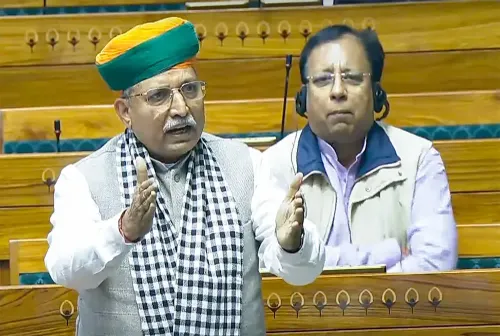
Over 660 Crore Court Records Digitized: MoS Arjun Meghwal

Synopsis
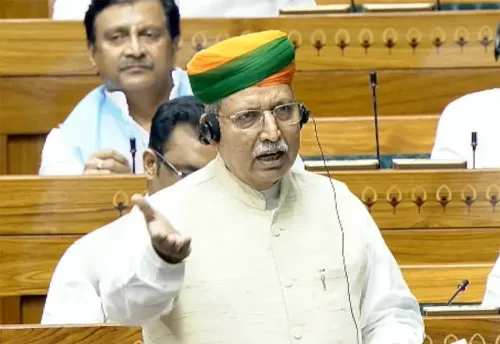
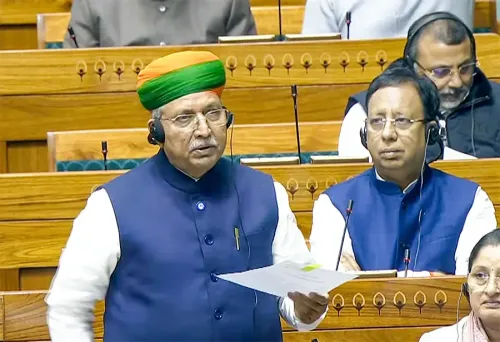
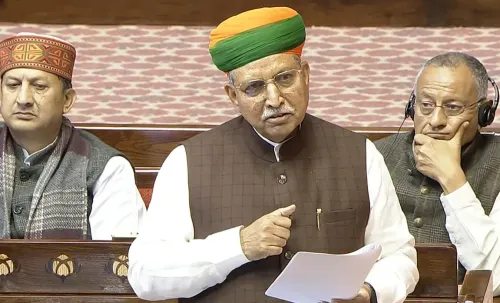
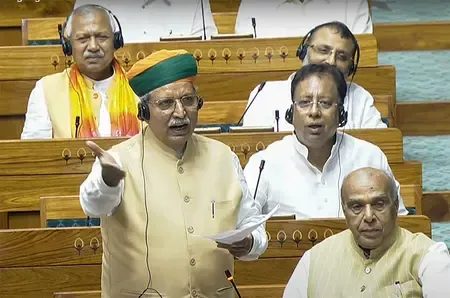
In a landmark achievement, the Indian government has digitized over 660 crore pages of court records, enhancing the efficiency of judicial proceedings with advanced technologies, as revealed by Minister of State Arjun Ram Meghwal.
Key Takeaways
Over 660.36 crore pages of court records digitized.
MoS Arjun Ram Meghwal announces significant budget increase for judiciary.
Phase-III aims for digital and paperless courts.
Integration of AI and other technologies in judicial processes.
Expansion of e-Sewa Kendras enhances citizen service.
New Delhi, March 12 (NationPress) Under the e-Courts Mission Mode Project, over 660.36 crore pages of court documentation have been digitized, enabling courts to perform more than 3.97 crore hearings via video conferencing, as reported to the Rajya Sabha on Thursday.
In a written response, Minister of State (MoS) for Law and Justice, Arjun Ram Meghwal, emphasized the Union government's dedication to modernizing the judiciary through advanced digital infrastructure, significantly increasing the budget for Phase-III (2023–2027) to Rs 7,210 crore.
This phase aims to convert Indian courts into digital and paperless entities by digitizing both legacy and current case records, broadening video conferencing capabilities to encompass all courts, jails, and hospitals, and extending online court services beyond just traffic offenses.
Additionally, the plan includes achieving universal coverage of e-Sewa Kendras, creating a sophisticated cloud-based data repository for storing digitized court records and applications, and implementing cutting-edge technologies like Artificial Intelligence (AI) and Optical Character Recognition (OCR) for case analysis and forecasting.
MoS Meghwal noted that during this phase, 2,444 e-Sewa Kendras have been set up to improve citizen service delivery.
He further mentioned that nearly 1.07 crore cases have been filed electronically via the e-Filing platform. The live streaming of court sessions has been extended to four more High Courts in Uttarakhand, Calcutta, Telangana, and Meghalaya, bringing the total to 11.
All e-Courts portals are now hosted on the National Informatics Centre's (NIC) cloud infrastructure, and district court websites have transitioned to the Secure, Scalable, and Sugamya Website as a Service (S3WAAS) platform, according to MoS Meghwal.
The Case Information System (CIS) has been upgraded to version 4.0, which introduces improved objectivity, transparency, and speed in case management.
AI-driven tools are being integrated into judicial processes, including the AI/ML-enabled defect identification module developed by the Supreme Court in partnership with IIT Madras, and the Legal Research and Analysis Assistant (LegRAA) created by NIC's Centre of Excellence, guided by the e-Committee.
The Digital Courts platform allows judges to access all case-related documents, pleadings, and evidence in a digital format, representing a major advancement towards a paperless court ecosystem.
The e-Courts Mission Mode Project's Phase-I, launched in 2011 with an allocation of Rs 935 crore, focused primarily on creating the essential digital infrastructure for the judiciary.
This phase successfully achieved the computerization of 14,249 district and subordinate courts, established Local Area Networks (LAN) in 13,683 courts, and enabled software for digital case management in 13,672 courts, along with video conferencing capabilities in 493 courts and 347 jails.
Phase-II, which ran from 2015 to 2023 with a budget of Rs 1,670 crore, expanded the focus from basic computerization to offering citizen-centric digital services.
During this phase, the number of computerized courts rose to 18,735, marking a 31.5% increase compared to Phase-I. Video conferencing facilities saw a fivefold expansion, covering 3,240 courts (a 557% increase) and 1,272 jails (a 266% increase), as noted by MoS Meghwal.
Point of View
It is evident that the government's initiative to digitize court records is a significant step towards modernizing India's judiciary. By leveraging technology, the government aims to enhance transparency and efficiency in legal proceedings, ultimately benefiting citizens and the justice system as a whole.
NationPress
29 Sept 2026
Frequently Asked Questions
What is the e-Courts Mission Mode Project?
The e-Courts Mission Mode Project is an initiative aimed at modernizing the judiciary in India through digitization and the integration of technology in court processes.
How many pages of court records have been digitized?
Over 660.36 crore pages of court records have been digitized under this project.
What is the budget for Phase-III of the project?
The budget for Phase-III (2023–2027) of the project has been increased to Rs 7,210 crore.
How many e-Sewa Kendras have been established?
A total of 2,444 e-Sewa Kendras have been established to improve citizen service delivery.
What technologies are being implemented in the judiciary?
Technologies like Artificial Intelligence (AI) and Optical Character Recognition (OCR) are being introduced for case analysis and forecasting.