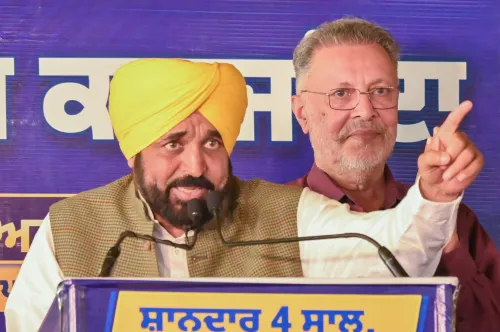
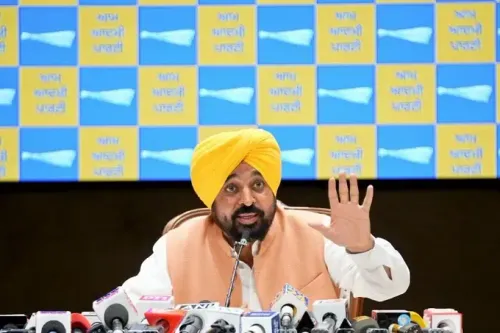
AAP MLAs defect to BJP in Punjab, but Bhagwant Mann holds majority
Synopsis
Three AAP MLAs — including a former IPS officer — have walked into the BJP camp ahead of Punjab's 2027 Assembly election, handing the saffron party a symbolic win and fresh campaign ammunition. Bhagwant Mann's majority is safe for now, but the defections, following an earlier exodus of seven Rajya Sabha MPs, signal growing internal fractures inside AAP at a moment when the state's drug crisis, debt burden, and youth unemployment are turning into live electoral liabilities.
Key Takeaways
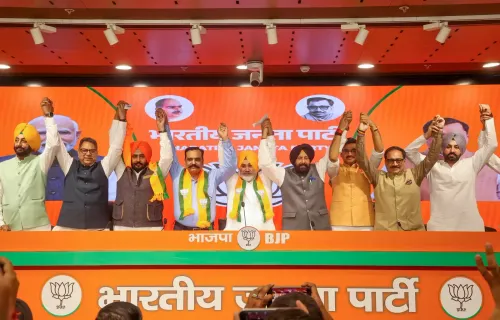
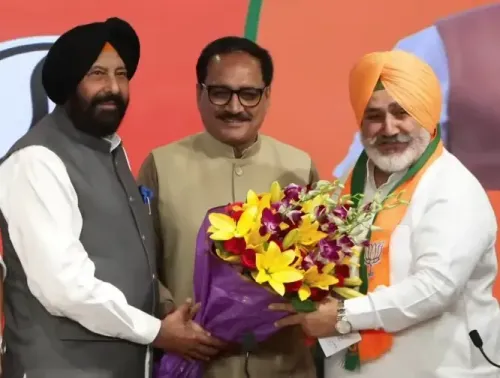
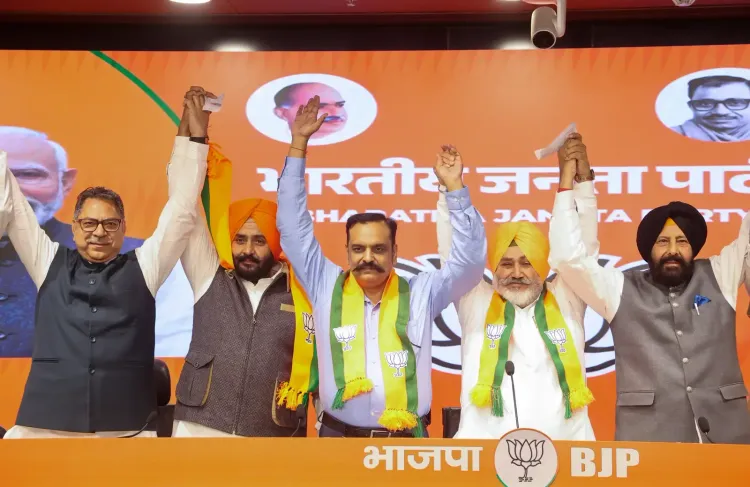
AAP MLAs Harmeet Singh Pathanmajra , Chetan Singh Jouramajra , and Kunwar Vijay Pratap Singh defected to the BJP on Monday, 2 November 2026 .
The three departures do not threaten CM Bhagwant Mann 's majority — AAP holds 92 of 117 seats won in the 2022 election.
The defections follow an earlier exodus of seven AAP Rajya Sabha MPs to the BJP, establishing a pattern ahead of the 2027 Punjab Assembly election .
Strong indications point to a BJP-SAD alliance revival , though no formal announcement has been made.
Key voter concerns include the drug menace , rising state debt , youth unemployment , and gangster activity — issues cited by the defectors themselves.
The Congress remains a credible third force in the upcoming election despite its 2022 collapse to 18 seats .
The Aam Aadmi Party (AAP) in Punjab suffered a fresh political setback on Monday, 2 November 2026, as a batch of its sitting MLAs crossed over to the Bharatiya Janata Party (BJP) — a development that, while falling short of threatening Chief Minister Bhagwant Mann's legislative majority, has handed the saffron party a symbolic victory ahead of the 2027 Punjab Assembly election. The defections unfold against a backdrop of structural governance challenges — from drug trafficking to mounting debt — that opposition parties are mobilising around.
Who Has Left and Why
Among the MLAs who have moved to the BJP are Harmeet Singh Pathanmajra, Chetan Singh Jouramajra, and former IPS officer-turned-politician Kunwar Vijay Pratap Singh. According to reports, some of the departing legislators were dissatisfied with AAP's candidate-selection process, while others cited differences with the party's centralised national leadership and concerns over on-ground governance. Ticket distribution and fears of political marginalisation in their own constituencies were also reportedly major factors. On-ground inputs suggest that at least two of the departing MLAs had felt sidelined within their constituencies for some time.
What It Means for Punjab Politics
Three MLA defections do not threaten the AAP government's majority in the 117-seat Punjab Assembly — the party swept to power in 2022 with a record 92 seats, reducing the then-ruling Indian National Congress (Congress) to just 18 seats and effectively wiping out the Shiromani Akali Dal (SAD)-BJP alliance. However, the exits reinforce opposition claims that internal dissatisfaction is growing. This comes after an earlier exodus of seven AAP Rajya Sabha MPs into the BJP, giving the saffron party a pattern of poaching to point to on the campaign trail.
Notably, there are strong indications that the BJP and SAD — whose alliance of over two decades collapsed over the now-repealed Farm Bills — are moving toward a reunion ahead of 2027. No formal announcement has been made, but a reconstituted BJP-SAD front would significantly alter the Opposition arithmetic against AAP.
The Structural Issues Driving the Narrative
The defections carry weight partly because they echo the very governance concerns that opposition parties have centred their campaigns on. The defectors have publicly cited drugs, gangsterism, corruption, extortion, and broader governance failures — a list that maps directly onto Punjab's most acute structural problems.
The drug menace remains perhaps the most politically charged issue in the state, with addiction rates, trafficking networks, and overdose deaths dominating reportage. The BJP and Congress both accuse the Mann government of failing to eradicate narcotics despite repeated assurances. The AAP administration, in turn, points to its 'Yudh Nashian Virudh' campaign, under which it claims thousands of arrests and seizures of trafficker-linked assets have been carried out.
Punjab also carries a worsening debt burden, with economists and political observers flagging serious concerns about fiscal sustainability. High debt-servicing costs are reportedly eating into development spending — an issue that cuts across rural and urban constituencies alike. Youth unemployment and large-scale emigration — with unscrupulous agents reportedly luring young people into precarious situations abroad — compound the economic distress. Agrarian stress, declining groundwater levels, slow industrial growth, and persistent gangster activity round out the long-standing concerns that are particularly salient in the rural seats that drove AAP's 2022 sweep.
Mann Government's Defence
Chief Minister Bhagwant Mann has pushed back against the narrative of failure, citing expansion of canal irrigation and a claimed dramatic rise in irrigation coverage, free electricity for most households, large-scale recruitment to government jobs, health insurance schemes, the rollout of Aam Aadmi Clinics, education reforms, road improvements, and the anti-drug campaign. His argument is that tangible delivery — not just announcements — defines his government's record.
Opposition parties counter that public anxiety over addiction, crime, unemployment, and debt remains stubbornly high, and that many voters are gauging performance by conditions on the ground rather than by programme launches.
What to Watch Ahead of 2027
The BJP, historically a minor player in Punjab, has been aggressively recruiting local leaders and positioning itself as a party capable of addressing law-and-order and economic grievances — a strategy the defections reinforce. The Congress, though diminished, remains a credible third force and is expected to contest vigorously. How far the latest defections shift the ground-level political balance — and whether a BJP-SAD reunion materialises — will be among the defining questions as Punjab moves toward its next Assembly election.
Point of View
Arithmetically, a crisis for Bhagwant Mann — but politics is as much about narrative as numbers. The BJP has now assembled a visible pattern: first Rajya Sabha MPs, now sitting legislators, each defection arriving with a ready-made press conference about drugs, debt, and governance. What mainstream coverage underplays is the structural bind AAP faces: the very centralisation that helped it win 92 seats in 2022 — tight candidate control, top-down discipline — is now being cited as the reason local leaders feel sidelined. A potential BJP-SAD reunion could further consolidate the anti-AAP vote in ways that 2022's fragmented opposition never managed. Mann's most credible counter is delivery data, but delivery needs to be felt on the ground before 2027 polling day.
NationPress
2 Nov 2026
Frequently Asked Questions
Which AAP MLAs defected to the BJP in Punjab?
The defecting AAP MLAs include Harmeet Singh Pathanmajra, Chetan Singh Jouramajra, and former IPS officer-turned-politician Kunwar Vijay Pratap Singh. They crossed over to the BJP on Monday, 2 November 2026, ahead of the 2027 Punjab Assembly election.
Does the defection threaten Bhagwant Mann's government?
No. Three MLA departures do not endanger the AAP government's majority; the party holds 92 of Punjab's 117 Assembly seats after its landslide victory in 2022. However, the exits reinforce opposition claims of growing dissatisfaction within the ruling party.
Why did the AAP MLAs leave the party?
According to reports, the defectors cited dissatisfaction with AAP's centralised candidate-selection process, differences with the national party leadership, and concerns over governance. Fears of being sidelined in their own constituencies were also reportedly a significant factor.
Are the BJP and SAD likely to form an alliance for 2027?
Strong indications suggest the two parties are moving toward a reunion ahead of the 2027 Punjab Assembly election, though no formal announcement has been made. The BJP-SAD alliance of over two decades broke down over the controversial Farm Bills, which were eventually repealed, and both parties suffered heavily in the 2022 election as a result.
What are the key issues shaping the 2027 Punjab election?
The principal issues include the drug menace, youth unemployment and emigration, the state's worsening debt burden, agrarian distress, law-and-order challenges including gangster activity, and declining groundwater levels. These concerns are especially acute in rural constituencies that delivered AAP its 2022 majority.