Major AAP Exodus: Punjab MLAs to Join BJP Next, Warns Akali Dal
Synopsis
Akali Dal's Bikram Singh Majithia has predicted a mass exodus of AAP MLAs to BJP, starting from Jalandhar and Ludhiana, following the defection of 7 Rajya Sabha MPs including Raghav Chadha and Sandeep Pathak. He even suggested CM Bhagwant Mann may eventually join BJP to protect his assets.
Key Takeaways
Seven AAP Rajya Sabha MPs , including Sandeep Pathak and Raghav Chadha , have defected to the BJP , marking a major blow to the party.
Akali Dal leader Bikram Singh Majithia has predicted that a large number of AAP MLAs in Punjab will also join the BJP , beginning from Jalandhar and Ludhiana .
Majithia alleged that CM Bhagwant Mann may eventually join the BJP to protect his wealth, including assets allegedly transferred to Australia — an unverified claim.
Congress leader Partap Singh Bajwa described the AAP split as a conflict over Punjab's state resources and public money , not a clash of ideology.
AAP currently holds 92 of 117 seats in the Punjab Vidhan Sabha , winning a landslide mandate in 2022 ; a significant number of defections would be needed to threaten the government.
The crisis exposes AAP's centralised Delhi-command model , which has historically created friction with state-level leaders across its units.
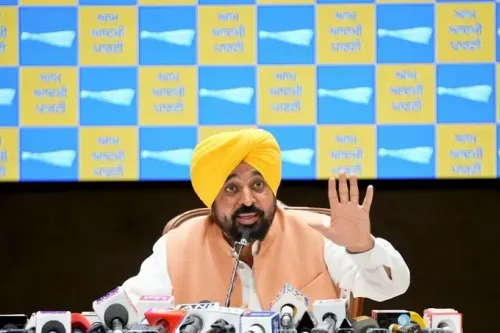
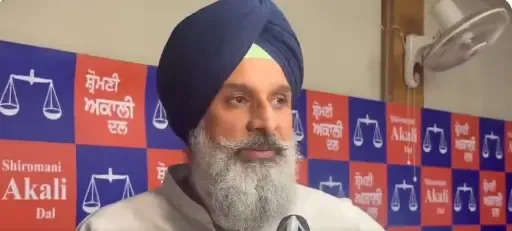
Chandigarh, April 25: In a sharp political warning that has rattled Aam Aadmi Party (AAP) in Punjab, Shiromani Akali Dal (SAD) leader Bikram Singh Majithia declared on Friday, April 24, that the defection of seven AAP Rajya Sabha MPs to the Bharatiya Janata Party (BJP) was only the beginning — and that a large number of AAP MLAs from Punjab would soon follow suit. The statement signals a deepening political crisis for Chief Minister Bhagwant Mann's government, which already faces mounting governance criticism.
Majithia's Explosive Warning: MLAs to Follow MPs Into BJP
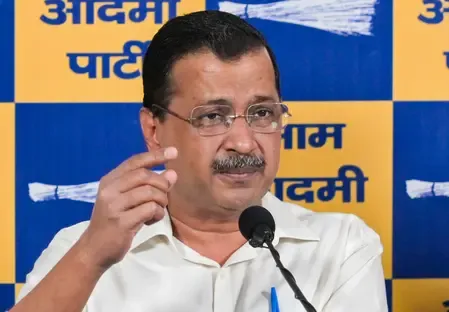
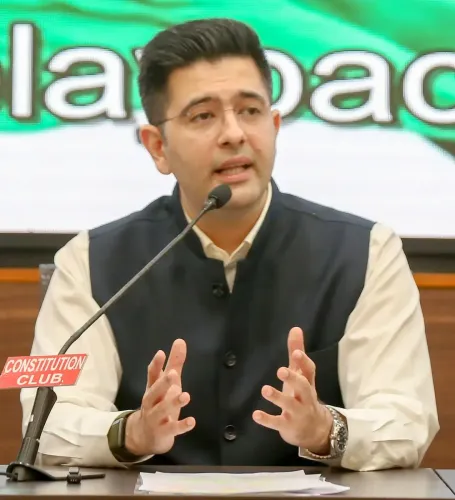
Majithia, reacting to the high-profile departure of Sandeep Pathak and Raghav Chadha — two of AAP's most prominent architects in Punjab — along with five other Rajya Sabha MPs, said the writing had been on the wall for a long time. "The AAP came to power on the promise of changing the system but itself got embroiled in corruption and scams," he stated.
The SAD leader predicted that the political unraveling would begin in Jalandhar and Ludhiana, two of Punjab's most politically significant cities. He warned that AAP could lose its majority in the Punjab Assembly and be reduced to a minority government.
In his most pointed remark, Majithia alleged that Chief Minister Bhagwant Mann himself may eventually join the BJP to protect what he called "ill-gotten wealth, including assets transferred to Australia" — a claim that remains unverified and which the AAP government has not officially responded to as of publication.
Outsiders vs. Insiders: The Rajya Sabha Seat Controversy
Majithia also questioned why CM Bhagwant Mann had allocated Rajya Sabha seats to leaders who were considered outsiders to Punjab, implying that such decisions sowed the seeds of internal resentment. This critique targets the AAP leadership's centralised decision-making model, long criticised by regional party units across states where AAP has operated.
Notably, Raghav Chadha, a Delhi-based leader, was given a Punjab Rajya Sabha seat — a move that had drawn criticism even within AAP circles at the time of his nomination. The departure of such figures now raises questions about the sustainability of AAP's cross-state political model.
Congress Calls It a War Over Punjab's Public Money
Leader of Opposition in Punjab Assembly, Partap Singh Bajwa of the Indian National Congress, offered a sharper ideological critique. He argued that the ongoing split within AAP in the Rajya Sabha has exposed the party's true character — one driven not by ideology but by a struggle over control of Punjab's state resources and public money.
"What is unfolding today is not a clash of principles but a conflict over power, patronage, and money," Bajwa said, asserting that AAP's politics in Punjab has been driven more by internal competition for access to the state exchequer than by genuine governance.
Bajwa also highlighted a striking contradiction: Raghav Chadha has publicly claimed he could not remain a partner in wrongdoing within the party, while CM Bhagwant Mann has alleged that Chadha and others left precisely because they were denied opportunities to indulge in corruption. "Both cannot be true simultaneously — and either way, it is the people of Punjab who lose," Bajwa implied.
The Bigger Picture: AAP's Structural Crisis
This is not the first time AAP has faced an internal rebellion. The party's founding members, including Prashant Bhushan and Yogendra Yadav, had exited years ago citing ideological differences. What makes the current crisis different is its scale and its proximity to electoral power — AAP governs Punjab with a landslide mandate won in 2022, making any internal fracture directly consequential for governance.
Analysts note that AAP's centralised command structure, which concentrates power in Delhi even for state units, has historically created friction with local leaders. The defection of Punjab-linked Rajya Sabha MPs to the BJP — the very party AAP has consistently positioned itself against — underscores how far the internal discontent has travelled.
This development also comes at a critical juncture: with Delhi Assembly elections recently concluded and Bihar elections approaching, the BJP absorbing AAP defectors sends a strong political signal about the national opposition's fragility.
What Comes Next for Punjab's Political Landscape
If Majithia's prediction holds and AAP MLAs begin defecting from Jalandhar and Ludhiana, the Punjab government could face a floor test scenario — a constitutional crisis that would trigger political uncertainty across the state. The AAP currently holds a commanding majority with 92 seats in the 117-member Punjab Vidhan Sabha, meaning a significant number of defections would be needed to destabilise the government.
However, political momentum and public perception can shift rapidly, and the optics of mass defection — even without a floor test — could severely weaken CM Bhagwant Mann's authority and administrative effectiveness ahead of the 2027 Punjab Assembly elections. All eyes are now on whether the predicted MLA exodus materialises in the coming weeks.
Point of View
Factional politics of Punjab. The defection of Rajya Sabha MPs to the BJP isn't just a political realignment; it's a signal that the anti-establishment brand AAP sold to voters in 2022 has been comprehensively hollowed out from within.
NationPress
7 Oct 2026
Frequently Asked Questions
Which AAP Rajya Sabha MPs have joined the BJP?
Seven AAP Rajya Sabha MPs, including prominent leaders Sandeep Pathak and Raghav Chadha, have joined the BJP. Pathak and Chadha were considered key architects of AAP's political rise in Punjab.
Will AAP MLAs in Punjab join BJP?
Akali Dal leader Bikram Singh Majithia has predicted that a large number of AAP MLAs in Punjab will join the BJP soon, with the movement expected to begin from Jalandhar and Ludhiana. However, no MLA defections have been confirmed as of publication.
Why did Raghav Chadha leave AAP?
Raghav Chadha has claimed he could not remain a partner in wrongdoing within AAP. However, CM Bhagwant Mann has counter-alleged that Chadha and others left because they were not allowed to indulge in corruption — creating a direct contradiction between both accounts.
Is the Punjab AAP government in danger of falling?
Akali Dal's Majithia has warned that AAP could become a minority government if enough MLAs defect. However, AAP currently holds 92 of 117 seats in the Punjab Assembly, meaning a very large number of defections would be needed to actually threaten the government.
What has Congress said about the AAP split in Punjab?
Punjab Leader of Opposition Partap Singh Bajwa of the Congress said the AAP crisis is rooted not in ideology but in a struggle for control over Punjab's state resources and public money. He called it a conflict over power, patronage, and money rather than a clash of principles.