Adani Enterprises denies airline launch plans, calls reports 'baseless'
Synopsis
Adani Enterprises has flatly denied entering the airline business — but the denial itself spotlights how naturally the market connects the group's dominant airport network to commercial aviation. With ₹20,000 crore committed to integrated airport cities across six gateways, the group's ambitions are firmly on the ground, not in the air — for now.
Key Takeaways
Adani Enterprises Limited (AEL) on 24 July denied reports it is planning to launch an airline, calling them 'entirely baseless and factually incorrect.' The company stated it is 'not evaluating any proposal to enter the airline business.' Adani Airport City Limited (AACL) is instead focused on a ₹20,000 crore airport city programme across six airports in five states .
The development covers over 655 acres and approximately 22 million square feet across Mumbai, Navi Mumbai, Ahmedabad, Lucknow, Jaipur , and Guwahati .
Nearly 70% of the planned investment is concentrated in the Mumbai Metropolitan Region (MMR) .
Adani Enterprises Limited (AEL) on Friday, 24 July categorically denied media reports and market speculation claiming that the Adani Group flagship is planning to enter the airline business. The company called the reports 'entirely baseless and factually incorrect' in a statement issued from Ahmedabad.
What the Company Said
'We would like to categorically deny the recent media reports and market speculation suggesting that Adani Enterprises is planning to launch an airline,' a spokesperson for Adani Enterprises Limited said. 'These reports are entirely baseless and factually incorrect. Adani Enterprises is not evaluating any proposal to enter the airline business,' the spokesperson added.
What Triggered the Speculation
Reports had surfaced in sections of the financial media suggesting that the Adani Group — which already operates India's largest private airport network through Adani Airport Holdings Limited (AAHL) — was weighing a move into commercial aviation. The proximity of the group's expanding airport infrastructure to the airline business appears to have fuelled the conjecture, though no official proposal was ever confirmed.
Adani Airports' Actual Focus: ₹20,000 Crore City Push
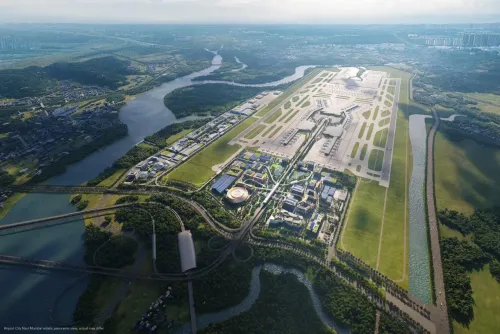
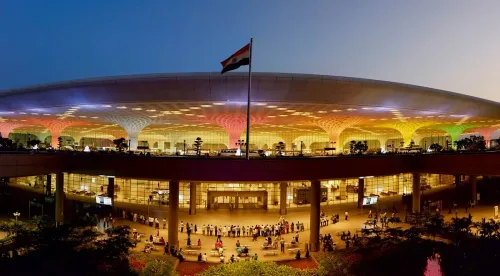
The denial comes even as Adani Airport City Limited (AACL), a wholly owned subsidiary of AAHL, has unveiled an ambitious programme to develop integrated airport cities across its network spanning five states. The first phase involves an investment of more than ₹20,000 crore and a land bank of over 655 acres across six airports.
Approximately 22 million square feet of mixed-use space will be developed across Mumbai, Navi Mumbai, Ahmedabad, Lucknow, Jaipur, and Guwahati. Nearly 440 acres of the total land bank is concentrated in Mumbai and Navi Mumbai alone, reflecting the Mumbai Metropolitan Region's (MMR) standing as India's primary commercial and aviation gateway.
What the Airport Cities Will Include
The integrated districts are designed to bring together hospitality, retail, entertainment, convention facilities, and commercial office space within walkable urban environments seamlessly connected to airport, Metro, and city transport infrastructure. According to the company, nearly 70 per cent of the planned investment will flow into Mumbai and Navi Mumbai.
What to Watch
The firm denial is likely to calm immediate speculation, but the Adani Group's deepening footprint across airport infrastructure — now spanning six major gateways — means questions about adjacency into aviation services will periodically resurface. The group's next moves in the airport city programme, particularly the pace of the ₹20,000 crore first-phase rollout, will be the more immediate story to track.
Point of View
But the fact that it was necessary at all reflects a broader market assumption: a group that controls India's largest private airport network is a natural candidate to move into airlines. Adani has so far resisted that logic, choosing instead to monetise its airport footprint through real estate and infrastructure — a capital-lighter, less operationally risky bet than aviation. The ₹20,000 crore airport city programme is the real story here, and it deserves more scrutiny than the airline rumour it overshadowed. Whether those integrated districts can generate the returns to justify the land investment, and on what timeline, is the question analysts should be pressing.
NationPress
22 Oct 2026
Frequently Asked Questions
Has Adani Enterprises confirmed any plans to start an airline?
No. Adani Enterprises Limited has categorically denied any such plans, stating it is 'not evaluating any proposal to enter the airline business.' The company called the reports 'entirely baseless and factually incorrect.'
Why did speculation arise about Adani entering the airline business?
The Adani Group operates India's largest private airport network through Adani Airport Holdings Limited, spanning six major airports. This existing aviation infrastructure led sections of the media and market participants to speculate about a potential move into commercial airline operations, which the company has now firmly denied.
What is Adani's actual airport investment plan?
Adani Airport City Limited (AACL), a subsidiary of Adani Airport Holdings Limited, is developing integrated airport cities across six airports in five states with a first-phase investment of over ₹20,000 crore. The project covers more than 655 acres and approximately 22 million square feet of mixed-use space.
Which cities are covered under the Adani airport city development?
The development spans Mumbai, Navi Mumbai, Ahmedabad, Lucknow, Jaipur, and Guwahati. Nearly 70% of the ₹20,000 crore investment is focused on Mumbai and Navi Mumbai, reflecting the Mumbai Metropolitan Region's role as India's top commercial and aviation hub.
What will the Adani airport cities include?
The integrated districts are planned to house hotels, offices, retail outlets, dining, entertainment venues, and convention facilities, all connected to airport, Metro, and city transport networks within walkable urban environments.