Adani Airports to build airport cities across 655 acres in 5 states, invest ₹20,000 crore
Synopsis
Adani Airport Holdings has committed over ₹20,000 crore to build integrated airport cities across 655 acres at eight airports — with 70% of capital aimed at Mumbai and Navi Mumbai alone. The Kimpton brand's India debut via an IHG tie-up signals that this is as much a luxury hospitality play as it is an infrastructure bet, modelled on Changi and Incheon.
Key Takeaways
Adani Airport City Limited (AACL) announced plans on 25 June to develop integrated airport cities across 655+ acres at eight airports in five states .
First-phase investment exceeds ₹20,000 crore , with nearly 70% directed at Mumbai and Navi Mumbai .
Total built-up area planned: approximately 22 million square feet across Mumbai, Navi Mumbai, Ahmedabad, Lucknow, Jaipur , and Guwahati .
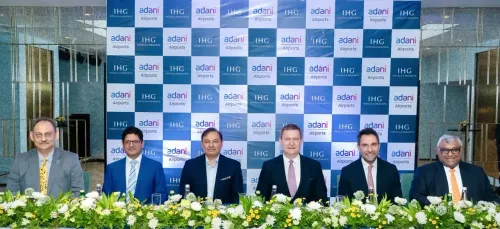
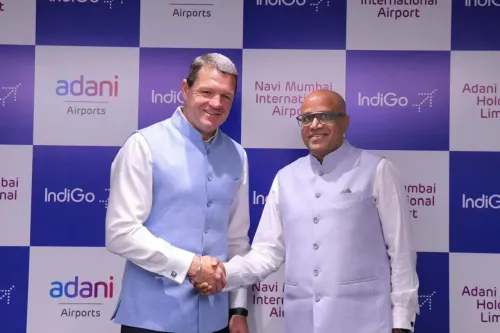
AAHL has signed hotel management agreements with IHG Hotels & Resorts for five hotels, including the first Kimpton property in India.
The model is inspired by global airport districts including Singapore's Changi , Dubai International , Amsterdam's Schiphol , and Seoul's Incheon .
Adani Airport City Limited (AACL), a wholly-owned subsidiary of Adani Airport Holdings Limited (AAHL), on Thursday, 25 June announced plans to develop integrated airport cities spanning over 655 acres across eight airports in five states, with a first-phase investment exceeding ₹20,000 crore. The initiative marks one of the most ambitious airport-led urban development programmes by a private operator in India.
Scale and Scope of the Development
The planned development will cover approximately 22 million square feet across Mumbai, Navi Mumbai, Ahmedabad, Lucknow, Jaipur, and Guwahati. Of the total 655-acre land bank, nearly 440 acres are concentrated in Mumbai and Navi Mumbai alone, reflecting the scale of AAHL's footprint in the Mumbai Metropolitan Region (MMR).
Nearly 70 per cent of the planned investment will be directed at Mumbai and Navi Mumbai, which AAHL describes as India's leading commercial, financial, and aviation gateway.
What the Airport Cities Will Offer
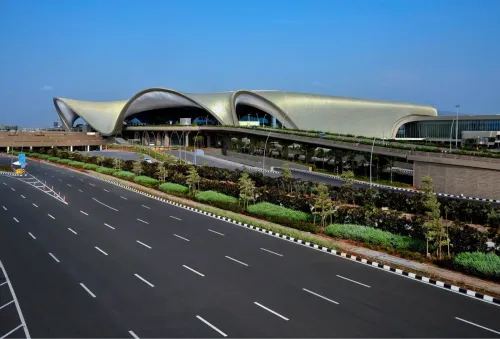
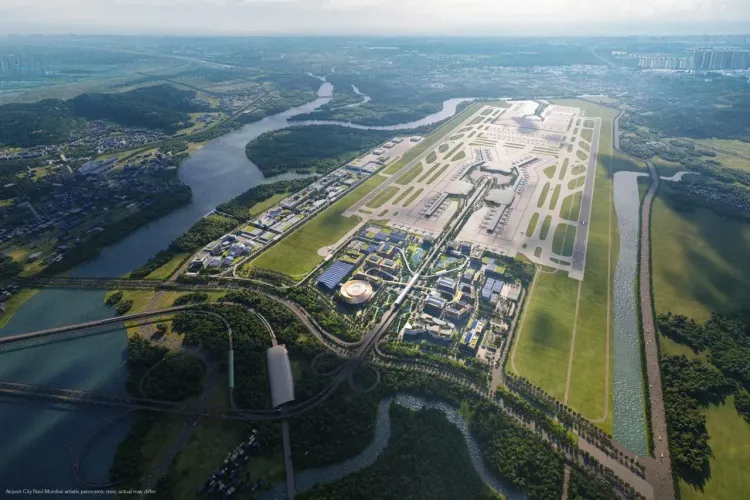
Each airport city is being designed as an integrated, walkable urban district — bringing together hospitality, retail, entertainment, convention facilities, and commercial infrastructure within a single master-planned environment. The districts are intended to function as natural extensions of the airport ecosystem rather than standalone real estate projects.
The developments will be seamlessly connected with airport, Metro, and city transport infrastructure, allowing travellers, businesses, and local communities to access hotels, offices, dining, and entertainment within a unified precinct.
Global Benchmarks and Design Partners
AACL says the model is inspired by globally successful airport districts — Singapore's Changi, Dubai International, Amsterdam's Schiphol, and Seoul's Incheon. The company is working with leading global design and engineering partners, though their names have not been disclosed.
As part of the initiative, AAHL has signed hotel management agreements with IHG Hotels & Resorts for five luxury and premium hotels, including the debut of the Kimpton brand in India. The company is also in discussions with domestic and international partners across hospitality, food and beverage, retail, and entertainment.
What Adani Group Said
Jeet Adani, Director of AAHL, said: 'Around the world, the most successful airport districts have become centres of commerce, tourism and urban growth. As India's aviation market expands, airports have an opportunity to create value far beyond aviation. We are creating a network of integrated urban destinations where airports become catalysts for investment, employment, better passenger experiences and the long-term growth of the cities they serve.'
He added that the objective is to 'create vibrant districts that combine connectivity with experience, generating economic activity, employment and long-term value for the communities around them.'
What Comes Next
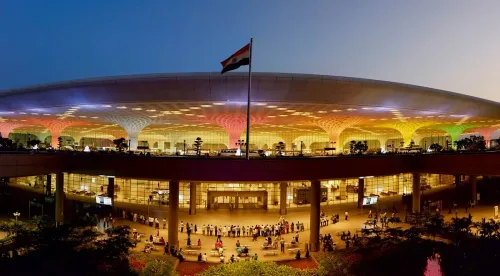
With the first-phase investment framework announced, the focus now shifts to execution timelines, partner disclosures, and regulatory clearances across five states. The scale of the Mumbai and Navi Mumbai component — anchored around Chhatrapati Shivaji Maharaj International Airport and the upcoming Navi Mumbai International Airport — will be closely watched as a bellwether for India's emerging airport-city model.
Point of View
AAHL is a private operator working across five state jurisdictions, each with its own land, zoning, and regulatory regime. The 70% concentration in Mumbai also means the programme's success is heavily contingent on Navi Mumbai International Airport's timeline — which has already seen years of delays. The IHG and Kimpton tie-up is a credible hospitality signal, but 22 million square feet of mixed-use space demands anchor tenants, not just hotel flags. Execution risk, not ambition, is the real story.
NationPress
24 Sept 2026
Frequently Asked Questions
What is Adani's airport city development plan?
Adani Airport City Limited (AACL) plans to develop integrated airport cities across 655-plus acres at eight airports in five Indian states, with a first-phase investment of over ₹20,000 crore. The development will cover approximately 22 million square feet and include hospitality, retail, entertainment, convention, and commercial facilities.
Which cities are included in Adani's airport city project?
The development spans Mumbai, Navi Mumbai, Ahmedabad, Lucknow, Jaipur, and Guwahati. Nearly 440 of the 655-plus acres are located in Mumbai and Navi Mumbai, which will also receive close to 70% of the total first-phase investment.
What is the Kimpton brand's connection to the Adani airport city project?
As part of the initiative, AAHL has signed hotel management agreements with IHG Hotels & Resorts for five luxury and premium hotels. This includes the debut of the Kimpton brand in India, marking the first Kimpton property in the country.
How does Adani's airport city model differ from conventional real estate?
Unlike standalone real estate developments, the airport city model is designed around connectivity and experience — integrating hotels, offices, retail, dining, entertainment, and convention facilities within a single master-planned precinct seamlessly linked to airport, Metro, and city transport networks.
Which global airport districts inspired Adani's airport city plan?
AACL has cited Singapore's Changi, Dubai International, Amsterdam's Schiphol, and Seoul's Incheon as the global benchmarks informing its airport-city design and development approach.