AFSPA extended 6 months in Manipur, Nagaland, Arunachal from Oct 1
Synopsis
India's Home Ministry has renewed AFSPA for six more months across most of Manipur, swaths of Nagaland, and three Arunachal Pradesh districts from 1 October — a quiet but significant decision that keeps sweeping military powers in place across the Northeast even as Manipur's 260-death ethnic conflict enters its third year with no clear resolution.
Key Takeaways
The MHA extended AFSPA for six months effective 1 October across most of Manipur , parts of Nagaland , and parts of Arunachal Pradesh .
In Manipur , 13 police stations in 5 Imphal Valley districts remain excluded from the extension.
In Nagaland , 9 full districts and 21 police stations in 5 more districts are covered.
Manipur's ethnic conflict between Meitei and Kuki-Zo-Hmar communities has claimed over 260 lives since 3 May 2023 .
The Act was previously withdrawn from Tripura (2015) , Meghalaya (2018) , and Mizoram (1980s) as security improved.
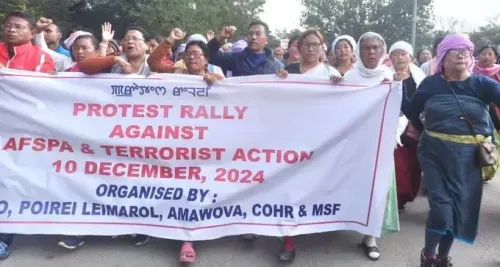
Civil society groups including the Meira Paibis and Manipuri Students' Federation continue to demand AFSPA's repeal.
The Ministry of Home Affairs (MHA) on Friday, 25 September 2026, extended the Armed Forces (Special Powers) Act (AFSPA), 1958, for another six months across most parts of Manipur, several districts of Nagaland, and certain districts of Arunachal Pradesh, with the extension taking effect from 1 October. The decision, conveyed through three separate MHA notifications, follows a government review of the law and order situation in each of the three states.
Key Developments in the Extension
In Manipur, the AFSPA has been renewed across the entire state with a notable carve-out: areas under the jurisdiction of 13 police stations across five districts — Imphal West, Imphal East, Thoubal, Bishnupur, and Kakching — remain excluded. These five districts lie in the Imphal Valley region, which accounts for five of Manipur's 16 districts.
In Nagaland, the Act has been extended across nine full districts — Dimapur, Niuland, Chumoukedima, Mon, Kiphire, Noklak, Phek, Peren, and Meluri — and 21 police stations spread across five additional districts: Kohima, Mokokchung, Longleng, Wokha, and Zunheboto.
In Arunachal Pradesh, the extension covers Tirap, Changlang, and Longding districts, as well as police station jurisdictions in Namsai, Mahadevpur, and Chowkham in Namsai district, which borders Assam.
Manipur's Prolonged Crisis: The Backdrop
The extension comes against the backdrop of one of independent India's most prolonged ethnic conflicts. Manipur has been gripped by violence between the majority Meitei community and the minority Kuki-Zo-Hmar tribals since 3 May 2023, a conflict that has claimed over 260 lives. The sustained unrest forced the state under President's Rule on 13 February 2025, four days after Chief Minister N. Biren Singh resigned on 9 February, bringing down the second Bharatiya Janata Party (BJP)-led government in the state. President's Rule was subsequently withdrawn after Yumnam Khemchand Singh assumed charge as Chief Minister on 4 February this year.
Officials in Imphal confirmed that the MHA notification was issued in exercise of powers under Section 3 of the AFSPA, 1958, following a review of the prevailing law and order situation.
What AFSPA Means on the Ground
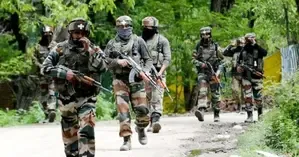
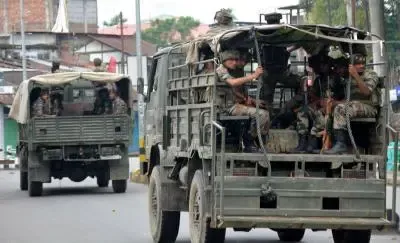
The AFSPA grants armed forces operating in notified 'disturbed areas' sweeping powers — including the authority to search premises, detain individuals, and open fire if deemed necessary for the 'maintenance of public order.' Critics and civil society groups argue the Act provides virtual immunity to security personnel, making accountability for alleged abuses difficult. Several organisations in Manipur, including the Manipuri Students' Federation (MSF), the Nupi Khunai-Yairipok, and the Meira Paibis, have intermittently agitated for the Act's withdrawal, as have groups in other Northeastern states.
Gradual Rollback Elsewhere in the Northeast
The Northeast has seen a patchwork of AFSPA coverage evolve over decades. Assam Chief Minister Himanta Biswa Sarma has noted that the MHA has already lifted the Act from large parts of Assam, where it was first imposed in 1990 at the peak of insurgency by the United Liberation Front of Asom (ULFA). Wider rollbacks have occurred as security situations improved: the Act was withdrawn from Tripura in 2015, Meghalaya in 2018, and Mizoram in the 1980s. Manipur, Nagaland, and parts of Arunachal Pradesh remain among the last holdouts, with every six-month renewal renewing debate about whether conditions warrant its continuation.
What Happens Next
The renewed AFSPA will remain in force until at least March 2027, subject to the next scheduled review. Civil society groups are expected to renew calls for repeal or amendment, particularly in light of Manipur's ongoing ethnic fault lines. The government's periodic exclusion of select police station areas from coverage suggests a gradual, condition-based rollback framework is in place, though critics argue the pace remains far too slow given the human cost of the conflict.
Point of View
With over 260 dead, and the Centre has no publicly articulated exit strategy either for the conflict or for the Act. The incremental exclusion of Imphal Valley police stations signals that the government's own framework acknowledges a distinction between settled and unsettled zones — yet that framework has not translated into a clear timeline for full withdrawal. Comparing the Northeast to states where AFSPA was lifted — Tripura, Meghalaya — the common denominator was a negotiated peace process, not just a security improvement. Without a political track to match the military one in Manipur, every six-month renewal is less a security decision and more an admission that governance has stalled.
NationPress
25 Sept 2026
Frequently Asked Questions
What is AFSPA and why has it been extended?
The Armed Forces (Special Powers) Act, 1958 grants security forces in notified 'disturbed areas' broad powers to search, arrest, and use force for the maintenance of public order. The MHA extended it for six months from 1 October in most of Manipur, parts of Nagaland, and parts of Arunachal Pradesh following a review of the law and order situation in each state.
Which areas of Manipur are excluded from the AFSPA extension?
Areas under 13 police stations in five Imphal Valley districts — Imphal West, Imphal East, Thoubal, Bishnupur, and Kakching — are excluded from the latest extension. The rest of Manipur's 16 districts remain under the Act.
Which districts in Nagaland and Arunachal Pradesh are covered?
In Nagaland, nine full districts — including Dimapur, Mon, Kohima, and Kiphire — and 21 police stations in five other districts are covered. In Arunachal Pradesh, Tirap, Changlang, and Longding districts, plus select police stations in Namsai district bordering Assam, fall under the extension.
What is the background to Manipur's ongoing conflict?
Ethnic violence between the majority Meitei community and the minority Kuki-Zo-Hmar tribals broke out on 3 May 2023 and has since claimed over 260 lives. The crisis forced the state under President's Rule on 13 February 2025 after Chief Minister N. Biren Singh's resignation; Yumnam Khemchand Singh took over as Chief Minister on 4 February 2026.
Has AFSPA ever been withdrawn from any Northeastern state?
Yes. The Act was withdrawn from Mizoram in the 1980s, Tripura in 2015, and Meghalaya in 2018 as security conditions improved. In Assam, where it was first imposed in 1990 against ULFA insurgency, it has been progressively lifted from large parts of the state, according to Chief Minister Himanta Biswa Sarma.