Ahmadi Community Faces Continued Restrictions on Eid Prayers in Pakistan
Synopsis
A recent report reveals that the Ahmadi community in Punjab, Pakistan, was once again barred from celebrating Eid prayers, highlighting ongoing systemic discrimination and exclusion. This situation raises serious questions about religious freedom and accountability.
Key Takeaways
Ahmadi community barred from Eid prayers in Punjab.
Police presence and administrative barriers disrupt gatherings.
Systematic discrimination entrenched in legal frameworks.
Authorities often act as instruments of restriction .
Yearly restrictions contradict claims of religious freedom .
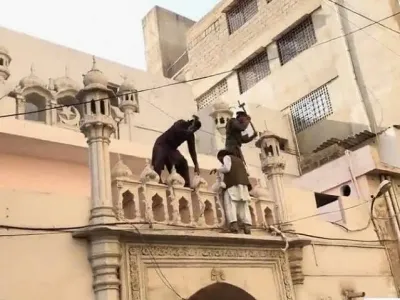
Islamabad, March 30 (NationPress) A prominent organization advocating for minority rights has reported that once again, members of the Ahmadi community have been barred from participating in Eid prayers across various districts in Punjab, Pakistan. This has transformed what should have been a unifying moment into yet another episode of exclusion.
According to the Voice of Pakistan Minority (VOPM), the presence of police, various administrative obstacles, and the looming threat of legal repercussions have resulted in disruptions or complete cancellations of their gatherings.
"The recurrence of these incidents is particularly disturbing. These aren't isolated events or mere oversights; they are part of a systematic, almost expected reality. Year after year, the Ahmadis face identical restrictions, unyielding pressures, and the same underlying message: their involvement in public religious life is unwelcome," stated the VOPM.
"The origins of this cycle can be traced back to Pakistan's legal framework, which explicitly limits Ahmadi religious practices. Over time, these laws have not only shaped policies but have also influenced public perceptions, normalizing discrimination and empowering local authorities to act against the community with minimal pushback. What is mandated legally manifests in real-life experiences of fear and marginalization," it continued.
The rights organization raised concerns regarding the role of Pakistani authorities in perpetuating this cycle, emphasizing that while law enforcement is expected to ensure safety and uphold rights, they frequently serve as tools of constraint.
The ongoing interference of Pakistani authorities in peaceful religious expressions, they noted, exacerbates exclusion and raises serious questions about accountability and the rule of law.
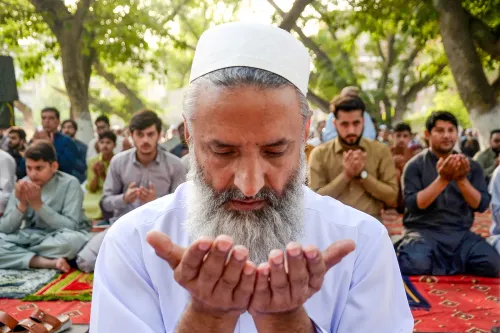
"For the Ahmadi community, the repercussions extend well beyond missing a single prayer. Eid is a profoundly significant occasion, representing belonging, faith, and community. Being deprived of the opportunity to celebrate it openly, year after year, intensifies their sense of isolation, transforming a moment of joy into a stark reminder of inequality," the VOPM remarked.
What makes this recurring pattern even more notable is the contradiction it presents to the narratives of Pakistan, which has consistently vowed to promote religious freedom and combat extremism.
"Nevertheless, the yearly restrictions imposed on Ahmadis narrate a different tale—one in which commitments largely remain unfulfilled on the ground," it concluded.
Stressing the entrenched discrimination faced by the Ahmadi community, the VOPM stated, "A society cannot claim to uphold justice while permitting the same violations to happen repeatedly. Until this cycle is disrupted, the promise of equal rights in Pakistan will remain not just unmet but systematically denied."
Point of View
This report underscores the persistent inequalities faced by the Ahmadi community in Pakistan. While the nation professes a commitment to religious freedom, the recurring restrictions illustrate a dire need for accountability and reform to ensure true equality for all citizens.
NationPress
7 Oct 2026
Frequently Asked Questions
Why are Ahmadis restricted from offering Eid prayers?
The restrictions stem from Pakistan's legal framework, which imposes limitations on Ahmadi religious practices, leading to systemic discrimination.
What is the impact of these restrictions on the Ahmadi community?
The ongoing exclusion deepens feelings of isolation and marginalization within the Ahmadi community, transforming meaningful occasions like Eid into reminders of inequality.
How do Pakistani authorities contribute to this situation?
Authorities often act as instruments of restriction, enforcing laws that limit the rights of Ahmadis rather than protecting their freedoms.
What does the Voice of Pakistan Minority advocate for?
The VOPM advocates for the rights of minority groups in Pakistan, emphasizing the need for an end to discriminatory practices and a commitment to true religious freedom.
How often do such incidents occur?
These incidents occur annually, indicating a troubling pattern of exclusion during significant religious events for the Ahmadi community.