Ahmedabad green cover plan: AMC targets 13.5% by 2029 for CWG
Synopsis
Ahmedabad's air barely improved last year, with PM10 slipping only from 103 to 102. With the 2030 Commonwealth Games approaching, the AMC has launched a four-year plan to curb dust and expand green cover. It has already sealed 30 construction sites and collected ₹3.25 crore in fines, but its green cover target is a modest half a percentage point.
Key Takeaways
The AMC aims to raise Ahmedabad 's green cover from 13% to over 13.5% by 2029 under a 2026-2029 action plan.
The AMC inspected 1,186 construction sites in 2026-27 , issued 4,114 notices and sealed around 30 sites .
Fines of ₹3.25 crore were collected between 1 April and 22 November , led by the North-West Zone at ₹1.05 crore .
The city now has 308 sensors plus 10 CAAQMS monitoring stations.
Ahmedabad's PM10 level was 102 in 2025-26 , against 103 in 2024-25 .
The plan was prepared with ICLEI South Asia , while IIT Kanpur is studying the city's pollution sources.
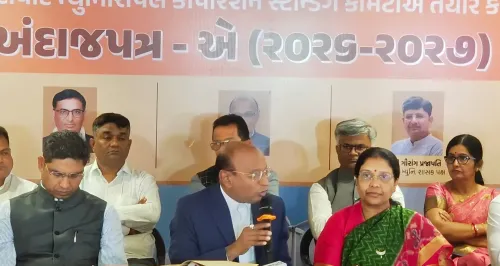
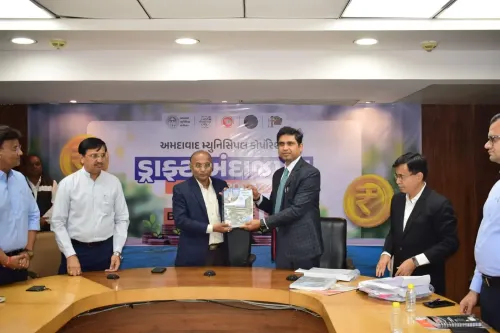
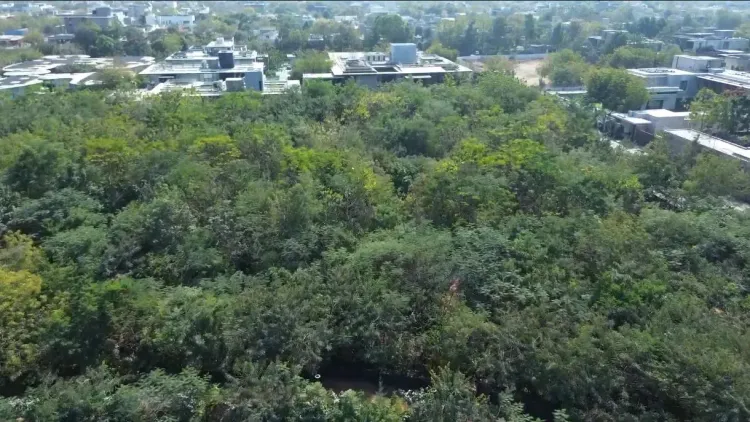
The Ahmedabad Municipal Corporation (AMC) has drawn up a four-year action plan to raise Ahmedabad's green cover from the current 13 per cent to more than 13.5 per cent by 2029. The plan aims to improve air quality and curb pollution ahead of the 2030 Commonwealth Games. Covering 2026 to 2029, it targets dust from construction sites and roads, monitors industrial emissions, expands green spaces and tightens enforcement against polluters.
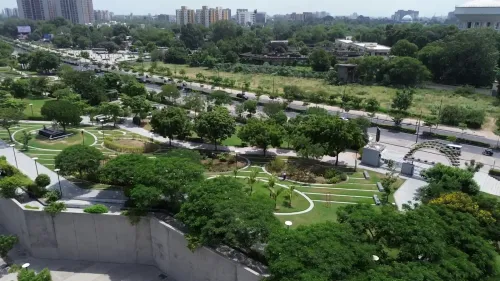
The roadmap also includes urban forests, new gardens and tree plantations along roads. It lays out how one of Gujarat's fastest-growing cities plans to manage the environmental cost of a construction boom before an international sporting event.
Key Developments in Enforcement
In the current financial year 2026-27, the AMC inspected 1,186 construction sites and issued 4,114 notices for breaching pollution-control norms. Around 30 sites were sealed after notices and penalties failed to bring them into compliance.
Between 1 April and 22 November, the civic body collected ₹3.25 crore in fines from construction sites, according to the plan. The North-West Zone recorded the highest recovery at ₹1.05 crore, followed by the East Zone at ₹65.31 lakh.
The South-West and South zones each contributed ₹43.15 lakh. The North Zone yielded ₹41.60 lakh, the West Zone ₹40.37 lakh and the Central Zone ₹10.07 lakh.
Rules for Construction Sites
Under its Good Construction Practices Policy, in force since July last year, the AMC requires dust sensors at construction sites with a carpet area above 20,000 square metres. The policy is implemented jointly by the Air Quality Management Cell (AQMC), the Estate Department and the Town Development Officer (TDO) Department.
Teams deployed across all zones check whether sites use green nets, sprinkle water, cover construction materials and provide wheel-washing for vehicles. The AQMC tracks sensor readings and acts against sites that record high pollution or break the norms. The Estate Department can seal sites that keep ignoring the rules after notices and penalties.
Monitoring Network and Joint Drives
Ahmedabad currently has 10 Continuous Ambient Air Quality Monitoring Stations (CAAQMS). Eight were set up by the Centre and two by the Gujarat Pollution Control Board (GPCB), and their live AQI readings appear on the Central government's portal.
The city also has 243 dust sensors at construction sites, around 50 environmental sensors at AMC ward offices under the Smart City initiative, and 15 sensors installed by the Indian Space Research Organisation (ISRO). That brings the total to 308.
When pollutant levels spike in an area, AQMC teams carry out field inspections to trace the likely sources. Daily checks cover construction sites, roads without end-to-end paving, industrial units, ready-mix concrete plants and bridges under construction. Reports with photographs are uploaded through a designated application.
When AQI levels rise, the Solid Waste Management Department, Health Department, GPCB, AQMC and police run joint drives. These can include closure notices and sealing of non-compliant units. Mist machines also run round the clock at several locations to suppress dust.
Road Dust and Pollution Hotspots
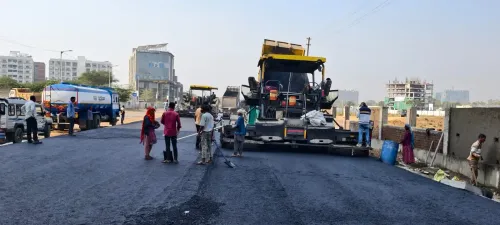
The AMC has flagged road dust as a key concern. The Engineering Department's Road Projects wing handles resurfacing, end-to-end road development, RCC and white-topping on high-dust stretches. The Garden Department plants trees along dividers and roadsides, and the civic body works to stop illegal dumping of construction and demolition (C&D) waste on vacant AMC plots.
Ahmedabad's PM10 concentration was recorded at 102 in 2025-26, only marginally lower than 103 in 2024-25. The AMC has named National Highway works, its own bridge projects, the Kankaria railway yard and the upgrade of the Sardar Patel Ring Road as major dust challenges. The impact is sharpest in winter, when fine particulate matter tends to stay closer to the ground.
Long-Term Measures and Expert Inputs
The plan was prepared with guidance from ICLEI South Asia, a consultant organisation that has worked with the AQMC for five years. Separately, IIT Kanpur is studying pollution sources across the city, including their intensity, location and timing.
Planned long-term measures include:
- Dust-free roads along major stretches, industrial areas and hotspots
- Tyre washers, anti-smog guns and CCTV cameras at construction sites
- Encouraging industries to install pollution-control equipment, adopt Online Continuous Emission Monitoring Systems (OCEMS) and switch to cleaner fuels
- Stricter action against illegal C&D waste disposal and open burning of garbage
- Mechanical sweeping of major roads
- Pollution-control equipment at crematoriums
Other proposals include a single dashboard for all air-quality devices, drone surveillance, an air-quality forecasting system, stricter checks on vehicle Pollution Under Control certificates and wider adoption of electric vehicles.
The AMC intends to roll out these measures between 2026 and 2029. Progress on dust control and green cover will be watched closely as Ahmedabad prepares to host the 2030 Commonwealth Games.
Point of View
And the PM10 shift from 103 to 102 shows how little the needle has moved. The enforcement numbers suggest the AMC is policing private builders, yet its own list of hotspots is led by public works: highways, bridges, the Kankaria railway yard and the Ring Road upgrade. ₹3.25 crore in fines is modest next to the scale of construction under way. The real test is whether the AMC applies the same discipline to state-backed projects and publishes source-wise data once the IIT Kanpur study is complete.
NationPress
28 Nov 2026
Frequently Asked Questions
What is the AMC's four-year air quality plan for Ahmedabad?
It is a 2026-2029 action plan by the Ahmedabad Municipal Corporation to curb pollution and raise green cover from 13% to over 13.5% by 2029. It focuses on construction and road dust, industrial emissions, green spaces and stronger enforcement ahead of the 2030 Commonwealth Games.
How much has the AMC collected in pollution fines this year?
The AMC collected ₹3.25 crore in fines from construction sites between 1 April and 22 November. The North-West Zone accounted for the most, at ₹1.05 crore.
What is Ahmedabad's current PM10 level?
Ahmedabad's PM10 concentration was recorded at 102 in 2025-26. That is marginally lower than 103 in 2024-25.
Which projects are the biggest dust challenges in Ahmedabad?
The AMC has identified National Highway works, its own bridge projects, the Kankaria railway yard and the Sardar Patel Ring Road upgrade as major challenges. The problem is worse in winter, when fine particles stay closer to the ground.
Who is helping the AMC with the pollution plan?
ICLEI South Asia, which has worked with the AMC's Air Quality Management Cell for five years, guided the plan. IIT Kanpur is separately studying the intensity, location and timing of pollution sources across the city.