India Innovates AI Solutions for Early Preterm Birth Prediction

Synopsis
In a groundbreaking initiative, India is conducting the largest pregnancy study to develop AI-based tools aimed at reducing preterm births, with a focus on improving maternal and child health outcomes.
Key Takeaways
GARBH-INi initiative involves a study of 12,000 pregnant women .
Focus on developing AI-based solutions to predict preterm births.
Creation of a national biorepository with over 1.6 million biospecimens .
Addresses a critical public health issue in India.
Part of a larger mission to integrate science with nation-building.
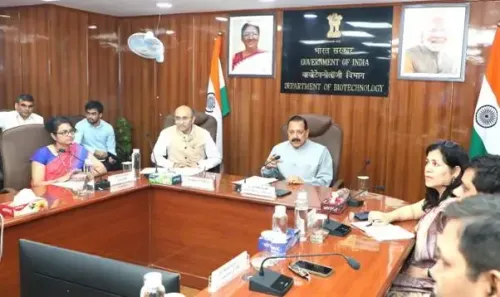
New Delhi, March 23 (NationPress) - Dr. Jitendra Singh, the Union Minister of State for Science & Technology, announced on Monday that India is spearheading the largest pregnancy cohort study involving 12,000 women as part of the GARBH-INi initiative. The primary goal is to create indigenous, AI-powered solutions aimed at preventing preterm births.
During an event, Singh elaborated that this initiative facilitates the development of AI-enhanced pregnancy dating models specifically designed for the Indian demographic, along with discovering microbiome-based predictors for preterm birth, rapid diagnostic tools, and genetic indicators for early risk evaluation.
These innovations are poised to significantly enhance maternal and child health outcomes across the nation, addressing preterm births, which are a major contributor to neonatal mortality and long-term health issues, he noted.
The program has successfully enrolled around 12,000 pregnant women, making it one of the largest pregnancy cohorts in South Asia. It has also established a repository containing over 1.6 million well-characterized biospecimens and more than one million ultrasound images to support ongoing research.
Singh emphasized that India bears a substantial share of the global burden of preterm births, highlighting the need for solutions that are relevant to Indian circumstances.
This program represents a comprehensive, data-centric approach that merges clinical epidemiology, multi-omics biomarkers, and artificial intelligence for tailored predictions.
The initiative has also set up a national biorepository and the GARBH-INi-DRISHTI data-sharing platform, which broadens access for the research community and contributes to international scientific literature.
During the announcement, significant partnerships and technology transfer agreements were formalized, including the transfer of microbiome-based biotherapeutic technology. Initiatives like GARBH-INi are integral to a broader national mission that connects scientific advancements with long-term nation-building, he highlighted.
According to the minister, India’s bioeconomy has expanded from nearly $10 billion in 2014 to approximately $195 billion, with the nation gaining global recognition for its strengths in preventive and primary healthcare, bolstered by homegrown innovations.
Dr. V.K. Paul, a member of NITI Aayog, mentioned that the next phase of the program should concentrate on the effective application of the tools, predictive models, and platforms that have been developed to date.
aar/pk
Point of View
It is evident that India's proactive approach to leveraging AI in maternal healthcare through the GARBH-INi initiative represents a significant step forward. The focus on indigenous solutions tailored for the Indian context reflects a commitment to improving health outcomes while addressing a critical public health issue.
NationPress
22 Sept 2026
Frequently Asked Questions
What is the GARBH-INi initiative?
The GARBH-INi initiative is India's largest pregnancy cohort study aimed at developing AI-driven solutions to prevent preterm births, involving 12,000 women.
How many women are involved in the study?
The study involves approximately 12,000 pregnant women, making it one of the largest pregnancy cohorts in South Asia.
What are the main goals of this initiative?
The main goals include creating AI-based pregnancy dating models, identifying microbiome predictors of preterm birth, and developing rapid diagnostic tools.
Why is addressing preterm births important?
Preterm births are a leading cause of neonatal mortality and can have long-term health implications, making their prevention crucial for improving maternal and child health outcomes.
What is the significance of the national biorepository?
The national biorepository supports research by providing access to a vast collection of biospecimens and ultrasound images, crucial for the development of predictive models.