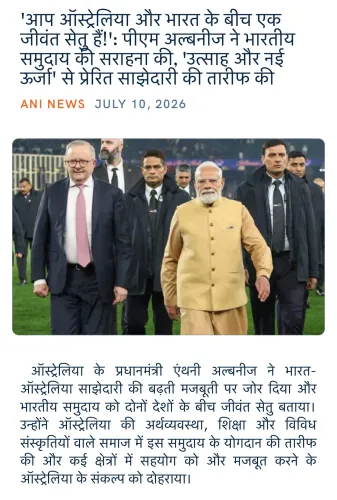
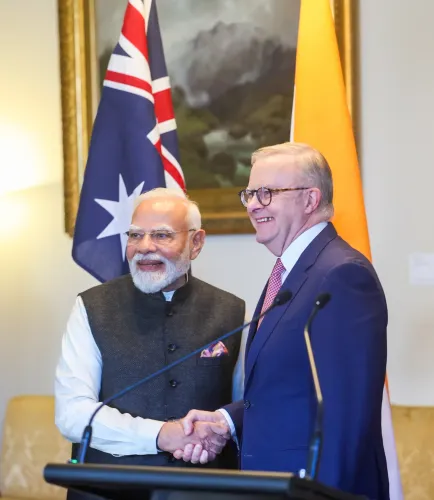
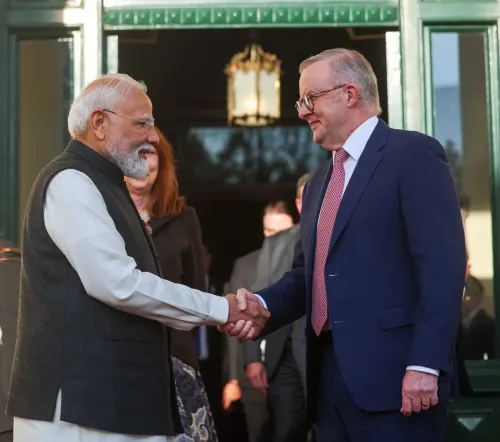
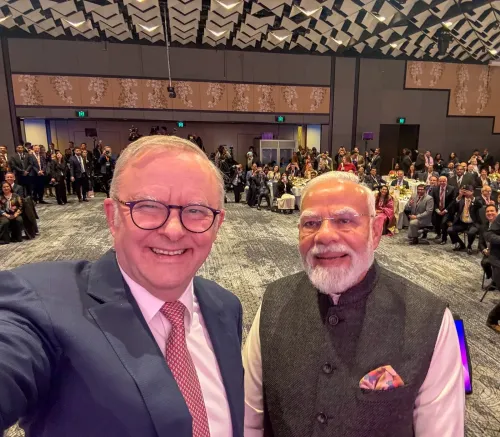
India partnership central to Albanese's vision for Australia's future by 2050
Synopsis
At a major economic conference in Canberra, Australian PM Anthony Albanese named India a defining pillar of Australia's strategic future — not just a trading partner. With India on course to become the world's third-largest economy this decade, Albanese's framing positions the Australia–India relationship as central to how a middle power navigates a fast-shifting Indo-Pacific.
Key Takeaways
Australian PM Anthony Albanese identified India as a key priority for Australia's long-term economic and strategic future at the CEDA State of the Nation Conference in Canberra .
Albanese described the Indo-Pacific as the world's fastest-growing region and said Australia must 'own our place' in it.
The Australia–India Comprehensive Strategic Partnership covers trade, defence, critical minerals, technology, and education.
The Economic Cooperation and Trade Agreement (ECTA) has further strengthened bilateral trade ties.
Albanese noted India is set to become the third-largest economy in the world this decade — calling it 'an extraordinary opportunity' for Australia.
The Prime Minister has made two official visits to India and first visited the country in 1991 .
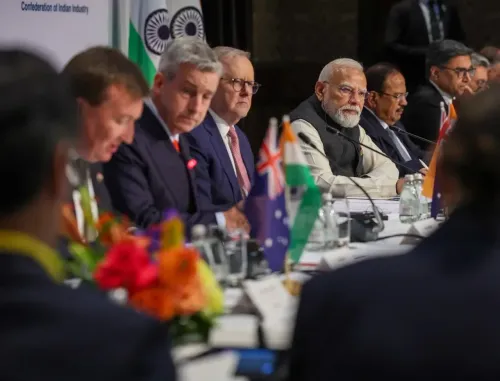
Australian Prime Minister Anthony Albanese has identified deeper ties with India as a cornerstone of Australia's long-term economic and strategic outlook, underscoring the relationship's growing importance to Canberra's regional ambitions. The remarks, delivered at the Committee for Economic Development of Australia (CEDA) State of the Nation Conference in Canberra, signal that India remains front and centre in Australia's Indo-Pacific calculus.
Key Remarks at the CEDA Conference
Addressing business and policy leaders, Albanese said deepening Australia's investment in South East Asia and elevating ties with India were among his government's foremost regional priorities. He described the Indo-Pacific as the world's fastest-growing region and stressed that Australia must 'own our place' in it — a pointed call for strategic confidence rather than passive engagement.
The Prime Minister argued that Australia's multicultural workforce, international connections, and regional partnerships represent its greatest competitive advantages. He said that by investing in innovation, manufacturing, energy security, and international partnerships, Australia had the opportunity to emerge from the current period of global uncertainty as 'a stronger, fairer and more resilient nation.'
The Australia–India Relationship: Where It Stands
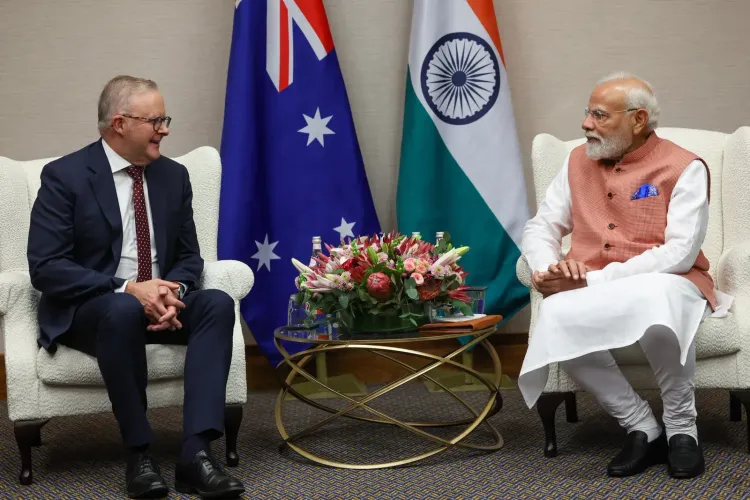
The two nations have systematically broadened their relationship in recent years, anchored by the Australia–India Comprehensive Strategic Partnership. Cooperation now spans critical minerals, technology, education, defence, and people-to-people links — sectors that reflect both countries' shared interest in a stable and prosperous Indo-Pacific.
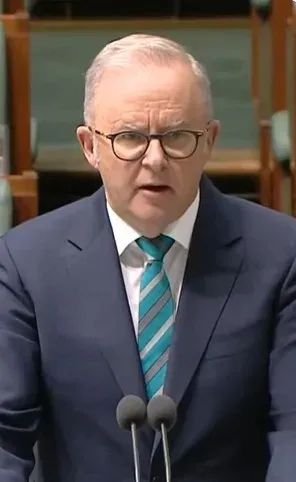
Trade ties received a structural boost through the Economic Cooperation and Trade Agreement (ECTA), which Albanese highlighted in a separate address at the Australian Parliament last month. He pointed to India's trajectory as a compelling economic case: 'India, of course, has the largest population in the world, but it will also grow to be the third largest economy in the world over this decade. That is an extraordinary opportunity for us in our region.'
Albanese's Personal Connect with India
Albanese also drew on personal experience to frame the bilateral relationship, recalling his first visit to India in 1991 as a 'wonderful experience.' He noted that he has since made two visits to India as Prime Minister, calling it 'one of my great honours.' The Prime Minister further noted that beyond trade and strategy, the two nations are 'drawn together through culture, education, and, of course, the international language of cricket.'
What This Means for the Indo-Pacific
This comes amid a broader recalibration of middle-power diplomacy in the Indo-Pacific, where nations like Australia are actively seeking to diversify economic and security partnerships beyond traditional Western alliances. India's rise as the world's most populous nation and its projected ascent to the third-largest economy this decade make it an indispensable partner for Canberra's 2050 ambitions.
Notably, the emphasis on India spans multiple pillars — trade, defence, education, and critical minerals — suggesting a relationship that is deepening in substance, not just rhetoric. As both governments look ahead, the pace of institutional cooperation under frameworks like ECTA and the Comprehensive Strategic Partnership is expected to accelerate.
Point of View
Personal emphasis on India — from his 1991 visit to two Prime Ministerial trips — signals that this is not a bureaucratic talking point but a genuine strategic conviction. Yet the real test is whether the relationship moves beyond high-level declarations into durable institutional architecture. ECTA is a start, but critical minerals cooperation and defence-industrial collaboration remain works in progress. As India accelerates toward the third-largest economy status, Australia's window to lock in deep structural ties is narrowing — middle powers that hesitate tend to find themselves as junior partners in arrangements shaped by others.
NationPress
25 Sept 2026
Frequently Asked Questions
Why is India important to Australia's long-term strategy?
Australian PM Anthony Albanese has described India as a key pillar of Australia's economic and strategic future, citing its trajectory to become the world's third-largest economy this decade. The two countries share interests across trade, defence, critical minerals, and the broader stability of the Indo-Pacific region.
What is the Australia–India Comprehensive Strategic Partnership?
It is the overarching bilateral framework that governs cooperation between Australia and India across trade, investment, defence, education, technology, and people-to-people links. It provides the institutional structure within which agreements like ECTA operate.
What is the ECTA and how does it affect Australia–India trade?
The Economic Cooperation and Trade Agreement (ECTA) is a bilateral trade pact that has expanded market access and deepened commercial ties between Australia and India. PM Albanese highlighted it as a key driver of the strengthened trading relationship between the two nations.
Where did Albanese make these remarks about India?
Albanese spoke about India's importance at the Committee for Economic Development of Australia (CEDA) State of the Nation Conference in Canberra. He made related remarks about India's economic rise in a separate address at the Australian Parliament the previous month.
What areas does Australia–India cooperation currently cover?
Cooperation spans critical minerals, technology, education, defence, energy security, and people-to-people links. Both nations are also expanding engagement in the Indo-Pacific through the Comprehensive Strategic Partnership and trade frameworks like ECTA.