Diwali food safety: AMC makes rapid test kits mandatory for Ahmedabad traders
Synopsis
Ahmedabad's civic body is putting food-safety tools directly in traders' hands this Diwali — making rapid adulteration test kits mandatory for sweet and mawa sellers with over ₹5 lakh turnover. With roughly 350 kits already distributed and the Health Department on enforcement duty, it's a notable shift from inspection-only policing to point-of-sale verification.
Key Takeaways
The Ahmedabad Municipal Corporation (AMC) has mandated rapid food-adulteration testing kits for sweet, mawa, and farsan traders with annual turnover above ₹5 lakh .
The kits, priced at around ₹3,000 , detect starch in mawa and can also be used by consumers for preliminary checks.
Around 350 people have already procured the kits, according to Standing Committee Chairman Kamlesh Patel .
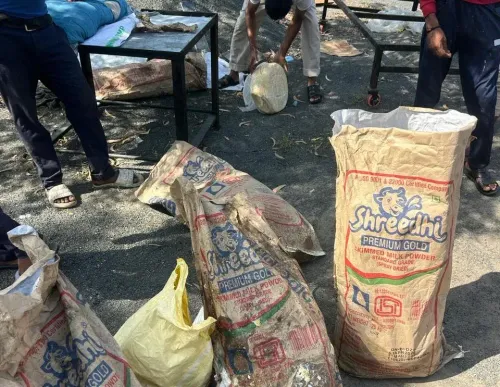
The directive follows recent incidents involving the sale of counterfeit and non-edible substances in the guise of mawa.
The AMC also approved upgrades to Kids City at Kankaria Lakefront and reduced Diwali public lighting to 7 pm–1 am at 7 locations to conserve electricity.
Investigations were ordered into two accidents at AMC work sites over the past 15 days , including one at a sewage treatment plant .
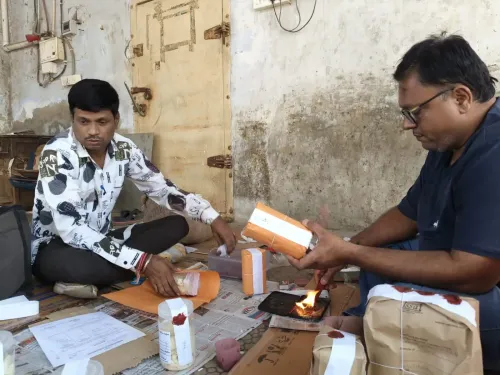
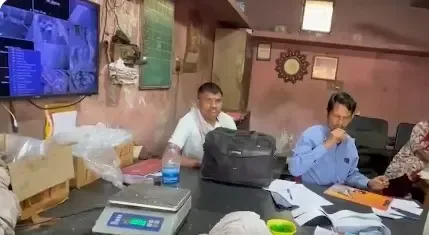
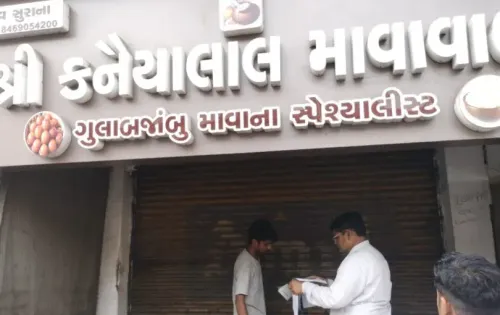
The Ahmedabad Municipal Corporation (AMC) on Thursday, 29 October 2026 made it mandatory for sweet, mawa, and farsan traders with an annual turnover exceeding ₹5 lakh to keep rapid food-adulteration testing kits during the Diwali festive season. The directive, aimed at curbing food adulteration and protecting public health, follows recent incidents involving the sale of counterfeit and non-edible substances being passed off as mawa in Ahmedabad.
What the Directive Covers
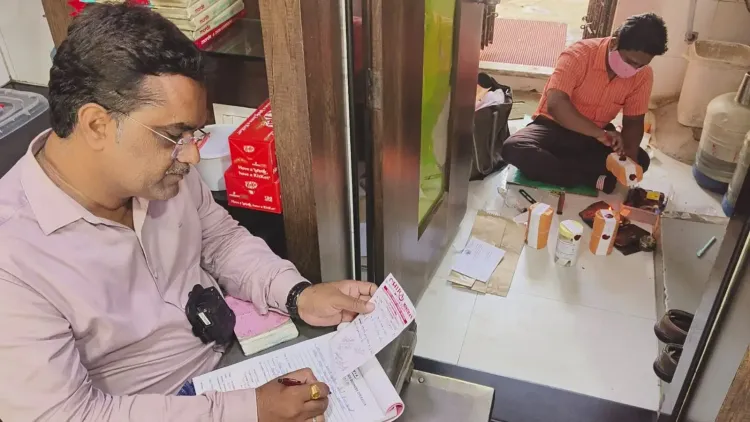
The order was announced by Standing Committee Chairman Kamlesh Patel following the AMC's weekly meeting. The AMC's Health Department has been directed to ensure that the specified traders procure and actively use the kits, which are priced at approximately ₹3,000 each. The kits are designed to detect the presence of starch in mawa as a preliminary quality check — a key marker of adulteration. Notably, the kits are also available to consumers who wish to conduct their own checks on purchased food products. According to Patel, around 350 people have already procured such kits ahead of the festival.
Background: Why This Matters Now
Diwali is among the peak seasons for mawa and mithai consumption across India, making it a period of heightened risk for food adulteration. This comes amid a broader pattern of civic authorities across Indian cities ramping up food-safety enforcement in the weeks before major festivals. The AMC's move signals a shift from purely inspection-based enforcement toward placing verification tools directly in the hands of traders — and consumers.
Water Connections and Safety Audits
The AMC's weekly meeting also addressed several other civic concerns. The corporation decided to intensify inspections targeting water wastage and illegal water connections. High-consumption establishments — including car washing centres, paying guest accommodations, and lodging and boarding facilities with large room counts — will face scrutiny. Departments have been directed to disconnect any illegal connections detected during these inspections in accordance with existing rules.
Separately, the committee called for investigations into the conduct of both officials and contractors in connection with two accidents reported in Ahmedabad over the past 15 days, including one at a sewage treatment plant (STP). According to Patel, the inquiry must determine whether the required safety equipment was available and whether safety standards — including during welding operations — were followed. Importantly, the probe will not be confined to contractors alone; the officials overseeing the work will also face scrutiny for possible negligence.
Kids City Upgrade and Diwali Lighting Cuts
The AMC also approved the modernisation of Kids City at Kankaria Lakefront, which will see the introduction of new attractions including a chocolate factory, a space exploration centre, a 'Khelo India' sports academy, a renewable energy technology centre, an aerodynamics and flight science laboratory, and a drone laboratory.
In a move to conserve electricity, the civic body announced a reduction in public lighting arrangements during Diwali. From Dhanteras to Labh Pancham, illumination will be provided at seven locations — comprising six bridges over the Sabarmati River and the Bhadrakali Mata Temple — down from previous years, which included traffic circles, underpasses, and government buildings. The lighting schedule will also be curtailed from the usual 7 pm–7 am to 7 pm–1 am, except on Diwali night and Bestu Varas (Gujarati New Year), when lights will remain on through the night.
With Diwali approaching, the AMC's enforcement posture will be closely watched to see whether rapid-kit compliance among traders translates into measurable reductions in adulteration complaints.
Point of View
But its effectiveness depends entirely on the AMC's Health Department following through with compliance checks — something Indian civic bodies have historically struggled to sustain beyond a headline announcement. The ₹3,000 price point is modest, yet smaller traders near the ₹5 lakh threshold may resist the outlay without a credible threat of penalty. More broadly, the move reflects a wider pattern of municipal bodies reaching for visible, festival-timed enforcement rather than addressing the supply-chain conditions that make mawa adulteration persistently profitable. Whether this translates into fewer adulteration complaints post-Diwali — or simply into kits sitting unused on shelves — will be the real measure of success.
NationPress
29 Oct 2026
Frequently Asked Questions
What is the AMC's new directive for food traders ahead of Diwali 2026?
The Ahmedabad Municipal Corporation has made it mandatory for sweet, mawa, and farsan traders with an annual turnover exceeding ₹5 lakh to keep rapid food-adulteration testing kits during the Diwali festive season. The directive was announced on 29 October 2026 by Standing Committee Chairman Kamlesh Patel.
How much does the rapid food-adulteration test kit cost, and what does it detect?
The kits are priced at approximately ₹3,000 each and are designed to detect the presence of starch in mawa as a preliminary indicator of adulteration. They can also be purchased and used by consumers for their own checks on food products.
Why has the AMC introduced this rule now?
The directive follows recent incidents in Ahmedabad involving the sale of counterfeit and non-edible substances being sold as mawa. Diwali is a peak season for mawa and mithai consumption, making it a high-risk period for food adulteration.
Who is responsible for enforcing the test-kit mandate?
The AMC's Health Department has been specifically instructed to ensure that the specified traders procure and use the kits. The civic body's enforcement posture is expected to be active through the Diwali season, from Dhanteras to Labh Pancham.
What other decisions did the AMC take at its weekly meeting on 29 October?
The AMC approved upgrades to Kids City at Kankaria Lakefront, ordered investigations into two work-site accidents including one at a sewage treatment plant, announced intensified inspections for illegal water connections, and decided to reduce public Diwali lighting to seven locations with a curtailed 7 pm–1 am schedule to conserve electricity.