Operation Falcon: ANC nabs 12 Myanmar poachers after 200-hour Andaman hunt

Synopsis
Twelve Myanmar nationals caught deep inside Indian forest territory — not just for poaching protected sea cucumbers, but for illegally infiltrating a strategically sensitive island chain. A 200-hour, five-force joint operation by the ANC exposes the dual threat these waters face: ecological plunder and sovereign boundary violations.
Key Takeaways
The Andaman and Nicobar Command (ANC) concluded Operation Falcon on 18 August , arresting 12 Myanmar nationals .
The search lasted over 200 hours (8+ days) through the dense jungles of North Andaman .
The operation involved the Indian Army , Indian Navy , Indian Air Force , Indian Coast Guard , and Andaman and Nicobar Police .
The case involved both illegal poaching and unlawful infiltration into Indian territory.
The sea cucumber , likely target of the poachers, is listed under Schedule-I of the Wildlife Protection Act — on par with tigers and elephants.
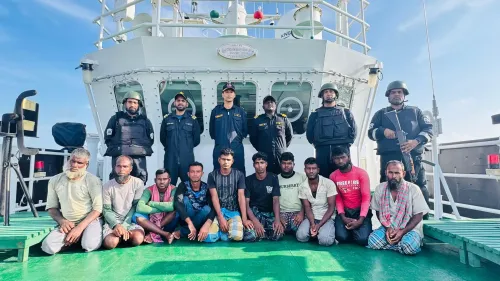
The Andaman and Nicobar Command (ANC) on Tuesday, 18 August announced the successful conclusion of Operation Falcon, following the arrest of 12 foreign poachers after a 200-hour search through the dense tropical jungles of North Andaman. The poachers, confirmed to be from Myanmar, had illegally infiltrated Indian territory — making this simultaneously a poaching case and a border security incident.
How Operation Falcon Unfolded
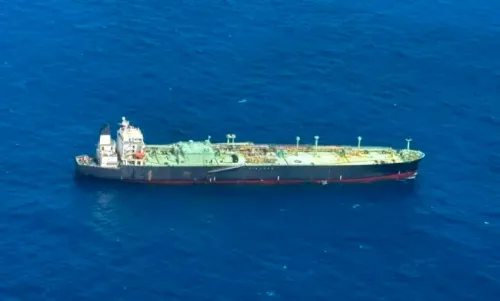
The operation was triggered by the seizure of a suspicious boat in waters around the archipelago. Security personnel subsequently apprehended one poacher near Diglipur, which revealed the presence of a larger gang operating in the region. Forces then pushed into the dense forest cover, sustaining a search that lasted more than eight days before all 12 individuals were captured.
'This was not only a case of poaching. It was also a case of illegal infiltration into Indian territory. Constant vigil is maintained against all illegal activities,' an official said.
Joint Forces, Seamless Coordination
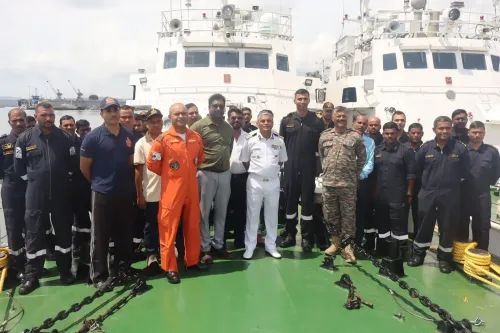
The ANC, India's only tri-services command, coordinated assets from the Indian Army, Indian Navy, Indian Air Force, Indian Coast Guard, and Andaman and Nicobar Police for the operation. According to the Command's post on social media platform X, the mission integrated 'persistent aerial, maritime and ground surveillance' with boots-on-ground resolve to secure the arrests.
'The successful culmination of Op Falcon underscores the jointness, operational readiness and resolve of ANC in safeguarding national interests, coastal integrity and the rich marine ecosystem of the Andaman and Nicobar archipelago,' the Command stated.
Why These Waters Are a Poaching Hotspot
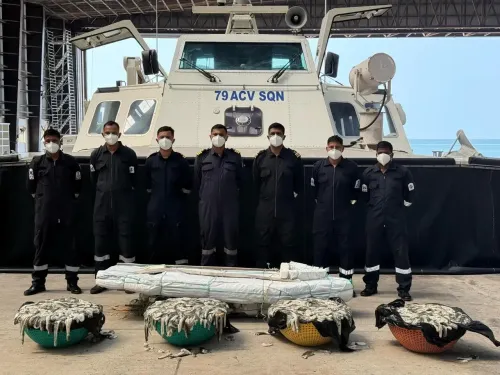
The seas surrounding the Andaman and Nicobar Islands harbour rare and endangered marine species that command high prices in Southeast Asian markets — both as delicacies and ingredients in traditional medicine. Chief among these is the sea cucumber, a creature of outsized ecological importance: it breaks down seabed nutrients and its excreta, essentially calcium carbonate, actively supports coral reef growth.
Reflecting this ecological value, the sea cucumber has been listed under Schedule-I of the Wildlife Protection Act, placing it in the same protected category as tigers and elephants. That designation has done little to deter demand-driven poaching from neighbouring countries, making the archipelago's waters a recurring target.
Broader Security Implications
The ANC's mandate extends well beyond conventional defence. As the custodian of one of India's most strategically sensitive island chains — positioned at the mouth of the Strait of Malacca — the Command is also the first line of response against illegal maritime intrusions. The Myanmar nationals' presence deep inside Indian forest territory underlines the dual threat: ecological damage and sovereign boundary violations. Notably, this is not the first such operation; the ANC has conducted multiple anti-poaching missions in recent years as regional demand for protected marine species continues to rise.
With Operation Falcon concluded, security forces are expected to sustain heightened maritime surveillance in the North Andaman sector.
Point of View
But the more consequential detail is the illegal infiltration angle. Twelve foreign nationals operating inside Indian forest territory for over eight days — undetected until a suspicious boat triggered the response — points to a surveillance gap in one of India's most strategically sensitive maritime zones. The Andaman chain sits astride the Strait of Malacca, through which a significant share of global trade passes. That the ANC needed 200 hours to locate a 12-person gang in its own backyard should prompt a harder look at the adequacy of ground-level monitoring, not just aerial and maritime assets. The ecological dimension — sea cucumbers, coral reefs, Schedule-I protections — is real, but the security dimension deserves equal billing.
NationPress
3 Oct 2026
Frequently Asked Questions
What was Operation Falcon in the Andaman and Nicobar Islands?
Operation Falcon was a joint anti-poaching and border security operation conducted by the Andaman and Nicobar Command (ANC) in North Andaman. It concluded on 18 August with the arrest of 12 Myanmar nationals following a 200-hour search through dense tropical jungle.
Who were the poachers arrested in Operation Falcon?
The 12 arrested individuals were Myanmar nationals who had illegally entered Indian territory. Authorities confirmed the case involved both poaching of protected marine species and unlawful infiltration into Indian sovereign territory.
Why are the waters around Andaman and Nicobar a target for poachers?
The archipelago's waters are rich in rare and endangered marine species — particularly sea cucumbers — which fetch high prices in Southeast Asian markets as food delicacies and traditional medicine ingredients. Sea cucumbers are listed under Schedule-I of India's Wildlife Protection Act, the same category as tigers and elephants.
Which forces were involved in Operation Falcon?
The operation involved seamless coordination between the Indian Army, Indian Navy, Indian Air Force, Indian Coast Guard, and Andaman and Nicobar Police, integrating aerial, maritime, and ground surveillance.
How did Operation Falcon begin?
The operation was initiated after the seizure of a suspicious boat in Andaman waters. One poacher was first arrested near Diglipur, revealing the existence of a larger gang, which prompted the extended eight-day jungle search.