Indian Army DGIS chief reviews Eastern Command's digital push in Kolkata

Synopsis
The Indian Army's top IT general visited Eastern Command in Kolkata to advance one of the force's most ambitious modernisation bets — embedding AI, machine learning, and big data analytics from procurement policy down to the frontline soldier, with a 2027 deadline in sight.
Key Takeaways
Lt Gen Harsh Chhibber , DGIS chief, visited Eastern Command headquarters in Kolkata on 12 August .
Discussions with Lt Gen VMB Krishnan focused on advancing digital capabilities and operational effectiveness.
The Army is deploying AI, ML, and big data analytics for battlefield awareness, threat detection, logistics, and wargaming simulations.
Key technology — including drone and satellite feed monitoring — is targeted to be operational by 2027 .
AI specifications will be embedded into the Army's technical baseline for all future procurements , with legacy retrofitting under consideration.
A special task force with multi-command personnel has been formed to drive the digital push.
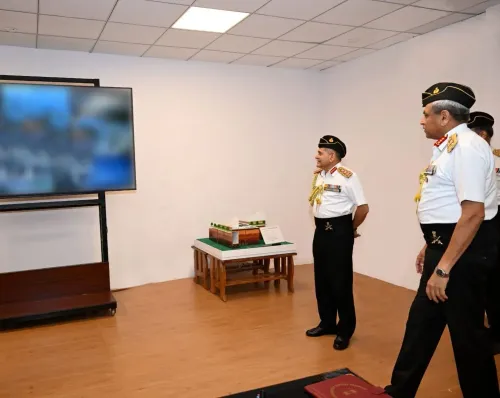
Lieutenant General Harsh Chhibber, Director General of Information Systems (DGIS) of the Indian Army, visited the Eastern Command headquarters in Kolkata on Wednesday, 12 August, to review the force's accelerating digital transformation agenda. The visit signals a structured push to embed artificial intelligence and advanced technology across frontline operations.
Key Developments
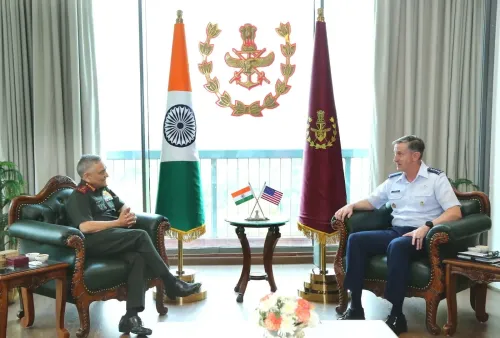
Lt Gen Chhibber held discussions with Lieutenant General VMB Krishnan, General Officer Commanding-in-Chief, Eastern Command. According to the Command, the interaction focused on 'advancing digital capabilities and leveraging technology for enhanced operational effectiveness.' The DGIS chief also addressed officers of the Command, briefing them on the latest strides in information and technology capabilities being rolled out across the Army.
What the Digital Push Involves
The Army is scaling up its use of Artificial Intelligence (AI), Machine Learning (ML), and big data analytics at all levels to streamline operations and sharpen decision-making. Large language models are being deployed to interpret and summarise lengthy field reports, provide voice-to-text services, power AI chatbots, enable facial recognition, and support pattern and threat detection tools.
Feeds from aircraft, satellites, drones, and ground sensor networks are also to be monitored through this technology, which is targeted to be operational by 2027. Applications span counterintelligence, surveillance, logistics, open-source intelligence, social media security, enemy equipment analysis, and wargaming simulations.
Scope and Procurement Roadmap
The Army plans to embed AI specifications into its technical baseline for all future procurements and is exploring retrofitting select AI capabilities into legacy systems. A dedicated special task force, comprising personnel drawn from different commands, has been constituted to drive the initiative. Additional objectives include optimising equipment targeting, predictive maintenance, and navigation in GPS-denied environments.
Bridging the Technology Gap
While the Indian Air Force and Indian Navy have long integrated high-technology systems into their platforms, the Army is now accelerating its own induction curve. 'The aim is to take this technology to the soldier who will actually be fighting the wars of the future. For this, high-tech systems are being developed that are easier to understand,' an official said. This comes amid a broader national push for defence indigenisation and the growing salience of multi-domain warfare doctrine.
What Comes Next
With a 2027 deadline set for key technology deployments, the Eastern Command visit is one of several coordination exercises the DGIS is conducting across commands. The integration of AI into procurement policy could mark a structural shift in how the Army acquires and maintains equipment over the next decade.
Point of View
But the 2027 deadline for full deployment is tight given the force's historically cautious procurement cycles. Embedding AI into future procurement baselines is the right structural move — the harder test is whether legacy retrofitting will receive adequate funding and institutional priority. Notably, the Army is playing catch-up with the Air Force and Navy on technology integration, and multi-domain warfare doctrine demands that the gap close faster than current timelines suggest. The formation of a cross-command task force is encouraging, but execution will depend on whether the DGIS can sustain momentum across bureaucratic and budgetary headwinds.
NationPress
27 Sept 2026
Frequently Asked Questions
Why did the DGIS chief visit Eastern Command in Kolkata?
Lt Gen Harsh Chhibber visited Eastern Command on 12 August to review the Army's digital transformation progress and discuss advancing AI and technology capabilities for operational effectiveness. The visit included briefings to command officers on the latest IT developments being rolled out across the force.
What technologies is the Indian Army deploying under this programme?
The Army is deploying Artificial Intelligence, Machine Learning, big data analytics, large language models, voice-to-text systems, AI chatbots, facial recognition, and pattern and threat detection tools. Feeds from aircraft, satellites, drones, and ground sensors are also to be integrated into a unified monitoring framework.
When will the Indian Army's AI systems be fully operational?
Key technology deployments are targeted to be in place by 2027. Procurement guidelines embedding AI into the Army's technical baseline are expected to govern all future acquisitions, with legacy retrofitting under active consideration.
How does the Army plan to use AI on the battlefield?
The Army aims to use AI to enhance situational awareness, reduce response times, support counterintelligence, logistics, open-source intelligence, enemy equipment analysis, and wargaming simulations. It also targets predictive maintenance and navigation in GPS-denied environments.
How does the Army compare with the Air Force and Navy on technology integration?
The Indian Air Force and Indian Navy have already embedded high-technology systems into their platforms. The Army is now accelerating its own integration, with a focus on making advanced systems accessible and operable for frontline soldiers fighting future wars.