Operation Sindoor Anniversary: Army Destroys 9 Terror Camps, Issues Strong Warning

Synopsis
Days before the first anniversary of Operation Sindoor, the Indian Army reminded the world it destroyed 9 terror camps of LeT and JeM in Pakistan and PoK. Combined with 50 new mission-ready units and 5 lakh new weapons, the message is unmistakable: India's zero-tolerance posture is permanent, not temporary.
Key Takeaways
The Indian Army shared a post on April 26 ahead of the Operation Sindoor anniversary , highlighting destruction of 9 terror camps of LeT and JeM in Pakistan and PoK .
Operation Sindoor was launched on May 6 and 7, 2025 , in retaliation for the Pahalgam terror attack that killed 26 people on April 22, 2025 .
Post-operation, India added 50 mission-ready units , 5 lakh new weapons , 2 lakh equipment items , and 8 anti-terror frameworks under Atmanirbhar Bharat .
Operation Mahadev neutralised all three main perpetrators of the Pahalgam massacre after a 93-day manhunt across 300 sq km of Himalayan terrain.
The Pahalgam attack was carried out by The Resistance Front , an offshoot of Lashkar-e-Taiba ; victims were religiously profiled before being shot.
The Army's anniversary messaging — India does not forget and Outcomes that Endure — signals a permanent doctrinal shift away from strategic restraint toward proactive deterrence.
New Delhi, April 26: As India approaches the first anniversary of Operation Sindoor, the Indian Army on Sunday, April 26 launched a pointed social media offensive, reminding the nation and adversaries alike that its precision strikes obliterated nine terror camps belonging to Lashkar-e-Taiba (LeT) and Jaish-e-Mohammed (JeM) in Pakistan and Pakistan-occupied Kashmir (PoK). The Army's message was unambiguous: the consequences of terror will be lasting, not temporary.
In a post on X (formerly Twitter), the Army declared: Precision driven. Terror Targeting. Outcomes that Endure. The accompanying image bore the captions 9 terror camps destroyed and India does not forget, depicting a command centre mid-operation — a visual designed as much for strategic signalling as for public memory.
Atmanirbhar Bharat: India's Recalibrated Military Posture
Two days earlier, on Friday, April 25, the Army had shared another post underscoring the country's self-reliant defence preparedness. A new normal. A new posture. Recalibrated. Reinforced. Ready. Atmanirbhar Bharat Stands Prepared, the post read, signalling that Operation Sindoor was not a one-off event but a structural shift in India's security doctrine.
The post detailed post-operation capability enhancements: 50 new mission-ready units, four additional agile formations, more than five lakh latest weapons, over two lakh new equipment items, and eight anti-terror operational frameworks. These figures represent a tangible military build-up designed to institutionalise the deterrence posture established during Operation Sindoor.
Pahalgam Terror Attack: The Wound That Triggered a Nation
The chain of events began on April 22, 2025, when 26 people — 25 tourists and one local pony ride operator — were massacred in Pahalgam, Jammu and Kashmir. The attack was carried out by The Resistance Front (TRF), a shadow outfit of the Pakistan-based Lashkar-e-Taiba. The attackers asked victims to recite the Islamic kalima to identify non-Muslims before opening fire at close range, in many cases in front of the victims' own families. Several of those killed were newly married couples.
The brutality of the targeting — religious profiling in a tourist zone — sent shockwaves across India and drew widespread international condemnation. On the one-year anniversary of the attack, the Army reaffirmed: For acts against India, the response is assured. Justice will be served. Always.
Operation Mahadev: The 93-Day Hunt for Justice
Immediately after the Pahalgam attack, Indian security forces launched Operation Mahadev, a gruelling manhunt across more than 300 square kilometres of treacherous Himalayan terrain near Dachigam and Mahadev Ridge. Over 93 days, the operation culminated in the neutralisation of all three primary perpetrators of the massacre.
The Army's social media post marking the anniversary featured the tagline It was only a matter of time in bold red — a message of inevitability directed at terror networks operating across the border. The phrase encapsulates India's evolving counter-terror doctrine: patient, precise, and permanent in its consequences.
Operation Sindoor: India's Calibrated Military Strike
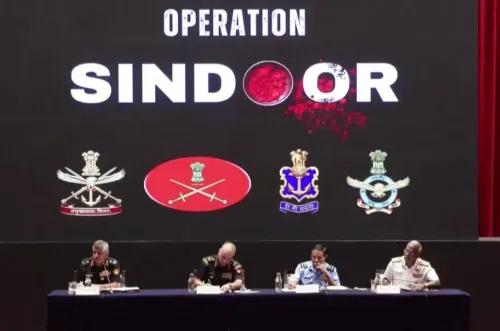
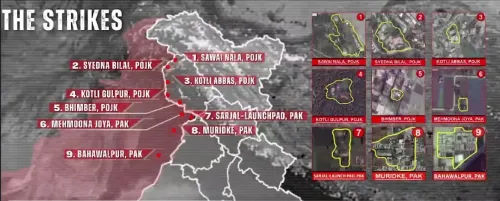
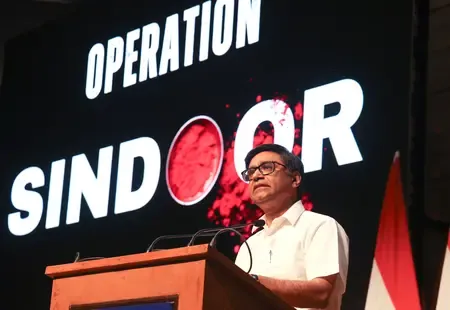
In direct retaliation for the Pahalgam massacre, Indian armed forces launched Operation Sindoor on May 6 and 7, 2025. The strikes were described by officials as focused, measured, and non-escalatory, targeting high-value terror infrastructure in Pakistan and PoK. Nine terror camps were destroyed in the operation, dealing a significant blow to the operational capacity of both LeT and JeM.
The operation's name — Sindoor, referring to the vermilion powder worn by married Hindu women — carried deep symbolic weight, directly referencing the newly-wed victims of the Pahalgam attack. A visual released by the Army showed a map of India marked with red sindoor powder, with the words Some boundaries should never be crossed and India does not forget.
This comes amid a broader pattern of India adopting a more assertive military posture following years of cross-border terrorism. Notably, the 2016 surgical strikes and the 2019 Balakot airstrikes had already signalled a departure from India's earlier policy of strategic restraint. Operation Sindoor is widely regarded as the most comprehensive and operationally complex of these actions, combining military strikes with non-military measures including diplomatic, economic, and information-domain actions.
Strategic Implications and What Comes Next
Defence analysts argue that the Army's sustained social media messaging ahead of the anniversary is itself a form of strategic communication — reminding both domestic audiences and adversaries that India's response framework has been permanently recalibrated. The emphasis on Atmanirbhar Bharat defence capabilities also signals reduced dependence on foreign military hardware, a shift with long-term geopolitical implications.
Security experts note that the destruction of nine terror camps — infrastructure built and maintained over decades — represents a significant degradation of cross-border terror capacity. However, analysts caution that such networks have historically shown resilience and the ability to reconstitute over time.
As the first anniversary of Operation Sindoor approaches in early May 2026, India's military and political establishment is expected to mark the occasion with further commemorations, policy announcements, and capability demonstrations. The broader message from the Indian Army is clear: the era of asymmetric tolerance for cross-border terrorism is over, and the new normal is one of swift, precise, and enduring accountability.
Point of View
Five lakh weapons, eight anti-terror frameworks — the Army is telling adversaries that the strike was a beginning, not an end. What the mainstream narrative often misses is the doctrinal shift this represents: India has moved from reactive restraint to proactive, institutionalised accountability. The Pahalgam massacre's religious profiling of victims was a deliberate provocation designed to test India's red lines — Operation Sindoor was the answer, and the Army is ensuring that answer echoes well beyond one news cycle.
NationPress
29 Sept 2026
Frequently Asked Questions
What was Operation Sindoor and when did it happen?
Operation Sindoor was a targeted Indian military strike carried out on May 6 and 7, 2025, in response to the Pahalgam terror attack. It destroyed nine terror camps belonging to Lashkar-e-Taiba and Jaish-e-Mohammed in Pakistan and Pakistan-occupied Kashmir.
What happened in the Pahalgam terror attack?
On April 22, 2025, terrorists from The Resistance Front, a shadow group of Lashkar-e-Taiba, killed 26 people including 25 tourists and a local pony operator in Pahalgam, Jammu and Kashmir. Victims were identified by religion before being shot at close range.
What is Operation Mahadev?
Operation Mahadev was launched immediately after the Pahalgam attack to hunt down the perpetrators. Over 93 days, Indian security forces scanned more than 300 square kilometres of Himalayan terrain near Dachigam and Mahadev Ridge, eventually neutralising all three main attackers.
What military enhancements has India made after Operation Sindoor?
Following Operation Sindoor, India added 50 new mission-ready units, four agile formations, over five lakh new weapons, more than two lakh new equipment items, and eight anti-terror operational frameworks under the Atmanirbhar Bharat defence initiative.
Why is the Indian Army marking the Operation Sindoor anniversary?
The Indian Army is using the first anniversary of Operation Sindoor to reinforce its zero-tolerance counter-terror doctrine and signal sustained military readiness. The messaging including India does not forget serves as both domestic reassurance and strategic deterrence directed at adversaries.