Arunachal Cabinet clears ₹1,500-crore Mission Shikshit, CM-STARS jobs scheme
Synopsis
In one of its most wide-ranging single-session decisions, the Arunachal Pradesh Cabinet committed ₹1,500 crore to transform schools by 2029, promised government jobs to Olympic and Asian Games medallists, and slashed licensing red tape for 28 business categories — a governance push that tests whether policy ambition in India's northeast can outpace implementation gaps.
Key Takeaways
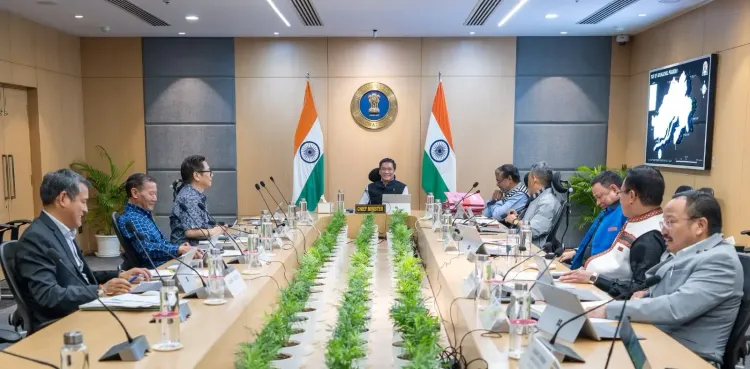
Arunachal Pradesh Cabinet , chaired by Chief Minister Pema Khandu , approved multiple major reforms on 14 November .
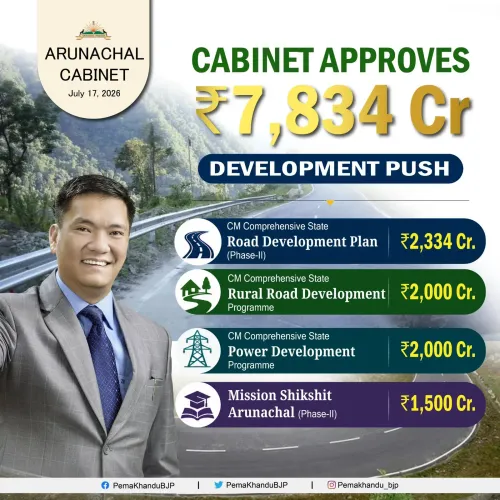
Mission Shikshit Arunachal receives an indicative outlay of ₹1,500 crore for 2026-27 to 2028-29 , targeting school infrastructure upgrades by 2029 .
Phase one had upgraded more than 800 schools with an investment of ₹3,612 crore .
CM-STARS scheme will offer direct government employment to medal-winning athletes at the Olympics, Asian Games, Commonwealth Games , and their para equivalents.
Dual licensing requirements scrapped for 28 categories of businesses in municipal areas to ease compliance burden.
Hollongi Aero-City land management framework approved via the Airport Development Authority Land Disposal Rules, 2026 .
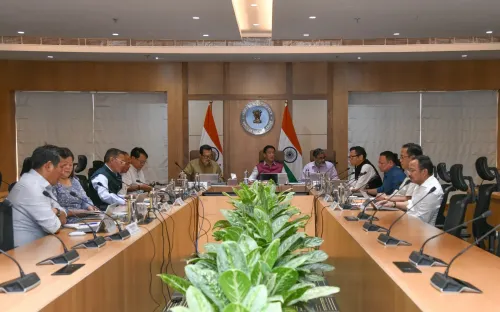
The Arunachal Pradesh Cabinet, chaired by Chief Minister Pema Khandu, on Saturday, 14 November approved a sweeping set of decisions covering education infrastructure, athlete employment, citizen service delivery, ease of doing business, water supply governance, and airport land management. The centrepiece is a ₹1,500 crore outlay for Mission Shikshit Arunachal, targeting a transformed school ecosystem by 2029.
Mission Shikshit Arunachal: Phase Two Takes Shape
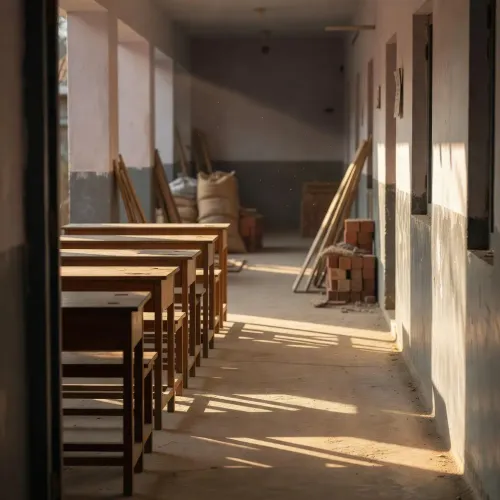
The Cabinet approved the Standard Operating Procedure (SOP) for implementing Mission Shikshit Arunachal by 2029, with an indicative financial outlay of ₹1,500 crore covering the three-year period from 2026-27 to 2028-29. The mission targets upgrades to classrooms, school buildings, hostels, science laboratories, libraries, and teachers' quarters across the state.
The first phase of the mission had already upgraded more than 800 schools with an investment of ₹3,612 crore, including more than 120 hostels, 152 science laboratories, and 159 libraries. The second phase will introduce district-based planning, digital monitoring, geo-tagging, and third-party verification to ensure transparency and accountability — a structural improvement over the earlier rollout.
CM-STARS: Medal-Winning Athletes to Get Government Jobs
In a significant move for the state's sporting community, the Cabinet approved the Chief Minister's Sports Talent Appointment and Recognition Scheme (CM-STARS). The scheme will provide direct government employment to athletes who win medals at the Olympic and Paralympic Games, Asian Games, Asian Para Games, and Commonwealth Games. The initiative involves amendments to the Arunachal Pradesh Sports Policy, 2017, and is designed to incentivise elite athletic performance with tangible career security.
Citizen Services Overhaul and Ease of Doing Business
The Cabinet approved amendments to the Arunachal Pradesh (Methods and Procedures of Delivery of Services) Rules, 2017, introducing automated appeal processing, online filing, and automatic escalation of appeals in cases of delayed service delivery. Notably, the revised rules provide for compensatory payments to citizens affected by delays and impose direct financial accountability on defaulting public servants — a measure critics of bureaucratic inertia have long demanded.
On the business front, the Cabinet rationalised dual licensing requirements for 28 categories of establishments operating within municipal areas. Businesses holding valid statutory licences or registrations from competent Central or state authorities will no longer need separate municipal trade licences, though other applicable municipal regulations remain in force. This is expected to reduce compliance burden and processing time for entrepreneurs in urban Arunachal Pradesh.
Airport Land Rules, Water Policy, and Geospatial Mining
The Cabinet approved the Arunachal Pradesh Airport Development Authority Land Disposal Rules, 2026, establishing a framework for transparent land management through a leasehold-based system. The rules are expected to support the development of Hollongi Aero-City and attract investment in commercial, residential, logistics, and hospitality sectors.
A revised Operation and Maintenance (O&M) Policy for rural and urban water supply systems was also cleared, aimed at ensuring long-term sustainability of drinking water infrastructure with greater participation of gram panchayats and Village Water and Sanitation Committees. Separately, a Memorandum of Understanding (MoU) was approved between the Department of Geology and Mining and the Arunachal Pradesh Space Application Centre (APSAC) for deploying geospatial technologies, satellite imagery, and drone surveys in mineral resource mapping and monitoring.
Other decisions included enhancement of timber royalty rates, creation of posts in several departments, and approval of recruitment rules for various government departments. Taken together, the Cabinet's decisions represent one of the broader single-session reform packages the Khandu government has announced in recent years, with implementation timelines and monitoring frameworks set to determine whether the ambition translates into outcomes on the ground.
Point of View
But breadth is not the same as depth. Mission Shikshit's first phase spent ₹3,612 crore on infrastructure; the real question — whether learning outcomes improved — goes unaddressed in the Cabinet note. CM-STARS is a welcome signal to athletes, but government jobs as the primary incentive reflects a public-sector-first instinct that may not scale. The ease-of-doing-business reform on dual licences is the most structurally sound move: reducing friction for 28 business categories is concrete and measurable. The Hollongi Aero-City land rules could be transformative for the northeast's connectivity ambitions, but leasehold frameworks have historically attracted litigation in India's land-scarce frontier states — execution will be everything.
NationPress
14 Nov 2026
Frequently Asked Questions
What is Mission Shikshit Arunachal and how much has been allocated?
Mission Shikshit Arunachal is a state government initiative to upgrade school infrastructure — including classrooms, hostels, science labs, and libraries — with a target completion year of 2029. The Cabinet approved an indicative financial outlay of ₹1,500 crore for the period 2026-27 to 2028-29, building on a first phase that spent ₹3,612 crore to upgrade more than 800 schools.
What is the CM-STARS scheme approved by the Arunachal Cabinet?
CM-STARS, or the Chief Minister's Sports Talent Appointment and Recognition Scheme, provides direct government employment to athletes who win medals at the Olympic and Paralympic Games, Asian Games, Asian Para Games, and Commonwealth Games. It is implemented through amendments to the Arunachal Pradesh Sports Policy, 2017.
How does the ease of doing business reform affect businesses in Arunachal Pradesh?
The Cabinet has rationalised dual licensing for 28 categories of establishments in municipal areas. Businesses that already hold valid statutory licences from Central or state authorities will no longer need a separate municipal trade licence, reducing compliance steps and processing time, though other municipal regulations continue to apply.
What is the Hollongi Aero-City and how do the new land rules affect it?
Hollongi Aero-City is a planned development near Itanagar linked to the Hollongi airport. The newly approved Arunachal Pradesh Airport Development Authority Land Disposal Rules, 2026 establish a leasehold-based framework for transparent land management, intended to attract investment in commercial, residential, logistics, and hospitality sectors around the aero-city.
What citizen-service reforms did the Arunachal Cabinet approve?
The Cabinet amended the Arunachal Pradesh (Methods and Procedures of Delivery of Services) Rules, 2017 to introduce automated appeal processing, online filing, and automatic escalation for delayed services. The revised rules also allow compensatory payments to citizens affected by delays and impose direct financial accountability on public servants who default on service timelines.