Arunachal Pradesh education mission crosses ₹5,100 crore by 2029
Synopsis
Arunachal Pradesh has quietly pulled off one of the northeast's most ambitious education overhauls — rationalising nearly 1,000 schools, pushing CBSE pass rates up by over 21%, and committing more than ₹5,100 crore through 2029. The numbers are striking for a state that has historically ranked near the bottom of national education indices.
Key Takeaways
Arunachal Pradesh invested ₹3,612.50 crore in education under Phase I of the 'Shikshit Bharat to Shikshit Arunachal' mission ( 2023–2026 ).
Phase II adds ₹1,500 crore , taking total mission outlay past ₹5,100 crore by 2029 .
The school network was rationalised from 2,890 to 1,885 schools , with 538 host schools anchoring the system.
More than 2,600 merit-based teacher transfers were executed under the new Arunachal Pradesh Transfer and Posting Act, 2026 .
CBSE Class X pass rates rose 21.7% and Class XII by 22.8% ; the state ranked 17th in PARAKH Rashtriya Sarvekshan 2024 .
75,100 textbooks in 10 tribal languages were developed and distributed as part of cultural inclusion efforts.
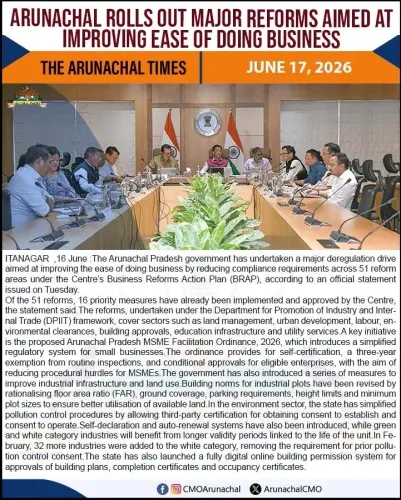
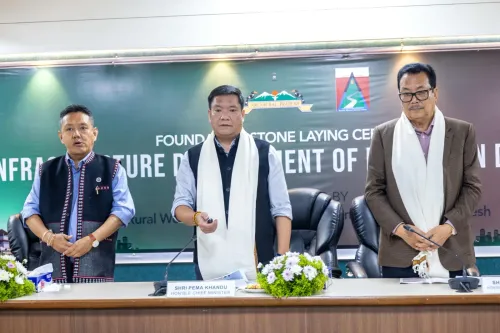
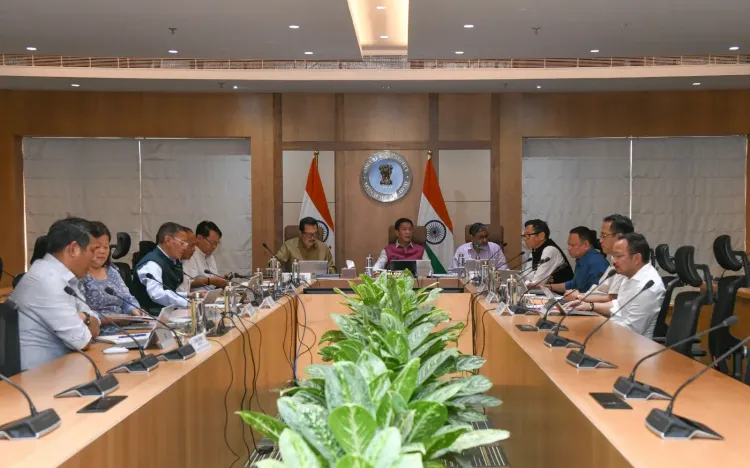
Arunachal Pradesh has committed over ₹3,612 crore under its flagship 'Shikshit Bharat to Shikshit Arunachal' mission, with a further ₹1,500 crore earmarked for Phase II, taking total investment past ₹5,100 crore by 2029. The state Cabinet, chaired by Chief Minister Pema Khandu, reviewed the mission's progress on Tuesday, 16 June, calling it one of the most comprehensive education reform drives in the state's history.
Phase I: What ₹3,612 Crore Built
During Phase I (2023–2026), the government channelled ₹3,612.50 crore into school infrastructure, teacher deployment, digital education, institutional reforms, and learning outcomes. A senior official of the Chief Minister's Office (CMO) confirmed the figures, noting that the Phase II outlay of ₹1,500 crore will sustain momentum through 2029.
The school network was rationalised from 2,890 to 1,885 schools, consolidating resources around 538 host schools to enable optimal teacher deployment. The Arunachal Pradesh Transfer and Posting Act, 2026, combined with a new digital Teacher Registry Portal, facilitated more than 2,600 merit-based teacher transfers — a structural move aimed at reducing arbitrary postings and improving transparency.
Digital Infrastructure and Governance
Modern governance platforms — the Arunachal Vidya Nidhi (AVN) and the Vidya Sameeksha Kendra — were established to enable real-time monitoring of educational infrastructure, service delivery, and institutional performance across the state. These systems mark a significant departure from manual oversight, particularly relevant given Arunachal Pradesh's challenging terrain and dispersed population.
The government also recruited 150 Special Education Teachers and ran capacity-building programmes that benefited more than 7,000 stakeholders in the education sector.
Academic Gains and National Rankings
The results, according to officials, are measurable. The CBSE Class X pass percentage rose by 21.7%, while Class XII pass rates climbed 22.8%, bringing the state closer to the national average. Arunachal Pradesh secured the 17th position in the PARAKH Rashtriya Sarvekshan 2024 and recorded gains in both the Performance Grading Index (PGI) and NITI Aayog Sustainable Development Goal (SDG) rankings.
This comes amid a broader national push under the National Education Policy (NEP) 2020 to improve foundational learning outcomes, where northeastern states have historically lagged behind. Arunachal's trajectory is notable as one of the sharper upward moves in the region.
Infrastructure and Cultural Preservation
On the ground, the mission has delivered construction and upgradation of 50 Golden Jubilee Schools, 90 PM Shri Schools, more than 120 hostels, 152 science laboratories, 159 libraries, over 400 sanitation facilities, 300 PM Poshan kitchens, and 180 staff quarters, with stated emphasis on remote and border areas.
The mission also addressed cultural continuity, distributing 75,100 textbooks in 10 tribal languages and strengthening Bhoti language education — an acknowledgement that access without linguistic inclusion is incomplete in a state with over 26 major tribes.
What Comes Next
The Cabinet reaffirmed the government's commitment to achieving universal access to quality education, modern infrastructure, digital learning, and improved outcomes by 2029. Phase II planning is underway, with the additional ₹1,500 crore expected to deepen gains in areas where Phase I laid the groundwork. Whether execution in remote border districts matches the headline numbers will be the defining test of the mission's second chapter.
Point of View
But the more consequential data point is the school rationalisation — cutting nearly 1,000 schools is a politically difficult decision that most state governments avoid. Whether the consolidation genuinely improved teacher-pupil ratios or simply reduced rural access in hard-to-reach areas is a question the Cabinet review did not publicly address. The 21-22% jump in CBSE pass rates is real progress, but pass-rate inflation has been a documented risk in states under pressure to show results. Independent learning assessments, not just pass percentages, will tell the fuller story of whether Arunachal's ₹5,100 crore bet is translating into durable human capital gains.
NationPress
16 Sept 2026
Frequently Asked Questions
What is the 'Shikshit Bharat to Shikshit Arunachal' mission?
It is Arunachal Pradesh's flagship education reform programme launched in 2023, aimed at overhauling school infrastructure, teacher deployment, and digital learning across the state. The mission's total investment is expected to exceed ₹5,100 crore by 2029, covering Phase I (2023–2026) and the proposed Phase II through 2029.
How much has Arunachal Pradesh spent on education under this mission?
The state invested ₹3,612.50 crore during Phase I (2023–2026). A further ₹1,500 crore is proposed for Phase II, bringing the total outlay past ₹5,100 crore by 2029, according to a senior CMO official.
What improvements in exam results has the mission achieved?
CBSE Class X pass rates in Arunachal Pradesh rose by 21.7% and Class XII pass rates by 22.8%, bringing the state closer to the national average. The state also ranked 17th in the PARAKH Rashtriya Sarvekshan 2024 national assessment.
Why were nearly 1,000 schools closed or merged under the mission?
The school network was rationalised from 2,890 to 1,885 schools to enable better teacher deployment and more efficient use of resources, with 538 host schools absorbing students from smaller, under-resourced institutions.
How does the mission address Arunachal Pradesh's tribal communities?
The mission developed and distributed 75,100 textbooks in 10 tribal languages and worked to strengthen Bhoti language education, recognising that linguistic inclusion is essential for equitable access in a state with over 26 major tribes.