Is Assam Becoming the ‘Growth Engine’ of India’s Economic Expansion?

Synopsis
As India gears up to become the world's third-largest economy, Assam is emerging as a pivotal player under the leadership of Chief Minister Himanta Biswa Sarma. With significant infrastructure investments and a focus on sustainable growth, the state is positioning itself as a hub for global investors.
Key Takeaways
Assam is recognized as the fastest-growing economy in India.
The state benefits significantly from the Act East Policy.
There are ongoing efforts to develop a semiconductor ecosystem.
Infrastructure improvements are attracting global investors.
Assam is committed to sustainable and inclusive growth.
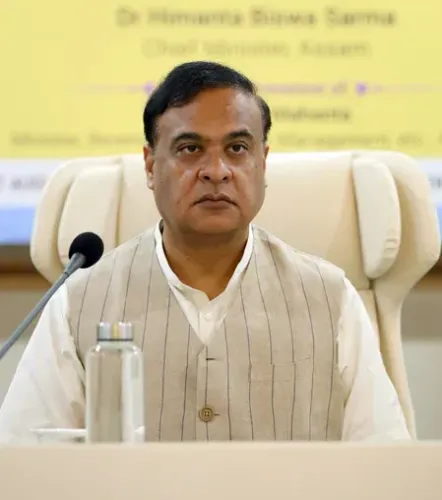
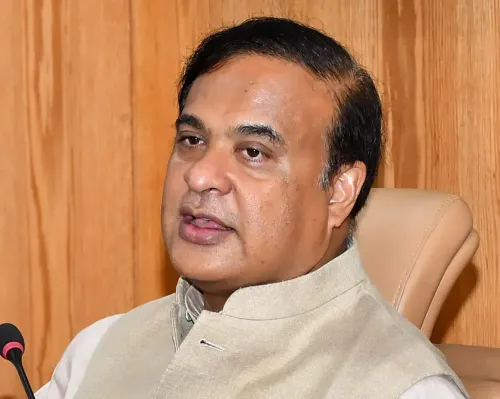
Davos, Jan 20 (NationPress) Assam's Chief Minister Himanta Biswa Sarma stated on Tuesday that India is on a steady path to becoming the world's third-largest economy, thanks to the leadership of Prime Minister Narendra Modi. Assam stands to gain significantly from the government's development-centric strategy.
While addressing journalists at the World Economic Forum Annual Meeting in Davos, Sarma highlighted the state's impressive economic transformation, largely propelled by the Prime Minister's Act East Policy.
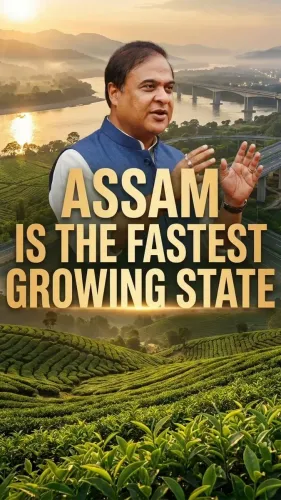
According to the latest figures from the Reserve Bank of India, Assam is now recognized as the fastest-growing economy in the nation.
The Chief Minister emphasized that Assam's long-standing expertise in the hydrocarbons sector continues to form a robust economic base, while advancements in green and renewable energy are also progressing.
He noted that extensive infrastructure improvements, enhanced connectivity with Southeast Asian markets, and various investor-friendly reforms have repositioned Assam as a crucial growth center in the Northeast.
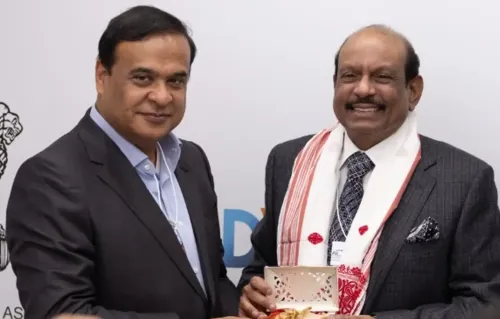
Proclaiming that “Assam has finally arrived,” Sarma encouraged global investors and industry leaders to consider the state as a promising destination for long-term investments.
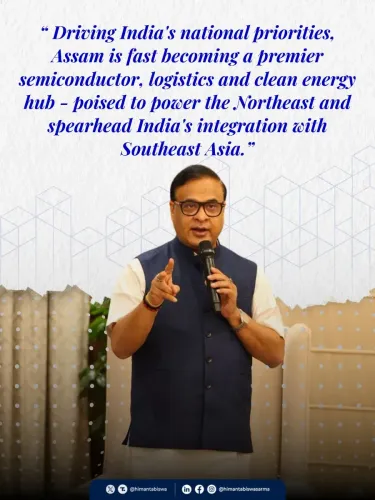
In addition, discussions on Assam's ambition to cultivate a semiconductor ecosystem were prominent at Davos. In a post on X, the Chief Minister remarked that private sector players have generated significant momentum for Assam's semiconductor initiatives and expressed the state's eagerness to collaborate with top global entities.
Sarma anticipated that meetings with international semiconductor leaders would advance discussions, although specific agreements have yet to be finalized.
Point of View
Assam's strategic initiatives under Chief Minister Himanta Biswa Sarma highlight its potential as a growth engine for India. The state's commitment to sustainable development and infrastructure enhancement positions it as a key player in the Northeast, aligning with India's broader economic objectives.
NationPress
11 Oct 2026
Frequently Asked Questions
What role does Assam play in India's economic growth?
Assam is emerging as a key growth hub in India, benefiting from the government's development policies and infrastructure investments.
How is Assam transforming its economy?
Through significant improvements in infrastructure, connectivity, and a focus on sectors like green energy and semiconductors.
What is the Act East Policy?
A strategic initiative by the Indian government aimed at enhancing economic and cultural ties with Southeast Asian countries.
Who is the Chief Minister of Assam?
The current Chief Minister of Assam is Himanta Biswa Sarma.
What is Assam's ambition regarding semiconductors?
Assam aims to develop a semiconductor ecosystem by partnering with global industry leaders.