Is the EU Complicit in Ignoring the Struggles of Christians and Hindus in Pakistan?
Synopsis
The ongoing plight of religious minorities in Pakistan raises critical questions about the EU's role and responsibility. As reports of abductions and violence against Christians and Hindus persist, the EU's trade relations with Pakistan come under scrutiny. Is the EU complicit in allowing these violations to continue unchecked?
Key Takeaways
Religious minorities in Pakistan face significant threats.
EU's GSP+ status raises questions about complicity.
Violence against women in minority communities is increasing.
Accountability for perpetrators is rare.
International advocacy is critical for change.
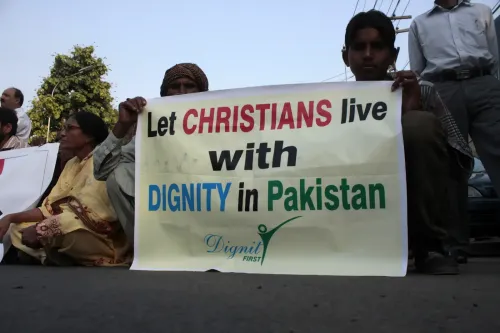
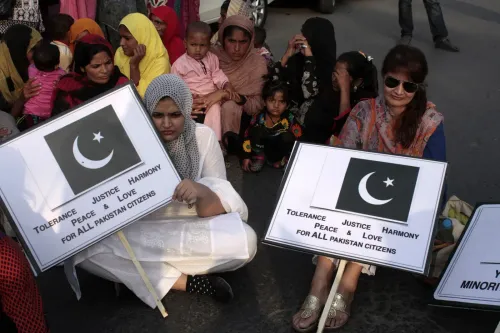
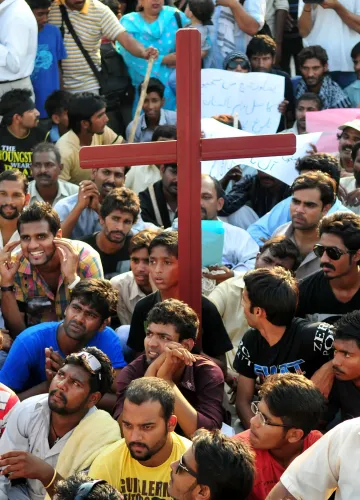
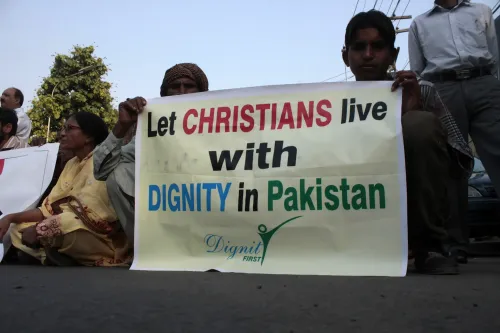
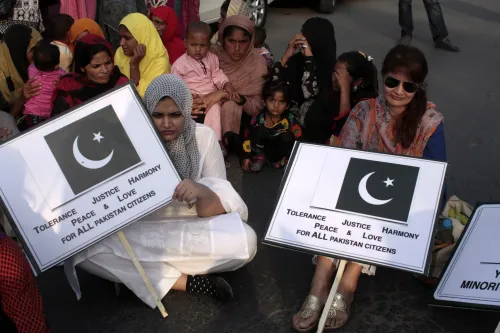
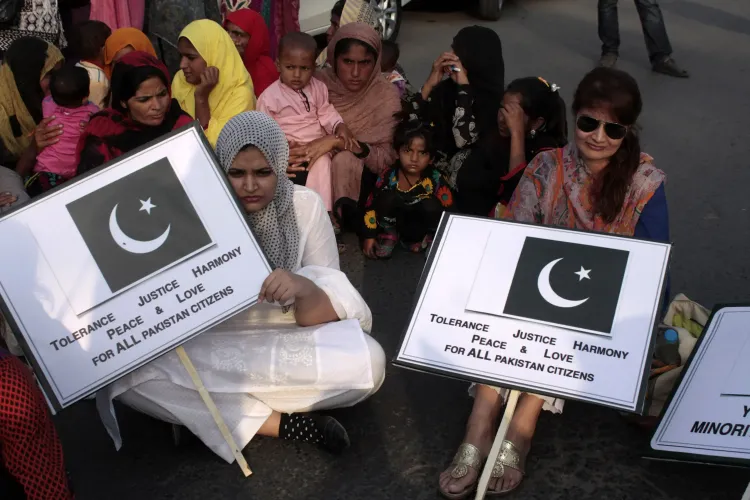
Islamabad, Jan 20 (NationPress) Pakistan remains a sanctuary for an array of radical Islamic terrorist organizations, each differing in size, nomenclature, and influence, frequently undergoing transformations through splitting, merging, and resurfacing. Simultaneously, religious minorities in Pakistan find themselves increasingly entangled between these extremist factions, a deeply entrenched Islamic societal structure, and a government that faces accusations of enabling these groups, according to a report released on Tuesday.
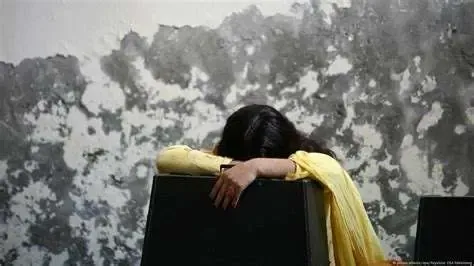
The European Conservative reported that on December 7, 2025, two Muslim individuals kidnapped a 14-year-old Christian girl in Pakistan. Her brother, Sahil George, claimed that the assault was motivated by a previous dispute.
In an interview with New York-based Christian Daily International, George, a 21-year-old member of the Associate Reformed Presbyterian Church in the Sahiwal region of Punjab, stated that the assailants, identified as Muhammad Bilal Arshad and Muhammad Zohaib, forcibly took his sister to a residence at gunpoint, where she was subsequently raped, a medical examination later corroborated.
“Regrettably, this is not an isolated case. Women and girls from minority faith communities in Pakistan are at a significantly increased risk of sexual violence perpetrated by Muslim men. Reports indicate a disturbing trend affecting Christians and Hindus who are abducted, raped, coerced into converting to Islam, and 'married' to their captors. Many families never reunite with their daughters, and authorities seldom take action to ensure justice,” wrote Turkish journalist Uzay Bulut in ‘The European Conservative’.
Albert Patras, a human rights advocate working with female violence survivors in South Punjab, was quoted by The European Conservative stating: “Women from minority backgrounds in Pakistan face a greater threat of sexual violence and other forms of abuse compared to the general female demographic.”
“In many instances, offenders of crimes against minority women elude justice,” he added.
According to the report, 10 days after the incident, the EU-Pakistan Joint Commission convened in Brussels on December 17, 2025, co-chaired by Muhammad Humair Karim, Secretary of Pakistan's Ministry of Economic Affairs, and Paola Pampaloni, Acting Managing Director for Asia and the Pacific in the European External Action Service. Both parties agreed to host the next session of the EU-Pakistan Joint Commission in Islamabad in 2026.
The report emphasized that the EU granted Pakistan Generalised Scheme of Preferences (GSP+) status in January 2014, allowing the country to enjoy preferential access to the EU market.
Highlighting the EU’s failures in Pakistan, the report stated, “This negligent approach is not diplomacy — it is complicity. It supports a regime undermining constitutional rights while exporting violence, all while EU trade benefits continue to flow unchecked through GSP+. Suspension is not optional; it is essential. The EU must take immediate action to stop incentivizing a threat to its own borders — or risk empowering impunity that could backfire to Europe.”
Point of View
It is imperative that we remain vigilant on issues affecting minority rights globally. The ongoing struggles faced by Christians and Hindus in Pakistan must be addressed, and the failure of the EU to act decisively is a matter that requires our attention. We support the rights of all communities and call for accountability.
NationPress
2 Oct 2026
Frequently Asked Questions
What happened to the Christian girl in Pakistan?
A 14-year-old Christian girl was abducted and raped by two Muslim men in December 2025, highlighting the ongoing violence against religious minorities.
What is the EU's role in Pakistan?
The EU has granted Pakistan GSP+ status, allowing for preferential trade, despite concerns about human rights violations against religious minorities.
Are minority women in Pakistan at risk?
Yes, reports indicate that women and girls from minority communities face a significantly higher risk of sexual violence and abuse in Pakistan.
How often do these incidents occur?
Such incidents are reportedly on the rise, with many victims never reunited with their families and perpetrators escaping justice.
What can be done to help these communities?
International pressure and advocacy for human rights protections are essential to address the violence faced by religious minorities in Pakistan.