Assam CM Himanta: Tea garden children open textbooks 79 years after Independence
Synopsis
Seventy-nine years after Independence, children in Assam's remote tea garden frontier districts — more than 500 km from Guwahati — are opening textbooks for the first time. Assam CM Himanta Biswa Sarma flagged the milestone on X, spotlighting both a historic gap in education access and the state's push to finally close it.
Key Takeaways
Assam CM Himanta Biswa Sarma announced on 5 November 2026 that children in frontier tea garden districts are accessing formal education for the first time.
The districts are located more than 500 km from Guwahati , highlighting the scale of geographical isolation these communities face.
Sarma noted that 79 years after India's Independence, education has finally reached these remote settlements.
Assam has a large tea-growing population spread across geographically isolated districts with historically poor school infrastructure.
The development is part of the Assam government's broader drive to expand education access to underserved and remote communities across the state.
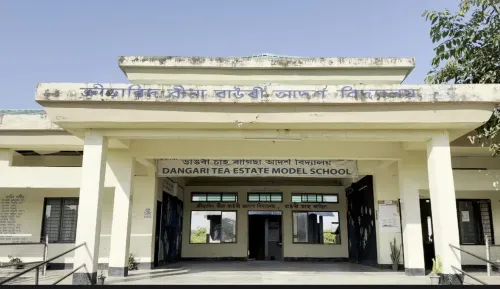
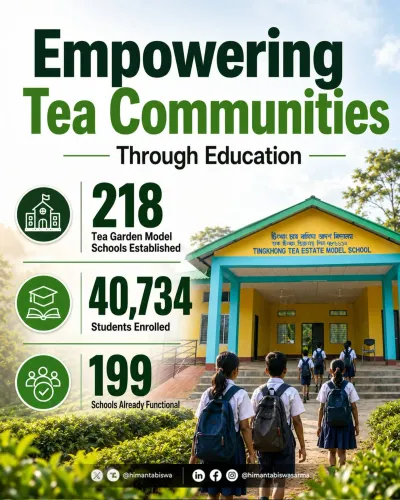
Assam Chief Minister Himanta Biswa Sarma on Thursday, 5 November 2026, highlighted a significant milestone in the state's education outreach — children in remote tea garden communities of Assam's frontier districts, located more than 500 km from Guwahati, are accessing formal schooling and opening textbooks for the very first time. The development marks a turning point for communities that have remained outside mainstream educational infrastructure for 79 years since India's Independence.
What Sarma Said
Himanta Biswa Sarma shared the development in a post on X (formerly Twitter), drawing attention to the geographical and historical depth of the challenge. "Deep in the heart of Assam's tea gardens, more than 500 km from Guwahati, children are opening textbooks for the very first time," the Chief Minister wrote. He added, "This is what real change looks like," underscoring the symbolic weight of the moment — 79 years after Independence, education has finally reached these frontier settlements.
The Challenge of Assam's Tea Garden Communities
Assam is home to one of the world's largest tea-growing populations, with communities spread across geographically isolated districts far from urban centres. Children in these areas have historically faced acute barriers to schooling — difficult terrain, long distances to the nearest institution, and severely limited infrastructure. The result has been a persistent and multigenerational gap in formal education access that no previous administration had fully bridged.
Notably, this is not merely a development story — it reflects a structural failure of post-Independence governance that allowed entire communities to remain outside the schooling system for nearly eight decades.
Broader Education Push in Assam
The Chief Minister's remarks come against the backdrop of the Assam state government's wider emphasis on education infrastructure expansion. Efforts to extend school facilities to economically and geographically disadvantaged communities have accelerated in recent years, with a particular focus on tribal belts, tea garden estates, and remote districts that have lagged on literacy indicators. The extension of schools to frontier areas is part of this broader drive to ensure no child is left behind due to circumstance of birth or geography.
What It Means for Frontier Districts
The significance of reaching these communities extends beyond access to a classroom. For children in Assam's tea garden settlements, formal education opens pathways out of generational poverty and labour dependency. Critics and education advocates have long argued that without active state intervention — including infrastructure, trained teachers, and mid-day meal support — physical school construction alone will not translate into sustained enrolment or learning outcomes. The state government's next steps in ensuring quality alongside access will be closely watched.
The development is an early indicator that Assam's frontier districts may finally be entering a new chapter — one where geography is no longer destiny for a child's education.
Point of View
But the more uncomfortable question it raises is why it took 79 years. Assam's tea garden communities have been economically productive for the Indian state since the colonial era — their labour built an industry worth thousands of crores — yet basic schooling eluded their children for generations. Access is a necessary first step, but history shows that reaching remote communities with a building and textbooks does not automatically translate into enrolment, attendance, or learning outcomes. The state's credibility on this milestone will depend on what comes next: teacher deployment, mid-day meals, dropout prevention, and independent outcome measurement — not just the optics of a first textbook.
NationPress
5 Nov 2026
Frequently Asked Questions
What did Assam CM Himanta Biswa Sarma announce about education in frontier districts?
Assam Chief Minister Himanta Biswa Sarma announced on 5 November 2026 that children in remote tea garden frontier districts, more than 500 km from Guwahati, are opening textbooks for the very first time. He described it as a historic milestone, noting it has taken 79 years after Independence for formal education to reach these communities.
Why have Assam's tea garden communities lacked access to education for so long?
Children in Assam's tea garden areas have historically faced barriers including difficult terrain, long distances to the nearest school, and severely limited infrastructure. Geographical isolation and inadequate investment in remote district schooling have kept these communities outside the formal education system for generations.
Which districts are being referred to as Assam's frontier districts?
The frontier districts referred to by CM Sarma are remote tea garden areas located more than 500 km from Guwahati. The source does not specify individual district names, but these are described as geographically isolated communities at the edge of the state's education network.
What is the Assam government doing to improve education access in remote areas?
The Assam state government has been expanding education infrastructure across underserved and remote communities, with a particular focus on tea garden estates, tribal belts, and distant districts that have historically lagged on literacy indicators. The extension of schools to frontier areas is part of this broader initiative.
Why does this development matter beyond the symbolic milestone?
For children in Assam's tea garden settlements, access to formal education opens pathways out of generational poverty and labour dependency. Education advocates note, however, that sustained enrolment and learning outcomes will require continued state investment in teachers, infrastructure, and support systems — not just initial access.