Awami League rejects Dhaka briefing to foreign diplomats
Synopsis
The Awami League has accused Bangladesh's government of misleading foreign diplomats and called for a UN-supported investigation into violence, attacks on its members and deaths in custody. The government has accused the party of provoking clashes and sought cooperation to bring its leaders and activists back to Bangladesh.
Key Takeaways
Humaiun Kobir , Bangladesh's state minister for foreign affairs, accused the Awami League at a Dhaka briefing of provoking clashes and creating political instability.
The Awami League rejected the allegations and accused the government of presenting a one-sided account to foreign diplomats.
The party sought an independent, UN -supported investigation into violence and sabotage in November 2026 , attacks on its members and deaths in custody.
The party said garment workers sought a monthly minimum wage of Tk 30,000 , compared with the current Tk 12,500 , alongside payment of overdue wages and an end to blacklisting.
The Awami League called for its ban to be lifted and for political prisoners, including detained children and former MPs, to receive fair trials or be released.
The Awami League has rejected a briefing to foreign diplomats in Dhaka by Bangladesh State Minister for Foreign Affairs Humaiun Kobir, accusing the government of presenting an incomplete account and seeking to mislead the international community. The dispute followed Kobir's allegations that the party was provoking clashes with law enforcement and creating political instability.
The party also called for an independent, United Nations-supported investigation into violence and sabotage in November 2026, attacks on its members and deaths in custody. The source dated the report 25 November without specifying the year.
Government allegations at the Dhaka briefing
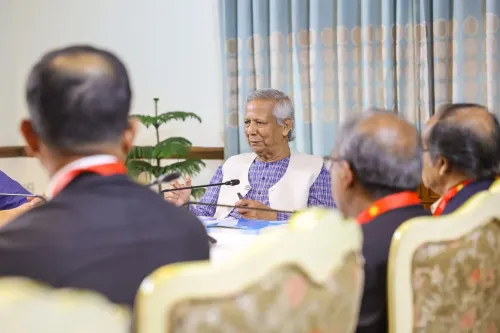
Addressing foreign diplomats on Tuesday, Kobir accused Awami League leaders and activists of creating fear and insecurity and provoking confrontations with law enforcement agencies. According to Bangladeshi daily Prothom Alo, he said the party was trying to create a perception of political chaos.
Kobir also alleged that party leaders and activists were involved in “terrorism and money laundering” abroad and sought international cooperation to bring them back to Bangladesh. The Awami League rejected the allegations and challenged the government's account of events.
Awami League's response
The party accused the government of blaming it for every act of violence while overlooking alleged attacks on its leaders and supporters, arbitrary arrests, deaths in custody, persecution of minorities and repression of garment workers. These were claims made by the party; the source did not provide independent findings on them.
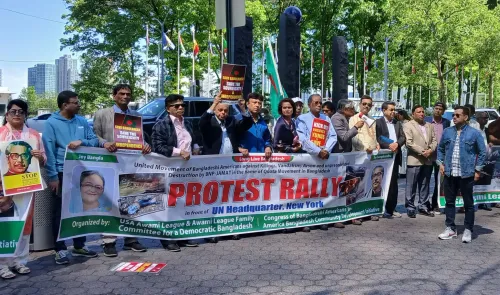
The Awami League expressed concern that the authorities had sought foreign cooperation by describing what it called peaceful political activity by Bangladeshis abroad as terrorism and money laundering. It appealed to other states to uphold asylum rights and the principle of non-refoulement, which it described as prohibiting a person's return to a country where they face a risk of persecution or ill-treatment.
The party said it condemned violence, arson, destruction of property and attacks on law enforcement personnel across Bangladesh. It said “every crime must be impartially investigated and prosecuted” and argued that branding supporters as terrorists before an investigation was incompatible with the rule of law.
Garment worker demands
The Awami League also rejected the government's portrayal of garment-sector unrest as a campaign organised by the party. It said more than four million workers in Bangladesh, which it described as the world's second-largest garment-exporting country, had raised three principal demands.
According to the party, those demands were a minimum monthly wage of Tk 30,000, compared with the current Tk 12,500, an end to blacklisting and payment of overdue wages. The party argued that timely government action on its commitments to workers and the international community could have prevented the situation.
Calls for an investigation and legal relief
The Awami League urged the diplomatic corps, the United Nations and the wider international community to support an independent investigation into the alleged November sabotage and violence, attacks on party members and deaths in custody. Its request covers both acts of violence it condemned and alleged abuses against its own supporters.
It also called for the ban on the party to be lifted, mass cases to be withdrawn, and political prisoners, including detained children and former members of parliament, to receive fair trials or be released. The source did not report a response to these requests; attention will now turn to whether the authorities or international bodies address the party's demands.
Point of View
But so do claims of arbitrary detention and abuse; one cannot substitute for the other. For neighbouring India and the wider region, credible due process and protection of political rights are more useful benchmarks than partisan assurances.
NationPress
25 Nov 2026
Frequently Asked Questions
Why did the Awami League reject Bangladesh's briefing to diplomats?
The Awami League said the briefing was incomplete and one-sided and accused the government of misleading the international community. It rejected allegations that its leaders and activists were provoking clashes to create instability.
What did Humaiun Kobir allege about the Awami League?
Bangladesh State Minister for Foreign Affairs Humaiun Kobir alleged that the party was creating fear and provoking clashes with law enforcement. He also alleged that its leaders and activists were involved in terrorism and money laundering abroad.
What investigation has the Awami League requested?
The party called for an independent, UN-supported investigation into sabotage and violence in November 2026, attacks on its members and deaths in custody.
What wage demands did the Awami League cite for garment workers?
The party said workers were seeking a minimum monthly wage of Tk 30,000, compared with the current Tk 12,500. It also cited demands for overdue wages and an end to blacklisting.
What happens next in the Bangladesh political dispute?
The Awami League has asked international bodies and diplomats to support an investigation and press the authorities for legal and political changes. The source did not report a response to those requests.