Bangladesh Editors' Council condemns journalist attacks at Rajshahi University
Synopsis
At least 10 people were injured — including four named journalists — when BNP's student wing allegedly attacked reporters at Rajshahi University on 4 October. Bangladesh's Editors' Council has now issued five formal demands, warning that 'independent journalism is not possible in an environment of fear.' The incident lays bare a deepening crisis for press freedom under the current political dispensation.
Key Takeaways
Bangladesh's Editors' Council on 7 October 2025 condemned escalating attacks on journalists nationwide.
At least 10 people were injured in an alleged attack by Jatiyatabadi Chhatra Dal (JCD) members at Rajshahi University on 4 October .
Named injured journalists include correspondents of bdnews24 , The Daily Star , Agamir Shomoy , and Samakal .
The Council placed five formal demands , including impartial probes and exemplary legal action regardless of political affiliation.
Transparency International Bangladesh (TIB) and the Dhaka University Journalists' Association (DUJA) also condemned the attack and called for accountability.
Bangladesh's Editors' Council on Tuesday, 7 October 2025, strongly condemned the escalating attacks, threats, and harassment targeting journalists across the country, demanding prompt and impartial investigations into all recent incidents. The Council's statement came in the wake of the 4 October assault on journalists at Rajshahi University, which it described as 'extremely concerning.'
The Rajshahi University Attack
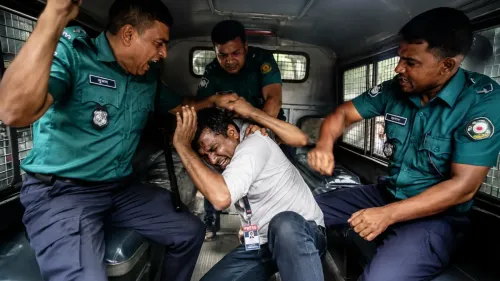
At least 10 people sustained serious injuries on Sunday night after leaders and workers of the Jatiyatabadi Chhatra Dal (JCD) — the student wing of Bangladesh's ruling Bangladesh Nationalist Party (BNP) — allegedly attacked journalists and students outside Shaheed Ziaur Rahman Hall at Rajshahi University. The incident has drawn widespread condemnation from press freedom advocates and civil society groups across the country.
Among the journalists identified as injured were Arifuzzaman Korban, university correspondent of bdnews24; Zahidul Islam of Agamir Shomoy; Noor Ahsan Mridul of The Daily Star; and Mainul Islam Raju of Samakal.
What the Editors' Council Demanded
In its formal statement, the Council placed five demands before the government and relevant stakeholders. These include: prompt and impartial investigations into all recent attacks on journalists; exemplary legal action against perpetrators regardless of political affiliation; and a safe working environment for journalists covering political events, university functions, court proceedings, and public gatherings.
The Council also called for an immediate end to obstruction and intimidation during journalists' professional duties, and for political parties and their affiliated organisations to make clear commitments toward ensuring press safety. 'An attack on a journalist is not only an attack on a professional; it is an attack on independent journalism, freedom of expression and the public's right to know,' the statement declared.
Emphasising that journalists' safety is a prerequisite for democracy, the Council stated: 'Independent journalism is not possible in an environment of fear, threats and violence.'
Civil Society Joins the Outcry
The anti-corruption watchdog Transparency International Bangladesh (TIB) voiced 'serious concern' over what it characterised as 'armed attack and death threats' against journalists at Rajshahi University, calling for justice irrespective of the political identity or influence of those responsible. The Dhaka University Journalists' Association (DUJA) also sharply criticised the attack and called for exemplary punishment against those involved, as well as concrete steps to ensure a safe working environment for media professionals on campuses.
Broader Context
The Rajshahi University attack is not an isolated incident. The Editors' Council's statement signals a pattern of growing hostility toward the press, with journalists reportedly facing threats and physical harm while covering political events and university campuses. Critics argue that the involvement of a ruling party-affiliated student body makes meaningful accountability more difficult, and that political pressure could impede impartial investigations.
The Council's demands now await a formal response from the Bangladesh government. Whether authorities act swiftly and transparently will be a key test of press freedom and democratic accountability in the country.
Point of View
But for who allegedly carried it out — the student wing of the ruling party. When perpetrators have political cover, demands for 'impartial investigations' risk becoming performative. Bangladesh's press freedom record has been fragile for years, and the credibility of this government's response will hinge on whether it can hold its own affiliates accountable — something most political establishments, globally, find structurally difficult to do. The Editors' Council's five-point demand is a legitimate escalation; the harder question is whether it produces consequences or merely documentation.
NationPress
7 Oct 2026
Frequently Asked Questions
What happened at Rajshahi University on 4 October 2025?
Leaders and workers of the Jatiyatabadi Chhatra Dal (JCD), the student wing of Bangladesh's ruling BNP, allegedly attacked journalists and students outside Shaheed Ziaur Rahman Hall at Rajshahi University, injuring at least 10 people. The four named injured journalists were correspondents of bdnews24, The Daily Star, Agamir Shomoy, and Samakal.
What has Bangladesh's Editors' Council demanded?
The Editors' Council has placed five demands: prompt and impartial investigations into all recent journalist attacks, exemplary legal action against perpetrators regardless of political affiliation, a safe working environment across public events and campuses, an end to obstruction and intimidation of journalists, and clear commitments from political parties to ensure press safety.
Who else has condemned the Rajshahi University journalist attack?
Transparency International Bangladesh (TIB) voiced serious concern over what it called 'armed attack and death threats' against journalists, calling for justice without political considerations. The Dhaka University Journalists' Association (DUJA) also condemned the incident and called for exemplary punishment and safer campus conditions for media professionals.
Why is journalists' safety a democratic concern in Bangladesh?
The Editors' Council stated that journalists' safety is 'not a special privilege but an essential requirement for a free, democratic and accountable society.' Attacks on journalists undermine freedom of expression and the public's right to information, particularly when the alleged perpetrators are affiliated with a ruling political party.
What is the Jatiyatabadi Chhatra Dal (JCD)?
The Jatiyatabadi Chhatra Dal (JCD) is the student wing of the Bangladesh Nationalist Party (BNP), which is currently in power in Bangladesh. The JCD's alleged involvement in the Rajshahi University attack has drawn criticism and raised concerns about political accountability.