Are Bangladesh Leaders Pointing Fingers at Administrative Failures and Policy Shortcomings for Rising Anxieties?
Synopsis
As Bangladesh heads towards its crucial elections, political leaders express deep concerns about administrative failures, rising unrest, and the alarming state of civic freedoms. This pivotal moment reveals the widening gap between political pledges and societal realities, particularly for women facing daily challenges.
Key Takeaways
Political leaders are vocalizing concerns over administrative failures as elections approach.
Women are increasingly disillusioned with political promises versus lived realities.
Religious and identity politics are becoming significant factors in the electoral landscape.
The Jamaat-e-Islami's return marks a pivotal change in Bangladesh's political dynamics.
Media freedom is under threat , impacting public discourse and information dissemination.
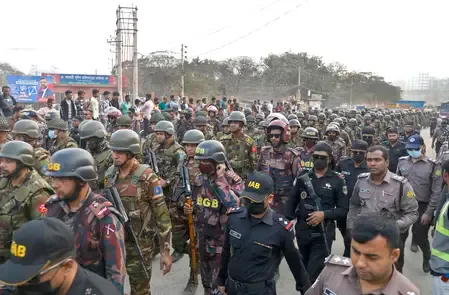
New Delhi, Jan 29 (NationPress) With only a fortnight remaining until the Bangladesh general elections, political figures are openly criticizing administrative shortcomings. A mix of political unrest, religious animosity, economic worries, and a tightening civic space has led to a collective outcry from various factions, including political leaders, media, and civil society across Bangladesh.
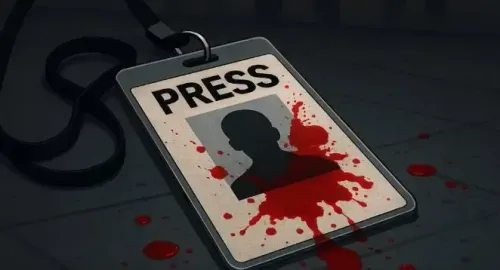
A recent editorial in the Dhaka Tribune raised alarms about the diminishing freedom of the press in Bangladesh. The piece highlighted that the recent targeted assaults on media institutions deserve stronger condemnation, stating: "Enabling the media to function without fear of censorship, coercion, or intimidation fosters an informed citizenry and a more vibrant public discourse."
The media landscape in the nation has been drawing attention to a series of intertwined crises: a slowing economy, escalating religious intolerance and inflammatory political speech, setbacks in gender equality, and increasing worries over media freedom, free speech, and the impartial enforcement of laws.
Editorials and reports underscore stagnant economic growth, escalating costs, and inadequate relief from recent policy initiatives, which leave households and businesses in distress as the elections draw nearer.
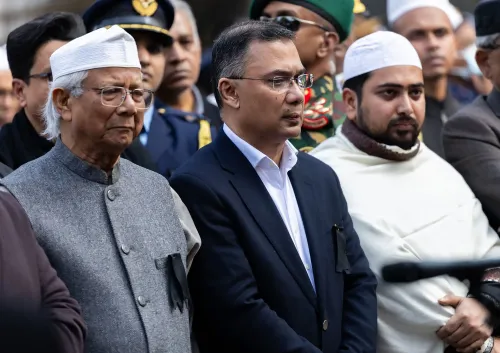
Adding to the concerns, Chief Adviser Muhammad Yunus has publicly stated that widespread document fraud is tarnishing the country’s international reputation. He bluntly referred to Bangladesh as "the world champion in fraud", with the Dhaka Tribune quoting him on how fake certificates and passports are jeopardizing citizens abroad.
Moreover, the voices of women are being recognized as a stark contrast to political promises versus actual experiences. Rights activists have raised alarms regarding safety in public areas, equal pay, childcare services, and women’s access to justice and substantial representation in political spheres.
As Bangladesh approaches its national election on February 12, women, constituting half the electorate, report that political rhetoric fails to resonate with them anymore, as noted by Dhaka-based The Daily Star, which has also noted instances of intense mob violence.
Reports indicate that rising violence, a contracting civic environment, job losses, economic instability, ongoing neglect of women's health issues, and the abandonment of 423 recommendations from the Women’s Affairs Reform Commission have exacerbated the divide between political pledges and reality, with women bearing the brunt.
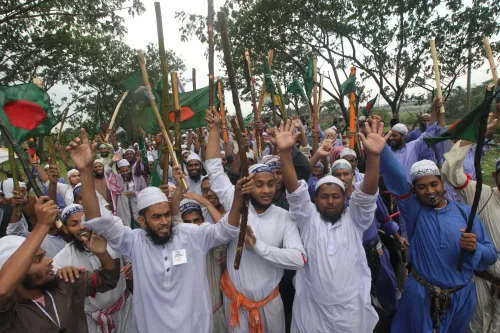
On the campaign trail, reports reveal that religious discourse and identity politics are emerging as powerful electoral strategies. Incidents of mob violence and lynching against minorities have been regularly reported, including the horrifying December incident involving a hanging Dipu Das.
Last week, an article on Banglanews24 referenced a study from Transparency International Bangladesh (TIB) that noted the rise of religious politics, attributing this trend to the prolonged absence of a democratic political climate, the influence of religious extremism, and the emergence of radical political factions both locally and globally.
On Wednesday, the Dhaka Tribune reported that the Bangladesh Nationalist Party (BNP) accused its former ally, Jamaat-e-Islami, of disseminating "fascist propaganda", engaging in political double standards, and perpetuating misleading narratives to sway voters in the upcoming elections.
The Jamaat has faced numerous bans and legal challenges, with its initial restriction dating back to 1972 for "misusing religion for political aims". It has been embroiled in various political and legal controversies since then.
The last Awami League government, led by former Prime Minister Sheikh Hasina, also imposed a ban due to the Jamaat's perceived threat to public safety and its alleged pro-Pakistan stance during the 1971 liberation war. Following Hasina's government being ousted in 2024, the interim administration led by Muhammad Yunus lifted the ban, allowing the party's registration to be reinstated by a Supreme Court ruling.
Now, Jamaat is preparing to participate in the February elections after a hiatus of nearly 17 years, marking its re-entry into Bangladesh's political landscape.
The Dhaka Tribune article quoted Mahdi Amin, a spokesperson for the BNP’s election steering committee, accusing Jamaat of hypocrisy for not addressing corruption during their tenure from 2001 to 2006, and continuing to spread the same old fascist propaganda in the election arena.
Point of View
It is critical to recognize the underlying issues that are driving the current political climate in Bangladesh. The voices of various stakeholders must be amplified to ensure that the upcoming elections reflect the true will of the people, fostering a more inclusive and democratic society.
NationPress
12 Oct 2026
Frequently Asked Questions
What are the main concerns leading up to the Bangladesh elections?
The primary concerns include administrative failures, political tensions, economic anxieties, and threats to media freedom.
How are women affected by the current political climate?
Women are expressing dissatisfaction with political rhetoric, highlighting issues like safety, equal pay, and representation.
What role does religious rhetoric play in the elections?
Religious rhetoric has emerged as a potent electoral tool, often leading to increased tensions and violence.
What is the significance of the Jamaat-e-Islami in these elections?
The Jamaat-e-Islami is returning to mainstream politics after a long hiatus, raising concerns about its past actions and current influence.
How does this election reflect broader societal issues?
The election is a reflection of deep-seated issues such as economic challenges, social inequalities, and the state of civic freedoms.