Is the Yunus-led interim government fueling organized mobs in Bangladesh?
Synopsis
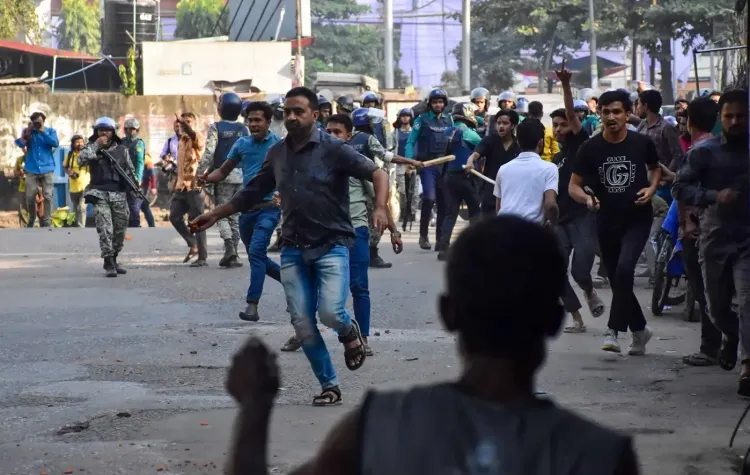
Experts are sounding alarms over the deteriorating law and order in Bangladesh, linking it to the Yunus-led interim government's alleged support for organized mobs. This revelation was made during a recent media reform dialogue, where journalists voiced concerns over increasing restrictions on media freedom and state responsibility failures.
Key Takeaways
The Yunus-led interim government is allegedly inciting organized mobs.
Media freedom in Bangladesh is under significant threat.
Recent attacks on media outlets highlight the precarious situation for journalists.
The upcoming elections are criticized for lacking genuine democratic processes.
Gender inclusivity in media is essential for building an equitable state.
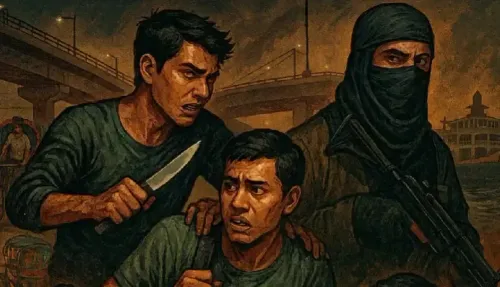
Dhaka, Jan 28 (NationPress) The ongoing decline in law and order within Bangladesh has raised alarms among experts, who assert that the Yunus-led interim government is fostering organized mobs throughout the nation, according to local media reports.
This assertion was made during a discussion hosted by the Centre for Governance Studies (CGS) titled 'Media Reform in Bangladesh: Between Freedom, Responsibility and Power' on Tuesday, which convened senior journalists, editors, academics, political figures, and media analysts from across the country.
Speakers at the event expressed their apprehensions, highlighting that media freedom in Bangladesh is becoming increasingly stifled, with journalists encountering threats, financial hardships, and pressure from politically affiliated factions, as reported by the prominent Bangladeshi newspaper, The Dhaka Tribune.
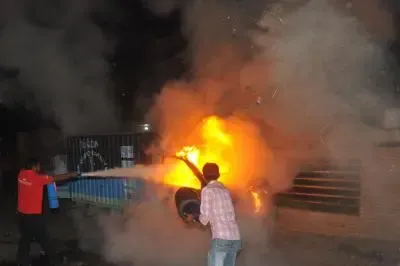
Reflecting on the incidents of December 18 when attacks were launched on media institutions The Daily Star and Prothom Alo, veteran journalist Nurul Kabir remarked that the interim government either condoned the assaults or failed to avert them.
"That was not spontaneous -- that was organized," quoted The Daily Star from Kabir.
He also emphasized that the failure of fire services to react during the media houses' arson incidents signifies a significant breakdown of governmental responsibility.
CGS President Zillur Rahman referenced the assaults on Prothom Alo and The Daily Star, indicating that a senior editor who criticized the interim government faced harassment and was labeled a political collaborator.
"This poses serious questions regarding media freedom," he remarked, pointing out that a representative from the interim government at the CGS event declined to classify the events as mob attacks.
Criticizing the forthcoming February 12 elections, Rahman stated, "There is no genuine voting in the country; what we have is referendum campaigning -- government campaigning through government offices, with 'Referendum 2026' superseding parliamentary elections."
Chair of the Bangladesh Media Reform Commission, Kamal Ahmed, cautioned that the Yunus-led interim government's proposed Broadcast Commission Ordinance and Media Commission Ordinance might lead to significant regulatory disputes due to overlapping authorities.
Kamal criticized the interim government's rush to enact ordinances, characterizing the new Information Broadcasting Commission and Media Commission as "disjointed initiatives" lacking adequate planning.
Meanwhile, senior journalist Zahid Newaz Khan shared experiences of surveillance and pressure, highlighting concerns regarding press accreditation and dependence on advertising revenue.
Advocating for gender inclusivity, Ayesha Kabir, head of Prothom Alo English, stated, "Women's participation in media must increase to foster an equitable state."
Since the Yunus-led interim government came to power in August 2024, Bangladesh has experienced a noticeable increase in assaults against journalists, the emergence of mob culture, and a worsening law and order environment.
Point of View
It is imperative to emphasize that the current situation in Bangladesh is precarious. The challenges faced by journalists and the threats to media freedom reflect a broader concern for democracy and governance in the nation. The involvement of the Yunus-led interim government in these issues must be scrutinized to ensure that democratic principles are upheld for the benefit of the citizens.
NationPress
22 Oct 2026
Frequently Asked Questions
What are the current challenges faced by journalists in Bangladesh?
Journalists in Bangladesh are facing increasing restrictions on media freedom, threats from politically affiliated groups, financial difficulties, and instances of harassment.
How has the Yunus-led interim government impacted law and order in Bangladesh?
Experts warn that the government’s patronage may be inciting organized mobs, leading to a deterioration of law and order in the country.
What recent incidents highlight the challenges to media freedom in Bangladesh?
The attacks on media outlets such as The Daily Star and Prothom Alo in December 2022 exemplify the growing threats against journalists and media institutions.
What do experts say about the upcoming elections in Bangladesh?
Critics, including CGS President Zillur Rahman, argue that the upcoming elections lack genuine democratic processes and resemble a referendum campaign instead.