Cultural Celebrations Mark Bangladesh's Independence Day in Assam and Tripura
Synopsis
On March 26, Bangladesh's Independence Day was joyfully celebrated in Assam and Tripura, showcasing cultural performances and emphasizing the importance of India-Bangladesh relations. This event marks a significant milestone—its 55th anniversary.
Key Takeaways
55th Anniversary: Celebrating Bangladesh's Independence Day.
Cultural Programs: Events featured performances by distinguished artists.
Strengthening Relations: Emphasis on enhancing India-Bangladesh ties.
Historical Remembrance: Tribute to freedom fighters from the 1971 Liberation War.
Community Support: Recognition of Tripura's role in sheltering refugees during the war.
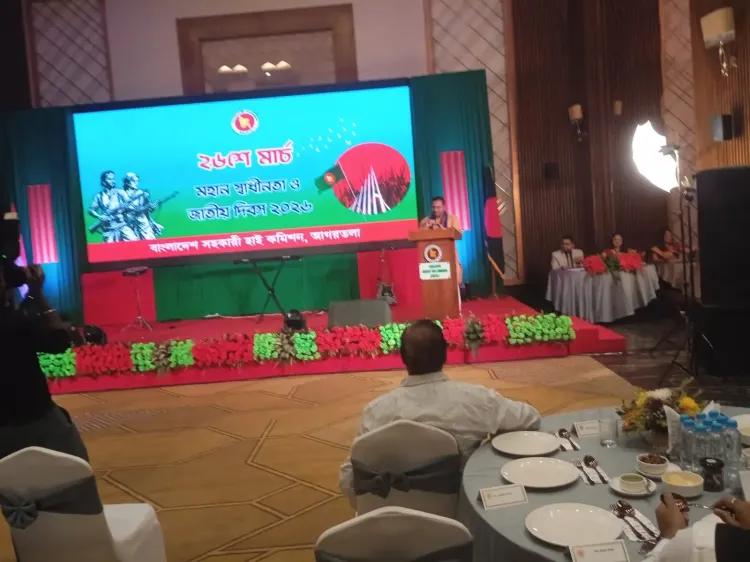
Guwahati/Agartala, March 26 (NationPress) The 55th anniversary of Bangladesh's Independence Day and National Day was commemorated with great zeal and cultural richness throughout Assam and Tripura on Thursday.
The Assistant High Commissions (AHCs) of Bangladesh in both Guwahati and Agartala organized a variety of events to honor this significant day.
These festivities included cultural exhibitions featuring talented artists and musicians, alongside discussions that underscored the day's historical and contemporary relevance.
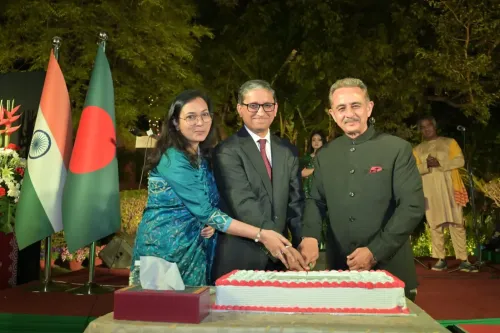
Special evening receptions and cultural showcases were held in both cities to pay tribute to esteemed guests from various Northeastern states of India.
On this momentous occasion, Border Security Force (BSF) personnel exchanged sweets and greetings with the Border Guards Bangladesh (BGB) at multiple border posts along the extensive 4,096-km India-Bangladesh boundary, representing the strong camaraderie between the two countries.
In Agartala, notable figures such as Tripura Assembly Speaker Ram Pada Jamatia, Higher Education Minister Kishore Barman, Rajya Sabha member and state BJP President Rajib Bhattacharjee, and Bangladesh's Assistant High Commissioner Hasan Al Bashar Abul Ulayee addressed the assembly.
During his speech, Jamatia highlighted the importance of fortifying India-Bangladesh relations for the mutual benefit of both nations.
Reflecting on the leadership of former Bangladesh Prime Minister Sheikh Hasina, the Tripura Assembly Speaker underscored the necessity of enhancing connectivity through waterways and railways, as well as boosting bilateral trade.
Recollecting his experiences during the 1971 Liberation War, the veteran tribal leader spoke of the profound hardships faced by refugees who sought shelter in Tripura.
Assistant High Commissioner Ulayee remarked that nearly four million Bangladeshis found refuge in Tripura during the 1971 conflict and expressed gratitude for the assistance provided by the state's residents.
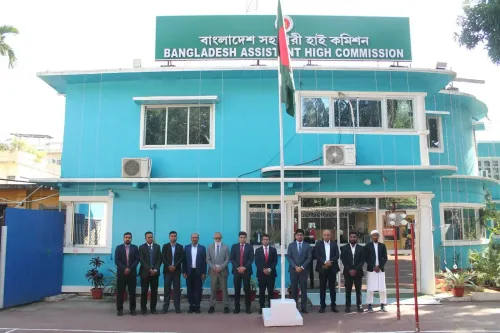
In Guwahati, the celebration was conducted with the appropriate solemnity at the Bangladesh Assistant High Commission.
The morning ceremony commenced with the Bangladesh Assistant High Commissioner in Guwahati, Zikrul Hasan Fahad, raising the national flag, accompanied by the rendition of the national anthem.
A ceremonial unit from the Assam Police rendered a state salute.
Messages from Bangladesh's President Mohammed Shahabuddin, Prime Minister Tarique Rahman, Foreign Minister Khalilur Rahman, and State Minister for Foreign Affairs Shama Obaed Islam were shared in the presence of officials and staff at the Chancery premises.
Special prayers were conducted for the martyrs and freedom fighters who sacrificed their lives during the 1971 Liberation War.
Among the attendees was Tasir Uddin Ahmed, a decorated Bangladeshi freedom fighter and father of Assistant High Commissioner Zikrul Hasan Fahad.
In his address, Fahad honored the brave freedom fighters and the Indian Armed Forces members who supported the Mukti Bahini during the 1971 struggle.
The roots of Bangladesh's Independence Day date back to March 26, 1971, when leaders from then East Pakistan declared their intent to gain independence following military assaults by the Pakistani forces.
Under the guidance of Bangladesh's founder Sheikh Mujibur Rahman, a guerrilla war commenced against the Pakistani military.
The conflict ultimately escalated into a comprehensive India-Pakistan war, leading to the surrender of around 93,000 Pakistani soldiers in Dhaka on December 16, 1971.
India was the first nation to acknowledge Bangladesh as a sovereign state.
According to testimonies from Bangladeshi freedom fighters and historians, the nine-month Liberation War witnessed widespread atrocities, resulting in over three million deaths and more than 600,000 women subjected to sexual violence.
Moreover, over ten million individuals were displaced from their residences during the conflict.
Frequently Asked Questions
What is the significance of Bangladesh's Independence Day?
Bangladesh's Independence Day marks the declaration of independence from Pakistan on March 26, 1971, which led to a nine-month Liberation War.
How was Bangladesh's Independence Day celebrated in Assam and Tripura?
The day was celebrated with cultural performances, discussions, and special receptions organized by the Assistant High Commissions of Bangladesh.
Who were the notable attendees at the celebrations?
Key attendees included Tripura Assembly Speaker Ram Pada Jamatia, Higher Education Minister Kishore Barman, and Bangladesh's Assistant High Commissioner Hasan Al Bashar Abul Ulayee.
What historical events are remembered on this day?
The day recalls the struggles and sacrifices made during the 1971 Liberation War, which resulted in the independence of Bangladesh.
How did the Indian and Bangladeshi border forces participate in the celebrations?
The Border Security Force (BSF) and Border Guards Bangladesh (BGB) exchanged sweets and greetings at various border posts to symbolize goodwill.