Has Bangladesh Slid Backwards Under Yunus' Governance?
Synopsis
A new report reveals unsettling truths about Bangladesh's political landscape under Muhammad Yunus. As lofty ambitions fade, questions arise about the interim government's ability to lead the nation towards a stable future amidst rising corruption and unrest.
Key Takeaways
Bangladesh's political stability is under threat due to rising corruption.
Public trust in the government is rapidly declining.
Yunus' leadership has been controversial amidst growing unrest.
Upcoming elections will be a critical moment for the nation.
International relations, particularly with India, are strained.
Dhaka, Jan 21 (NationPress) Bangladesh has regressed as the noble aspirations and principles that fueled the revolution have faded under the stewardship of the interim government, according to a recent report.
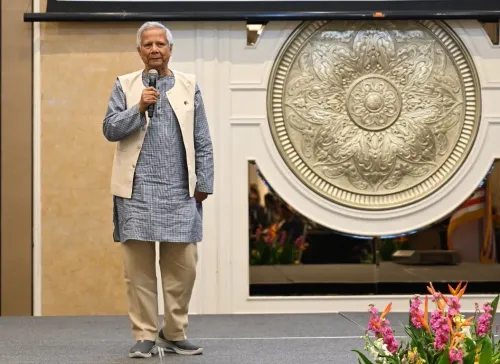
Upon assuming power, Chief Advisor Muhammad Yunus promised social unity, a reformed political framework, and new economic prospects while addressing the issues that led to public protests. However, his administration and its allies have been embroiled in corruption controversies despite their pledges to combat such issues.
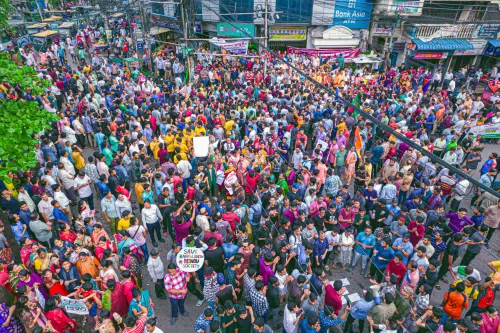
An EU Reporter article noted that anticipation is building for the elections and referendum set for February 12 in Bangladesh. Following the removal of the Sheikh Hasina-led government and the establishment of an interim regime, the Yunus administration has insisted on needing additional time to ensure smooth electoral proceedings. Nevertheless, doubts linger with less than a month remaining before the polls.
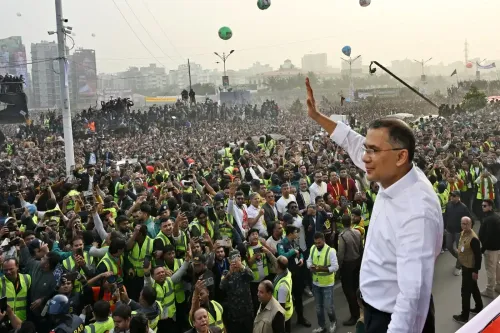
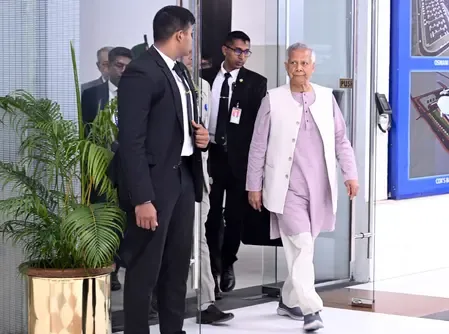
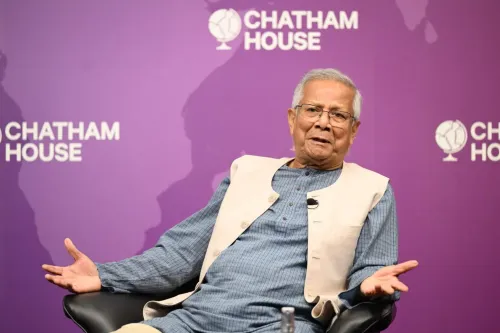
"In a critical phase for the nation, Muhammad Yunus seems to have become invisible. Once seen as a leading figure in post-revolutionary Bangladesh, he has largely withdrawn from public engagements in recent months, leading to speculation that he might be negotiating for the presidency. His absence from both national and international discourse has enabled Tarique Rahman, the BNP leader, to assume the role of the de facto head of state, engaging with Indian officials at a time when relations between Bangladesh and India are at a low point," the EU Reporter stated.
Bangladesh is grappling with numerous challenges, including deteriorating relations with India, rising inflation, and issues within the banking sector. The Yunus-led government has struggled to manage increasing interpersonal and sectarian violence, resulting in the assassination of a prominent figure in 2025. Although Yunus initially pledged to foster social cohesion and implement a reformed political system, his government has faced numerous corruption allegations despite its commitments.
"Ultimately, the nation has regressed as the lofty ambitions and ideals that were the foundation of the revolution have faded under the interim government’s oversight. Unlike conventional caretaker governments, the interim administration has embarked on a targeted series of reforms aimed at reshaping Bangladesh in its own image. However, the biased nature of its actions reveals a profound distrust of the political system and, consequently, the will of the Bangladeshi populace," stated the report from EU Reporter.
"This raises questions about the legacy Muhammad Yunus will leave in Bangladesh. Transitioning from an internationally acclaimed leader in the NGO sector, Yunus could have aligned himself with the pet projects of global elites. Instead, he has overseen a temporary government that is unraveling, as existing social tensions and diminishing trust in governance seep in, posing a monumental challenge for whoever is to become Bangladesh’s first democratically elected leader in 18 months to address the mess left by the Interim Government," it concluded.
Point of View
It is crucial to emphasize that the current situation in Bangladesh reflects a significant challenge for the nation. While the interim government led by Yunus sought to address pressing issues, the rise of corruption and unrest raises doubts about its effectiveness. It remains essential to advocate for transparency and accountability in governance to restore public trust and ensure a stable future for the people of Bangladesh.
NationPress
9 Oct 2026
Frequently Asked Questions
What are the main issues facing Bangladesh currently?
Bangladesh is currently facing challenges such as deteriorating relations with India, rising inflation, and issues within the banking sector, compounded by increasing violence and corruption.
What role has Muhammad Yunus played in the interim government?
Muhammad Yunus, as the Chief Advisor, initially promised social cohesion and reform but has faced criticism for failing to address corruption and unrest.
When are the upcoming elections in Bangladesh?
The elections and referendum in Bangladesh are scheduled for February 12.
How has the political landscape changed under Yunus?
The political landscape has seen a shift with Yunus' reduced public presence, allowing opposition leaders to gain influence during a critical time for the country.
What does the future hold for Bangladesh?
The future of Bangladesh hinges on the upcoming elections and the ability of the next government to restore public trust and address existing challenges.