Rohingya Refugee Camps in Bangladesh Face Severe Fire Safety Challenges
Synopsis
Bangladesh's Rohingya refugee camps confront a devastating fire safety crisis, with urgent responses overshadowing the need for sustainable solutions. As plans for fire-resistant shelters remain unfunded, the ongoing issues continue to threaten lives and property.
Key Takeaways
Fire safety in Rohingya camps is critically inadequate.
Over 2,425 fires have occurred since 2018.
Plans for fire-resistant shelters remain unfunded.
The camps house over 100,000 individuals.
Political decisions have led to predictable fire risks.
Dhaka, March 7 (NationPress) The fire safety protocols in Bangladesh's Rohingya refugee camps illustrate a significant contradiction, as aid organizations prioritize immediate responses while ignoring the root causes of fire hazards. Plans for 50,000 semi-permanent, fire-resistant shelters, which were announced with much enthusiasm, have remained unfunded following cuts to international aid in early 2025, according to a cited report.
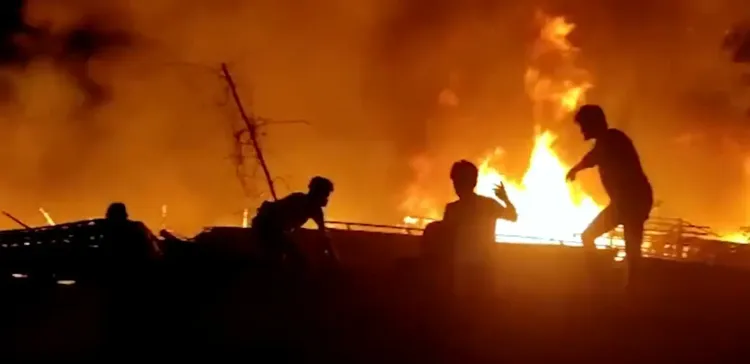
“The humanitarian record showcases not only this disaster but also its alarming frequency: from May 2018 to December 2025, there have been 2,425 recorded fires in the world's largest refugee settlement in southeastern Bangladesh, displacing over 100,000 people and destroying more than 20,000 shelters. This situation transcends mere accidents; it reflects the evolution of a refugee crisis into a more profound and persistent state of emergency,” a report from 'Global Voices' has highlighted.
The report notes that the fire that occurred in Cox Bazar's refugee camp in January of this year is not simply a risk to manage but rather an inevitability woven into the very structure of the settlement.
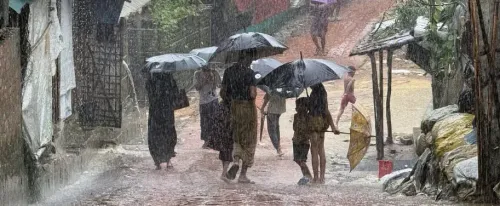
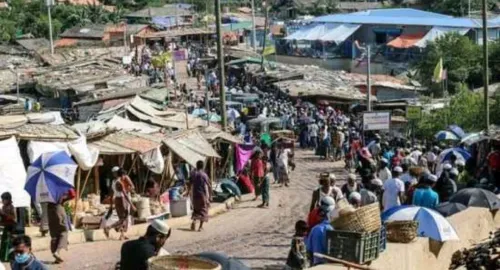
“Each shelter consists of bamboo, tarpaulin, and plastic rope, lacking any fire-resistant materials. The population density in some sections of the camp exceeds 95,000 individuals per square kilometer, with many families cooking over open flames mere inches from their neighbors, in structures that become highly flammable during the winter months,” it continued.
Lance Bonneau, the Chief of Mission for the International Organisation for Migration (IOM) in Bangladesh, precisely outlined the risks involved.
“When fires occur in overcrowded camp environments, the repercussions extend far beyond damaged structures. Families suffer the loss of shelter, vital belongings, and access to essential services,” Bonneau was quoted as saying by Global Voices.
The report emphasizes that these consequences are not just unfortunate byproducts but rather predictable results of political choices—to confine nearly one million people to inadequate land with insufficient resources.
Kaiser Rejve, Head of Programmes at CARE Bangladesh, highlighted the organization’s response after a fire in January 2026 that displaced 2,185 individuals, stating, “Beyond immediate actions, we are dedicated to enhancing preventive measures. We will integrate focused fire safety training into shelter upgrade and maintenance programs to elevate awareness and encourage safer practices.”
The report concludes that the Rohingya refugees have lived in these settlements for more than eight years, with the Bangladeshi government not considering them to be permanent residents, complicating any substantial long-term investments.
Point of View
The situation in the Rohingya refugee camps highlights a pressing need for sustainable solutions to fire safety. The continued neglect of structural issues exacerbates the crisis, demanding immediate action and investment.
NationPress
29 Sept 2026
Frequently Asked Questions
What are the main causes of fire in Rohingya camps?
The primary causes of fire in Rohingya camps include overcrowded living conditions, the use of flammable materials for shelters, and cooking with open flames in close proximity to one another.
How many fires have been reported in the camps?
Between May 2018 and December 2025, there have been 2,425 documented fires in the Rohingya refugee settlement.
What is being done to improve fire safety?
Organizations like CARE Bangladesh are developing fire safety training programs and advocating for the construction of fire-resistant shelters to prevent future incidents.
What is the population density in the camps?
Some blocks of the Rohingya refugee camps have a population density exceeding 95,000 people per square kilometer.
Are the camps intended to be permanent?
No, the Bangladeshi government does not consider these settlements to be permanent, complicating long-term investments in infrastructure.