Can Bangladesh's Yunus-Led Interim Government Restore Stability Amid Unrest?

Synopsis
As Bangladesh grapples with rising unrest and violence, the interim government led by Yunus is striving to restore stability and address the troubling incidents that have marred the nation’s image. With recent resignations and responses to political turmoil, the situation remains tense. Will these efforts be enough to quell the growing discontent?
Key Takeaways
Bangladesh is facing significant unrest and violent incidents targeting minorities.
The interim government under Muhammad Yunus is attempting damage control.
Resignation of key officials indicates a response to criticism.
Recent lynchings have raised alarms about the safety of religious minorities.
Political tensions continue to escalate amidst calls for stability.
New Delhi, Dec 26 (NationPress) Recent events in Bangladesh since Wednesday have made headlines, indicating that the transitional administration under Muhammad Yunus is formulating a strategy to mitigate the negative perception arising from extensive arson and violent incidents.
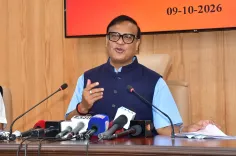
On Wednesday, Khuda Baksh Chowdhury, the special assistant to Chief Adviser Muhammad Yunus at the Ministry of Home Affairs, tendered his resignation, which was promptly accepted and made public through a gazette notification within hours.
In another troubling incident, regional media reported the lynching of a Hindu man in Rajbari district on the same day. Authorities identified the victim as Amrit Mondal, also known as Samrat, who was allegedly an extortionist and was attacked over accusations of attempting to collect money. There remains uncertainty about whether his religion played a role in the targeting.
Numerous theories regarding his supposed “connections” with India and the ousted Prime Minister Sheikh Hasina have surfaced. Concurrently, Tarique Rahman, Acting Chairman of the Bangladesh Nationalist Party (BNP), announced his plans for the nation. Yet, the interim government has initiated its own actions in response to international criticism.
The resignation of Chowdhury and its swift acceptance displayed the administration’s commitment to addressing those responsible for the law-and-order situation. Moreover, the quick investigation into the deceased's past spared the interim government from facing another accusation of “targeted killing” following the violent murder of Dipu Chandra Das in Mymensingh the previous week.
This killing occurred amidst unrest following the death of Osman Hadi, a prominent student leader associated with the August movement against former Prime Minister Sheikh Hasina last year.
Dipu, a 27-year-old Hindu garment worker, was brutally murdered by a mob in Bhaluka after being accused of blasphemy. Reports indicate he was viciously beaten and his body set ablaze. The administration condemned this murder and apprehended several suspects, highlighting the precarious position of minorities and the risks of unchecked rumor-fueled violence during political turmoil.
Meanwhile, Samrat was reportedly involved in multiple criminal cases, including murder. Local accounts suggested that he was part of a gang and had sought refuge in India following the ousting of Hasina after the August 2024 uprising.
It remains unclear why he chose to return and engage in crime under the current circumstances. However, justice cannot be served through mob violence.
Previously, Chowdhury, a former Inspector General of Police, was appointed as a special assistant to Chief Adviser Muhammad Yunus on November 10 last year to oversee security protocols.
The Daily Star reported that he was appointed in light of the previous year’s mass protests, with expectations that he would play a crucial role in reinstating order and enhancing morale within law enforcement, particularly the police. These expectations, however, were reportedly unmet, leading to claims that he needed to resign due to inadequate performance and crisis management failures.
Point of View
It is crucial to adopt a balanced perspective. The interim government's strategies reflect an attempt to manage a challenging situation, but the recurring incidents of violence against minorities cannot be overlooked. Ensuring security and restoring public trust should be the priority, as the nation navigates through this tumultuous period.
NationPress
9 Oct 2026
Frequently Asked Questions
What led to the resignation of Khuda Baksh Chowdhury?
Khuda Baksh Chowdhury resigned amid growing unrest and criticism of the government's handling of law and order, following violent incidents in Bangladesh.
What incidents prompted concerns regarding minority safety in Bangladesh?
The lynching of a Hindu man, Amrit Mondal, and the murder of another Hindu garment worker, Dipu Chandra Das, raised alarms about the safety of minorities amidst political unrest.
How has the interim government responded to the violence?
The interim government has accepted resignations and initiated investigations to address the violence and restore public confidence in law enforcement.
What role did Khuda Baksh Chowdhury play in the government?
Chowdhury served as a special assistant to Chief Adviser Muhammad Yunus, focusing on security measures following last year’s mass uprising.
What is the current situation in Bangladesh?
Bangladesh is experiencing unrest characterized by violent incidents, prompting the interim government to take steps to mitigate negative perceptions and restore stability.