Beijing's Tourist Experience Unveils Expanding Identity Control System

Synopsis
A Chinese tourist's recent trip to Beijing highlights the alarming growth of identity control mechanisms in China, blending big data and facial recognition technology to monitor citizens. This revelation raises significant concerns about privacy and civil liberties.
Key Takeaways
Significant identity control measures are being implemented in Beijing.
Tourists face frequent security checks and ID scans.
The use of big data and facial recognition technology is alarming.
Concerns over privacy and civil liberties are escalating among citizens.
Individuals identified as 'key persons' face strict oversight.
Beijing, April 5 (NationPress) A recent journey by a Chinese tourist to Beijing has unveiled a swiftly growing system of identity oversight in the Communist nation, which merges advanced data analytics and facial recognition technologies to track movements throughout the public areas of the capital, according to a report.
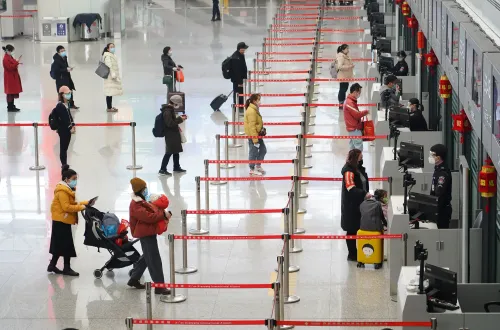
The tourist disclosed on social media that during his five-day stay in Beijing, he underwent security checks six times and was compelled to scan his national ID card 15 times, as reported by The Epoch Times.
In a video posted on WeChat, he remarked, "Essentially, wherever you go, scanning your ID is mandatory."
He further noted, "At tourist attractions, subway stations, and various public areas, there are ID checkpoints. Your journey is repeatedly interrupted."
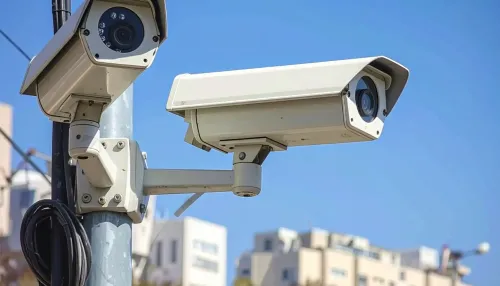
"His experience sheds light on a swiftly advancing system of identity oversight in Beijing—a system that integrates vast data and facial recognition technology to track movements in the city's public spaces," the report from The Epoch Times continued.
Numerous petitioners, human rights advocates, and others who communicated with The Epoch Times expressed that this system signifies a wider trend towards data-centric social governance, triggering alarm regarding privacy and civil liberties in China. Many spoke anonymously or with only their last names published due to fears of retaliation, the report mentioned.
Security assessments and ID validations have become nearly omnipresent for individuals in Beijing. Subway stations frequently demand bag inspections, and many venues require ID scans that are directly linked to personal data systems. For specific demographics, the restrictions can be even more stringent.
A woman identified only by her surname, Li, who has frequently visited Beijing to petition local authorities, indicated that the level of scrutiny has intensified.
As per the report, petitioning is a formal process aimed at addressing the grievances of citizens. However, human rights organizations have claimed that authorities often dismiss such petitions and frequently target those dissatisfied with the regime's authoritarian governance.
She stated, "I just returned from Beijing. This time, the inspections were more frequent than before."
"Locations like Tiananmen Square are consistently monitored. Petitioners face scrutiny wherever they go," she added.
According to her, individuals marked as "key persons" may face outright detention.
She explained, "If you’re flagged as a priority target, you might not be permitted to proceed at all. They will detain you and transfer you to local authorities."
Others have described it as a system that operates through invisible digital surveillance rather than merely physical checkpoints.
Point of View
The report underscores a concerning trajectory in Beijing where identity control measures are becoming increasingly pervasive. The integration of technology into public monitoring raises critical questions about individual freedoms and privacy rights in a rapidly evolving digital landscape.
NationPress
10 Sept 2026
Frequently Asked Questions
What did the Chinese tourist experience during his visit to Beijing?
The tourist experienced multiple security checks and had to scan his national ID card numerous times, highlighting the invasive nature of identity control in Beijing.
How does the identity control system work in Beijing?
The system combines big data and facial recognition technology to monitor individuals' movements across public spaces.
What are the implications of this identity control system?
The system raises concerns regarding privacy and civil liberties as it reflects a shift towards data-driven social control.
Has scrutiny increased for petitioners in Beijing?
Yes, many petitioners report that security checks and scrutiny have become more frequent during their visits.
What happens to individuals flagged as 'key persons'?
Those flagged may be stopped entirely, detained, and handed over to local authorities.