Political Showdown in West Bengal: Trinamool vs BJP; Congress and Left Seek to Reclaim Votes
Synopsis
As the Assembly elections near in West Bengal, the political arena is heating up. The ruling Trinamool Congress faces off against the BJP, while the Congress and Left aim to regain lost voter support. Discover the dynamics in this critical electoral battle.
Key Takeaways
Trinamool Congress and BJP are the main contenders for power in West Bengal.
The Left and Congress aim to recover their voter base.
Historical election outcomes show a significant shift in political alliances.
The 2021 elections were unprecedented for the Congress and Left, with no seats won.
Future strategies focus on increasing vote shares amid a fragmented political landscape.
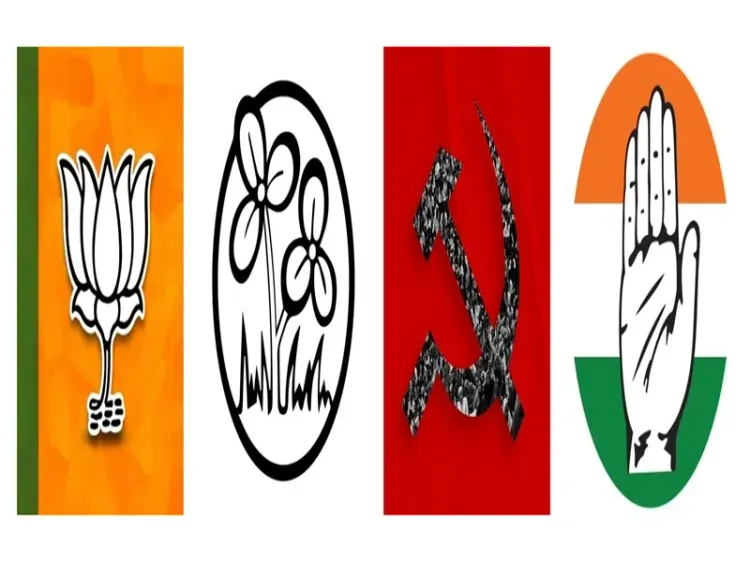
Kolkata, March 14 (NationPress) As the announcement for the Assembly elections in West Bengal approaches, the political landscape is becoming more defined. The ruling Trinamool Congress is set to face off against the main opposition party, the Bharatiya Janata Party (BJP), with both vying for control. Meanwhile, the Left and Congress are focused on boosting their vote shares.
When the Trinamool Congress ascended to power in 2011, it secured an impressive 184 seats in the 294-member Assembly, obtaining over 1.85 crore votes and a vote share of approximately 39 percent. The Communist Party of India-Marxist (CPI-M), the leading faction of the ousted Left Front, managed to win only 40 seats, garnering over 1.43 crore votes and a 30 percent share.
The Congress, which has seen its influence wane, contested alongside the Trinamool, achieving 42 seats with roughly 43 lakh votes and a 9 percent share.
In stark contrast, the BJP did not secure any seats during that election, receiving around 19.3 lakh votes and a 4 percent share.
In the subsequent Assembly elections of 2016, under the leadership of Mamata Banerjee, the Trinamool Congress increased its dominance, winning 211 seats with over 2.45 crore votes and nearing a 45 percent vote share.
The CPI-M's fortunes diminished further, dropping to just 26 seats with around 1.08 crore votes and a close to 20 percent share, while the BJP won three seats with about 55 lakh votes and around a 10 percent share.
The Congress slightly improved its performance, adding two seats to its tally and securing about 67 lakh votes, translating to approximately 12 percent of the vote share.
Post-election evaluations of the “Mahajot” or Grand Alliance between the Left Front and the Congress indicated that many communist supporters leaned towards the Congress in a bid to maintain political relevance.
However, numerous Congress supporters reportedly did not reciprocate, citing a long history of CPI-M oppression.
The 2021 Assembly elections brought unexpected results as both the Congress and Left Front failed to win a single seat, marking a historic first in West Bengal's electoral history where former ruling parties could not send representatives to the state Assembly.
In a significant shift, the BJP emerged as the primary opposition, winning 77 seats and achieving a substantial mandate with 2.29 crore votes and about 38 percent of the vote share.
This election also saw the first Leader of Opposition from the BJP benches, Suvendu Adhikari.
Unfortunately, the Mahajot failed to regain its strength, with the Congress eventually splitting from the alliance months ahead of the upcoming state elections.
Simple arithmetic suggests that with an increasing fragmentation of non-BJP votes, the Trinamool remains a dominant player, posing a considerable challenge for the two former allies.
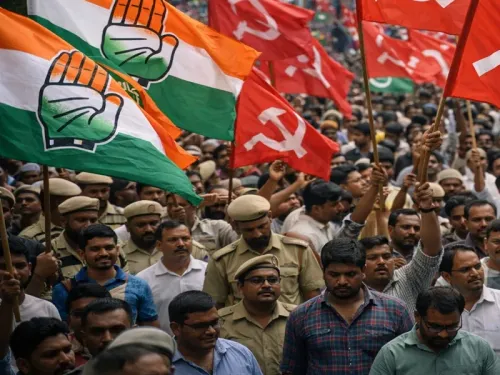
A senior Congress official noted that both parties are primarily looking to enhance their vote shares this time around.
In 2021, while the CPI-M managed a vote share of less than 5 percent, Congress barely surpassed 3 percent.
By contesting independently, both parties anticipate an increase of “at least one to 1.5, or a maximum of two” percentage points each.
The leader also mentioned that by going solo, the Congress aims to win back voters who had shifted to the Trinamool instead of supporting their former ally, the Left Front.
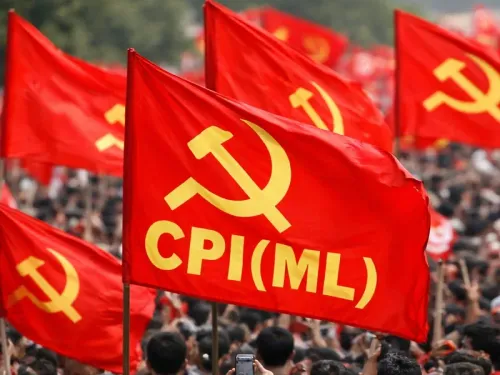
For the CPI-M, the goal is to consolidate its vote share by attracting back sections of its base who had voted for the BJP rather than the Congress or Trinamool.
Leaders from both parties, once dominant in West Bengal's political landscape, privately acknowledge the challenging situation they face, with even a modest increase in vote share viewed as a significant achievement.
Point of View
The evolving political dynamics in West Bengal reveal a significant shift as the Trinamool Congress and BJP prepare for a fierce contest. Both the Congress and Left are strategically aiming to regain their footing in a changing political landscape, highlighting the complexities of regional politics.
NationPress
27 Sept 2026
Frequently Asked Questions
What are the main political parties contesting in West Bengal's Assembly elections?
The primary parties are the ruling Trinamool Congress, the main opposition Bharatiya Janata Party (BJP), and the Left and Congress, who are both trying to improve their vote shares.
What was the outcome of the 2021 Assembly elections in West Bengal?
In the 2021 elections, the Congress and Left failed to win any seats, while the BJP emerged as the principal Opposition party.
How did the Trinamool Congress perform in the 2016 Assembly elections?
In 2016, the Trinamool Congress won 211 seats with approximately 2.45 crore votes, achieving close to a 45 percent vote share.
What does the term 'Mahajot' refer to in West Bengal politics?
'Mahajot' refers to the Grand Alliance formed between the Left Front and Congress in an attempt to consolidate their political power.
What are the challenges facing the Congress and Left in the upcoming elections?
Both the Congress and Left are facing challenges in regaining voter support, particularly as they attempt to contest independently and increase their vote shares.