RSS chief Bhagwat recalls Muslim man Ibrahim who defended Sangh against 1930s ban bid
Synopsis
RSS chief Mohan Bhagwat surfaced a rarely told story: in the 1930s, when a motion to ban the RSS was raised in the Central Provinces Legislative Assembly, it was a Muslim legislator named Ibrahim who stood up to block it — invoking not ideology but his personal trust in RSS founder Dr Keshav Baliram Hedgewar. The episode, shared at a Nagpur event, is being deployed as historical evidence of the Sangh's non-communal foundations as it marks 100 years.
Key Takeaways
RSS chief Mohan Bhagwat recalled on 9 November that a Muslim legislator named Ibrahim defended the RSS against a ban motion in the Central Provinces Legislative Assembly in the 1930s .
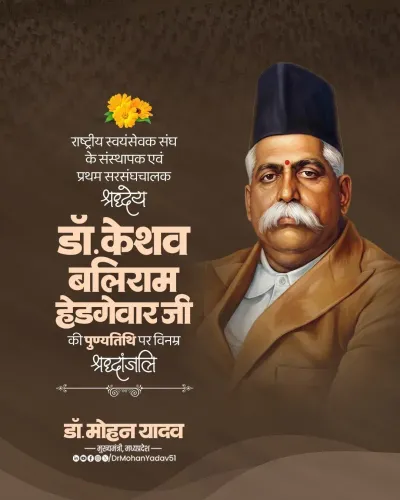
Ibrahim reportedly argued that while he personally opposed the concept of a Hindu Rashtra , he knew RSS founder Dr Keshav Baliram Hedgewar to be a good man, and therefore the RSS could not be communal.
Bhagwat made the remarks at the inauguration of an auditorium at Nagpur Nagrik Sahakari Bank Limited headquarters.
He said the RSS today has approximately 7 to 7.5 million Swayamsevaks, of whom around 4,000 are full-time Pracharaks who have forsaken personal life.
Bhagwat linked the RSS's 100-year journey to the character and selfless service of its workers, not to external patronage.
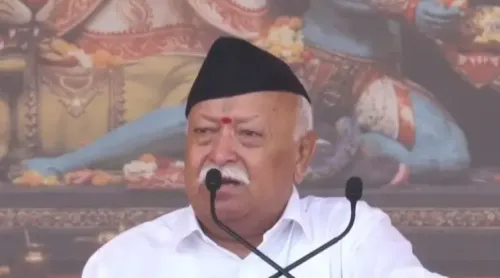
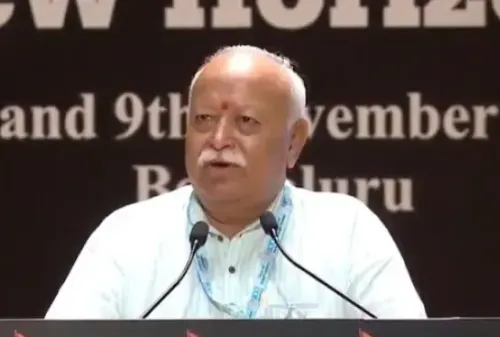
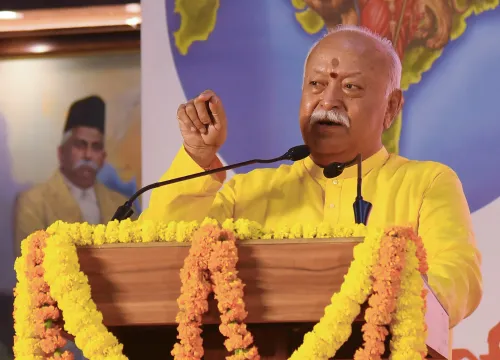
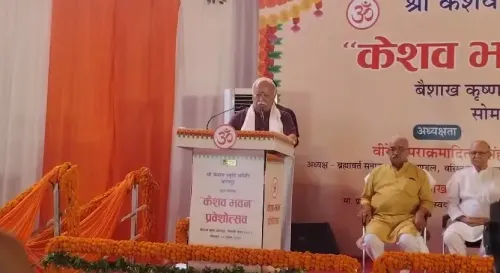
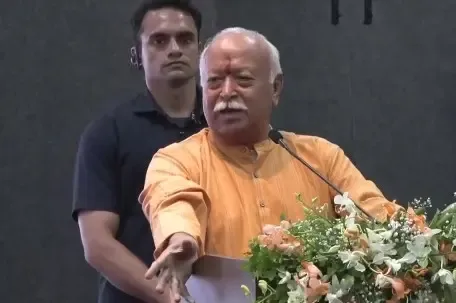
Rashtriya Swayamsevak Sangh (RSS) chief Mohan Bhagwat on Monday, 9 November recounted a little-known chapter from the Sangh's early history, revealing that a Muslim legislator named Ibrahim had spoken in defence of the RSS when a move was made to ban the organisation in the Central Provinces Legislative Assembly in the 1930s. Bhagwat shared the anecdote while addressing the inauguration of a newly constructed auditorium at the Nagpur Nagrik Sahakari Bank Limited headquarters in Nagpur.
Ibrahim's Defence in the Assembly
Bhagwat recounted that in the RSS's formative years, no Swayamsevaks were present in the Assembly to defend the organisation, nor was there any ideological support from within the House. It was at that juncture, he said, that Ibrahim stood up and argued against the ban.
'At that time, a person named Ibrahim raised his voice in support of the RSS, stating that the organisation should not be shut down as it is not communal,' Bhagwat said.
He further quoted Ibrahim's address: 'I believe that those who say Hindustan is a Hindu Rashtra should be sent to a mental hospital. However, I know Dr Keshav Baliram Hedgewar personally. He is not insane; he is a good person. Therefore, the RSS can never be communal.'
Hedgewar's Reputation as a Unifying Force
Bhagwat noted that while the RSS itself was relatively obscure in the 1930s, its founder Dr Keshav Baliram Hedgewar commanded wide personal respect across communities. This, he suggested, was what prompted Ibrahim's intervention — a defence rooted not in ideology but in personal trust in Hedgewar's character. The anecdote underscores a recurring argument made by the RSS that its founding ethos was never defined by communal exclusion.
'Since its inception, the organisation's identity has been shaped by its swayamsevaks. Today, after 100 years, Swayamsevaks continue to be the real identity of the RSS,' Bhagwat remarked.
On the Life of Pracharaks and Full-Time Volunteers
Moving beyond the historical episode, Bhagwat reflected on the selfless life of RSS full-time workers, known as Pracharaks. 'I am a Pracharak myself. I have observed Pracharaks closely over the years, and their lifestyle has become second nature to me,' he said.
He stated that of roughly 7 to 7.5 million volunteers who identify as Swayamsevaks today, around 4,000 full-timers have completely set aside personal desires to dedicate themselves to the nation's future. He described this life as 'swimming against the tide' — one free of ego, selfishness, or personal expectation.
India's Model of Selfless Service Under Global Scrutiny
Bhagwat emphasised that the RSS's century-long progress stems not from external favour but from the dedication and character of its workers. He also pointed to what he described as growing global interest in India's model of societal service, arguing that a strong, disciplined, and united society is essential for India to meet rising international expectations responsibly.
He noted that people write about Pracharaks out of genuine affection, not personal gain, as RSS work carries no material benefits.
Point of View
Bhagwat pushes back against the dominant narrative that frames the Sangh as inherently exclusionary. Yet the episode's credibility rests on a single contemporary account with no independent corroboration, and the RSS's critics are unlikely to accept one anecdote as a rebuttal to decades of documented tensions. What the moment does reveal is the RSS's growing confidence in narrating its own history on its own terms — and its awareness that the story of the Sangh's first century will be contested long after Bhagwat leaves the podium.
NationPress
9 Nov 2026
Frequently Asked Questions
Who was Ibrahim and why did he defend the RSS in the 1930s?
According to RSS chief Mohan Bhagwat, Ibrahim was a Muslim member of the Central Provinces Legislative Assembly who spoke against a move to ban the RSS in the 1930s. He reportedly justified his defence by citing his personal trust in RSS founder Dr Keshav Baliram Hedgewar, arguing that a man of Hedgewar's character could not lead a communal organisation.
What was the attempt to ban the RSS in the 1930s about?
Bhagwat did not elaborate on the specific details of the ban motion beyond stating it was raised in the Central Provinces Legislative Assembly. At the time, the RSS was still a relatively new and little-known organisation, and no Swayamsevaks were present in the Assembly to defend it.
Where did Mohan Bhagwat make these remarks?
Bhagwat made the remarks on 9 November at the inauguration of a newly constructed auditorium at the Nagpur Nagrik Sahakari Bank Limited headquarters in Nagpur, Maharashtra.
How large is the RSS today according to Bhagwat?
Bhagwat said the RSS currently has roughly 7 to 7.5 million volunteers who identify as Swayamsevaks, with approximately 4,000 full-time Pracharaks who have set aside personal life entirely to work for the organisation.
What is a Pracharak in the RSS?
A Pracharak is a full-time RSS volunteer who dedicates their life entirely to the organisation's work, forgoing personal pursuits, family life, and material benefits. Bhagwat himself is a Pracharak and described their lifestyle as one of complete selflessness and dedication to national welfare.