Bhiwandi building collapse death toll rises to 9; NDRF rescue on
Synopsis
A four-storey residential building in Bhiwandi, already flagged as dangerous by civic authorities, collapsed during repair work late Thursday night — killing at least 9 people. With rescue teams still sifting through debris and residents unaccounted for, the toll may not yet be final. The tragedy resurfaces a persistent question: why were families still living in a building the civic body had declared unsafe?
Key Takeaways
The death toll in the Bhiwandi building collapse rose to 9 as of 31 July , with NDRF teams recovering bodies from the rubble.
The Kohinoor Building's 'B' wing in Balaji Nagar, Bhiwandi collapsed at approximately 11:30 p.m. on Thursday during ongoing repair work.
The four-storey structure had 48 rooms and had previously been declared dangerous by the local civic body.
Residents reported hearing loud cracking sounds around 9 p.m. and began evacuating, but some were still inside when the wing gave way.
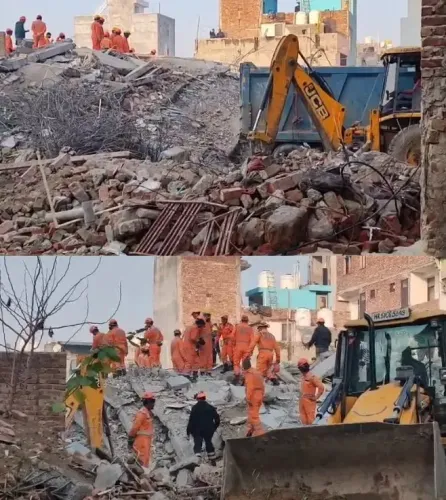
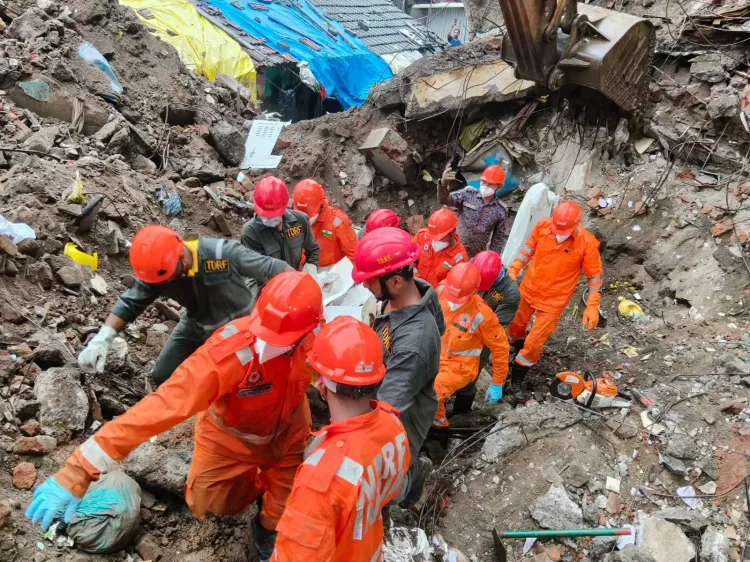
NDRF and SDRF teams, aided by JCB machines, worked through the night; officials warn more people may still be trapped.
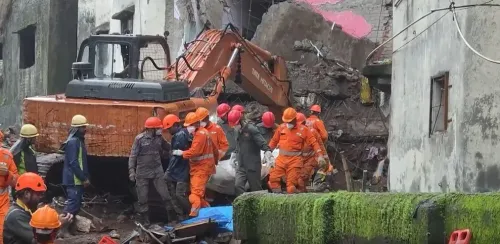
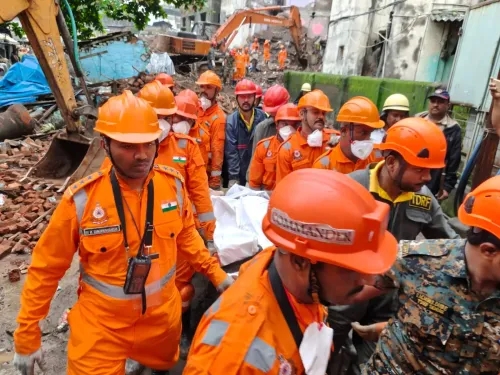
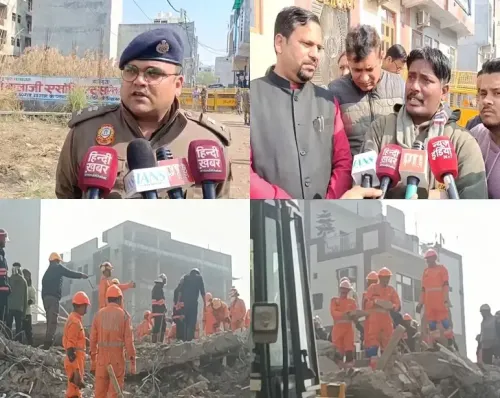
The death toll in the Bhiwandi building collapse in Maharashtra's Thane district climbed to nine on 31 July, as National Disaster Response Force (NDRF) teams recovered bodies from the rubble of a partially collapsed residential structure. Rescue operations remained active through the night, with authorities warning that more survivors could still be trapped beneath the debris.
How the Collapse Unfolded
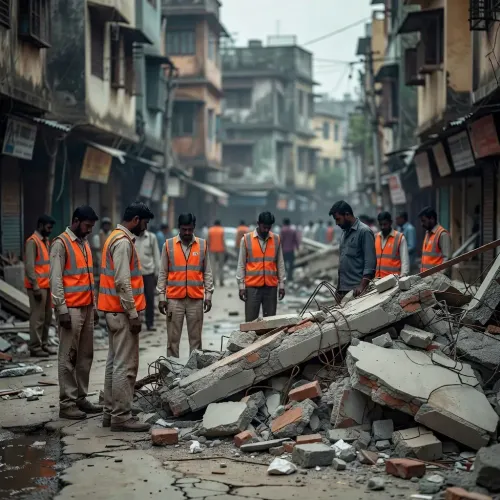
The incident occurred late on Thursday night when the 'B' wing of the four-storey Kohinoor Building in the Balaji Nagar area of Bhiwandi gave way at approximately 11:30 p.m. The structure, which contained 48 rooms — 12 on each floor — had previously been declared dangerous by the local civic body. Repair work was reportedly under way on the building's pillars at the time of the collapse.
Residents first noticed warning signs around 9 p.m., when loud cracking sounds were heard from the structure. Local residents immediately began assisting families to evacuate. However, with some occupants still inside, the wing suddenly came down, trapping multiple people under the debris.
Survivor Accounts
Deepak Kumar Yadav, a survivor, described the harrowing moments: 'Repair work was being carried out on the pillars of a nearby building. After dinner, we went to sleep when we suddenly heard a loud sound of the collapsing building. When we rushed out, there was chaos everywhere. I jumped from the first floor to save my life.'
Abhay Kumar Yadav recounted a similar escape: 'We were in our room after dinner when we heard a loud noise. We immediately tried to run outside, but there was no clear exit route, so I jumped from the first floor. I suffered a leg fracture. Later, some local residents brought a ladder, and others were able to climb down safely. There were around 25 to 30 people inside the building at the time.'
Sangeeta Prajapati, who was in the parking area when the structure came down, said she sustained injuries while attempting to flee. Meanwhile, Neha Singh was desperately searching for her husband, Ranjeet Singh, who had gone downstairs barely 10 minutes before the collapse and had been unreachable since. 'His phone is ringing, but he is not answering,' she said.
Rescue Operation and Challenges
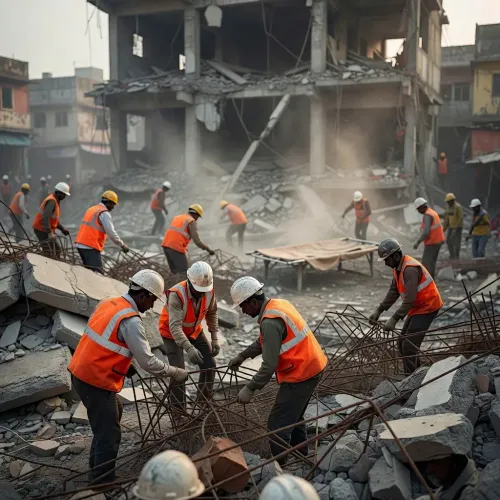
Teams from the NDRF and the State Disaster Response Force (SDRF) were deployed to the site immediately after the incident was reported. Debris clearance continued through the night with the aid of JCB machines and other heavy equipment. Officials acknowledged that poor visibility in the darkness, combined with the scale of the debris, significantly hampered rescue efforts, though teams remained engaged without pause.
Background: A Building Already Flagged as Dangerous
The Kohinoor Building's collapse is not an isolated tragedy in the region. The structure had already been declared unsafe by the local civic authority, raising questions about why residents were still occupying it and whether repair work should have been permitted. This comes amid recurring concerns about ageing and illegally modified residential buildings across Thane and Mumbai Metropolitan Region, where rapid urbanisation has outpaced structural safety enforcement. Authorities have yet to formally comment on whether evacuation orders had been issued prior to the incident.
As rescue operations continue, officials have not ruled out that the death toll may rise further.
Point of View
Or political will, to actually clear them. Bhiwandi sits within the Mumbai Metropolitan Region, one of the most densely built urban corridors in the country, where thousands of ageing, structurally compromised buildings remain occupied. Every such collapse is less a freak accident and more a predictable outcome of deferred action. The accountability question — who authorised continued occupation and repair work on a condemned structure — needs a direct answer, not just a rescue operation.
NationPress
14 Sept 2026
Frequently Asked Questions
What happened in the Bhiwandi building collapse?
The 'B' wing of the four-storey Kohinoor Building in Balaji Nagar, Bhiwandi, Maharashtra collapsed at around 11:30 p.m. on Thursday, 31 July, while repair work was reportedly under way. The building had 48 rooms and had previously been declared dangerous by the local civic body, trapping multiple residents under the debris.
How many people have died in the Bhiwandi building collapse?
The death toll has risen to 9, according to the NDRF, which has been recovering bodies from the debris. Rescue operations are ongoing and authorities have not ruled out that the toll may climb further.
Was the Kohinoor Building in Bhiwandi declared unsafe before the collapse?
Yes. The local civic body had previously declared the Kohinoor Building dangerous. Despite this, residents were still occupying the structure and repair work was reportedly being carried out on its pillars at the time of the collapse.
Who is conducting the rescue operation in Bhiwandi?
Teams from the National Disaster Response Force (NDRF) and the State Disaster Response Force (SDRF) are conducting the rescue operation, assisted by JCB machines and other heavy equipment. Operations continued through the night despite poor visibility and the scale of the debris.
How many people were inside the building when it collapsed?
Survivor accounts suggest approximately 25 to 30 people were inside the building at the time of the collapse. Some managed to escape by jumping from upper floors or using ladders brought by local residents, while others remain unaccounted for.