Bihar Health Minister meets JP Nadda, pushes trauma centres and super-speciality hospitals
Synopsis
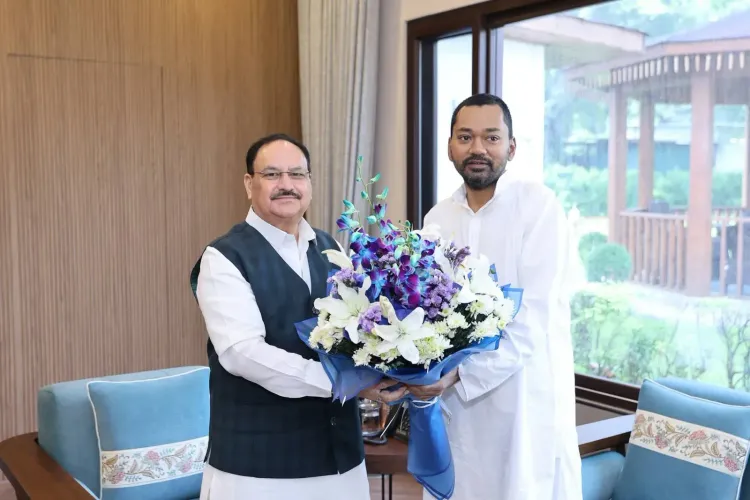
Bihar Health Minister Nishant Kumar took his state's healthcare expansion agenda to New Delhi on 8 August, pressing Union Minister JP Nadda on trauma centres, super-speciality hospital rollouts, and a structural push to keep patients from travelling out of their districts for specialist care — the clearest signal yet of Bihar's 'Healthy Bihar' ambitions moving from vision to ground-level execution.
Key Takeaways
Bihar Health Minister Nishant Kumar met Union Health Minister JP Nadda in New Delhi on 8 August .
Discussions covered expansion of trauma centres and super-speciality hospitals across Bihar.
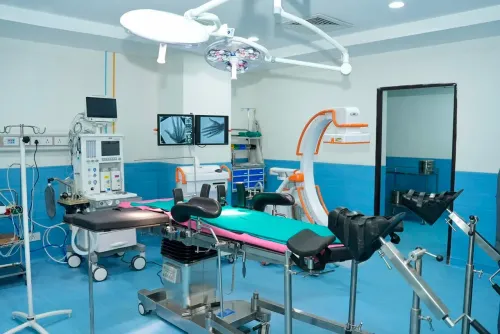
The state is establishing super-speciality blocks in district hospitals to reduce referrals to tertiary centres.
Kumar recently inaugurated a dialysis facility at IGIMS, Patna and briefed Nadda on ongoing PMCH expansion .
Increased deployment of specialist doctors at district and referral hospitals is a key operational priority.
All initiatives are part of Bihar's 'Healthy Bihar' long-term public health vision.
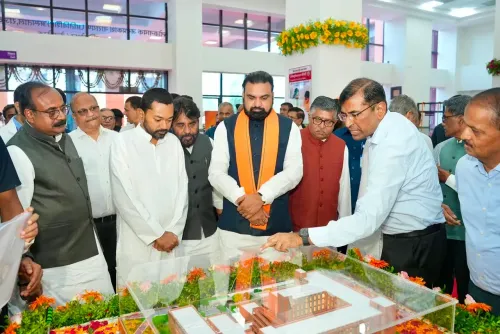
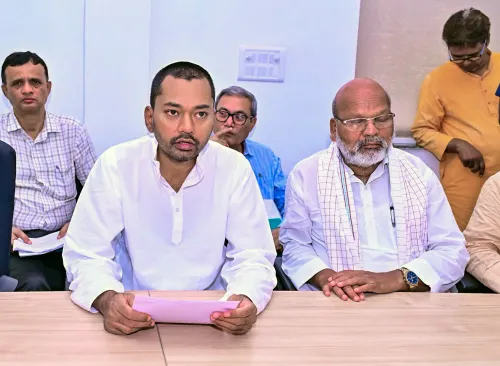
Bihar Health Minister Nishant Kumar met Union Health Minister JP Nadda in New Delhi on Saturday, 8 August to hold detailed discussions on strengthening healthcare delivery and accelerating health-sector expansion across Bihar. The meeting, which Kumar described as a courtesy call, covered a range of priorities including the rollout of trauma centres and super-speciality hospitals in the state.
Key Developments from the Meeting
Kumar briefed Nadda on the current status of health schemes being implemented in Bihar and the progress of ongoing projects under the state's Health Department. He also highlighted the government's core objective: delivering accessible, affordable, and high-quality healthcare to citizens across the state, particularly in underserved districts.
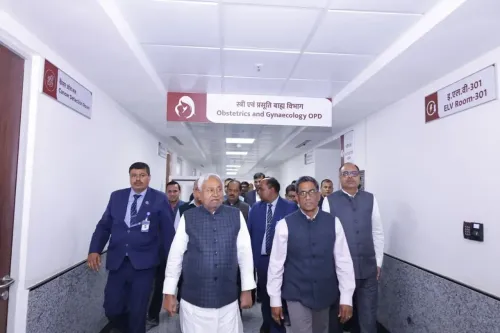
Among the facilities discussed were recent additions at two of Bihar's premier medical institutions — Patna Medical College and Hospital (PMCH) and Indira Gandhi Institute of Medical Sciences (IGIMS), Patna. Kumar noted that he recently inaugurated a dialysis facility at IGIMS and updated the Union Minister on the ongoing expansion of PMCH.
District-Level Healthcare at the Core
Since assuming charge of the Health Department, Kumar has made district-level healthcare strengthening a central pillar of his agenda. The state government is working to establish super-speciality blocks in district hospitals, alongside upgrades to diagnostic and treatment infrastructure.
The stated aim is to reduce the burden on major urban hospitals by enabling district and referral hospitals to handle a larger share of cases locally. This includes increasing the deployment of specialist doctors at district and referral hospitals — a move intended to cut down on unnecessary patient referrals to higher-level medical centres.
Reducing Patient Referrals: The Operational Goal
A significant focus of Bihar's current health strategy is curbing the practice of redirecting patients to tertiary centres for conditions that can be managed closer to home. By bolstering specialist services and diagnostic capacity at the district level, the government hopes to make local healthcare institutions more self-sufficient.
This approach, if executed at scale, could meaningfully reduce both the financial and logistical burden on patients — particularly those from rural and semi-urban areas who currently travel long distances for routine specialist care.
The 'Healthy Bihar' Vision
All of these initiatives are framed within the state government's broader 'Healthy Bihar' vision — a long-term effort to build a resilient public health infrastructure. The Saturday meeting with Nadda is seen as part of Bihar's push to align state-level priorities with central health funding and scheme frameworks, potentially unlocking additional support for its expansion plans.
How quickly these commitments translate into operational capacity at the district level will be the real measure of progress in the months ahead.
Point of View
But the prescription has been written before. The state has long struggled with specialist shortages and infrastructure gaps that persist despite repeated policy announcements. The real test of the 'Healthy Bihar' vision is not the number of super-speciality blocks inaugurated, but whether specialist doctors actually remain posted at district hospitals — a retention challenge that has undermined similar efforts across large states. The meeting with Nadda signals Bihar is seeking central alignment, likely with an eye on National Health Mission funding cycles. Whether that translates into measurable reductions in out-of-district patient referrals will be the credibility test for this administration's health agenda.
NationPress
23 Sept 2026
Frequently Asked Questions
Why did Bihar Health Minister Nishant Kumar meet JP Nadda?
Kumar met Union Health Minister JP Nadda in New Delhi on 8 August to discuss strengthening Bihar's healthcare infrastructure, including the expansion of trauma centres, super-speciality hospitals, and district-level health facilities. He also briefed Nadda on ongoing schemes and recent facility launches at PMCH and IGIMS.
What are Bihar's key healthcare priorities discussed in the meeting?
The key priorities include establishing super-speciality blocks in district hospitals, increasing specialist doctor deployment at referral hospitals, expanding trauma centre coverage, and reducing unnecessary patient referrals to higher-level medical centres.
What new facilities have recently been added at IGIMS and PMCH in Patna?
Health Minister Nishant Kumar recently inaugurated a dialysis facility at Indira Gandhi Institute of Medical Sciences (IGIMS) in Patna. He also updated the Union Minister on the ongoing expansion of Patna Medical College and Hospital (PMCH).
What is the 'Healthy Bihar' vision?
'Healthy Bihar' is the Bihar state government's overarching public health framework aimed at building a stronger, more accessible healthcare system. It focuses on district-level infrastructure upgrades, specialist availability closer to home, and reducing dependence on urban tertiary hospitals.
How does Bihar plan to reduce patient referrals to major hospitals?
The state plans to strengthen diagnostic and specialist services at district and referral hospitals, making them capable of handling a wider range of cases locally. Increased deployment of specialist doctors at these facilities is central to this strategy.